Your Kenmore washing machine won’t start. No lights, no sound, no spin. Just silence. Or maybe it powers on but refuses to spin, leaving clothes soaked and frustration high. You’re not alone. Thousands of homeowners face this every month, often spending money on unnecessary part replacements because they skip simple checks first.
This guide cuts through the confusion. You’ll learn how to pinpoint whether your issue is electrical, mechanical, or software related, and fix it fast. Whether you own a 1990s Whirlpool-built direct-drive model or a modern LG-manufactured front-loader, we have targeted solutions. You’ll also discover when to repair and when to replace, saving time, money, and frustration.
Confirm Power Supply First
Before opening the machine, verify it is receiving electricity. Most “no power” cases stem from external supply issues.
Test the Outlet
Plug a lamp or phone charger into the same outlet. If it does not work, the problem is not your washer. It is your home’s circuit.
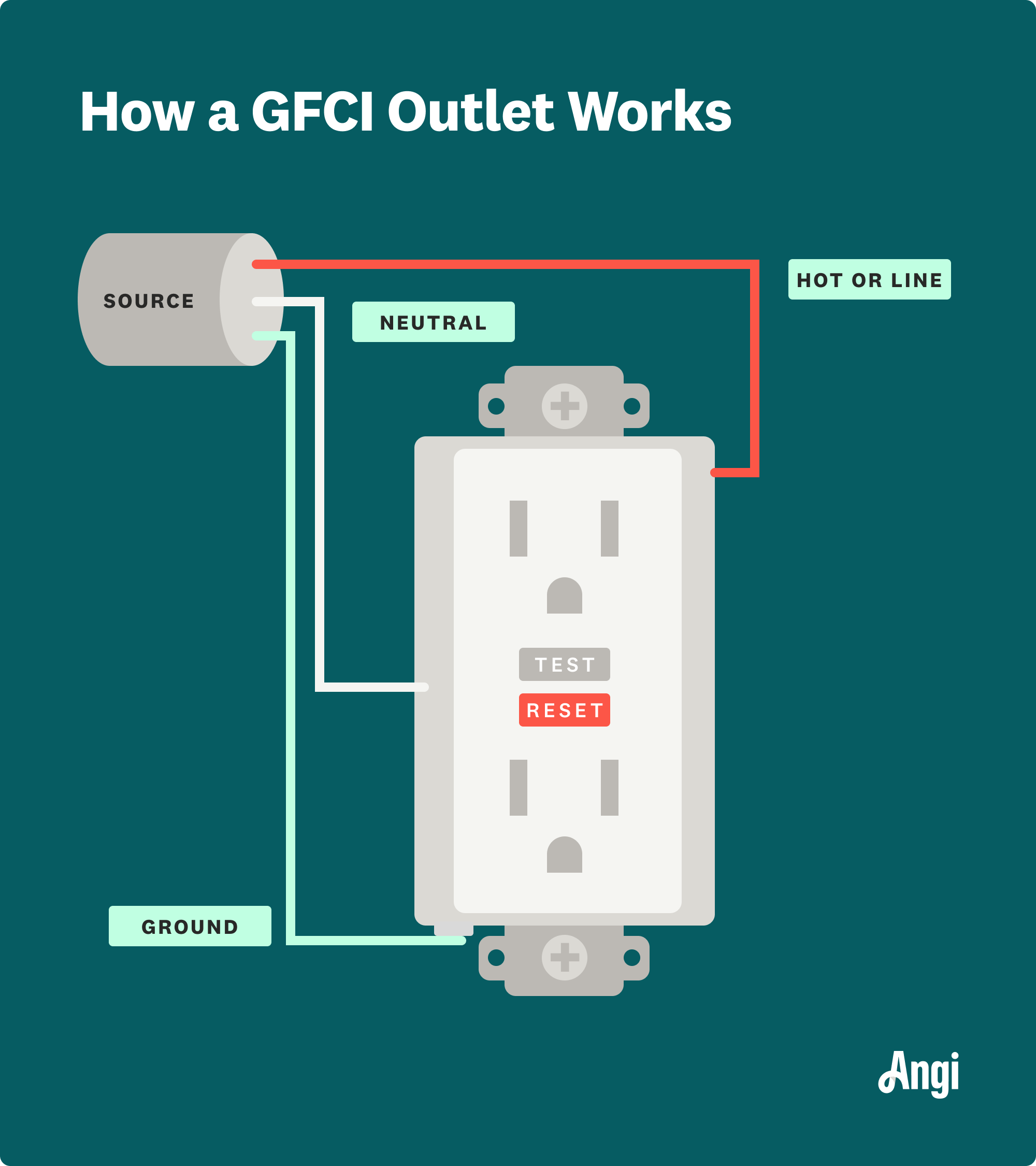
Many laundry rooms use GFCI outlets with Test and Reset buttons. These trip easily due to moisture or vibration. Press Reset firmly. If it clicks and stays in, try powering the washer again.
Check the Breaker Panel
Go to your electrical panel and inspect the breaker labeled laundry or washer. If the switch is halfway between ON and OFF, it has tripped. Flip it fully OFF, then back ON.
If it trips again immediately, stop. This indicates a short circuit, likely in the power cord, noise filter, or control board. Continuing could damage wiring or create a fire hazard.
Inspect the Power Cord
Unplug the washer. Follow the cord to where it enters the machine. Look for burn marks or melted plastic, fraying or chewed insulation common with rodents, or a burnt smell near the terminals.
Use a multimeter to test continuity. Set it to ohms. Touch one probe to each prong on the plug and the other to the corresponding terminal inside the washer’s terminal block. You should hear a beep indicating a complete circuit. No beep means a broken wire. Replace the cord.
Pro Tip: Replacement cords cost $20 to $80 and are easy to install. This fixes more dead washers than any other single part.
Diagnose the Control Board
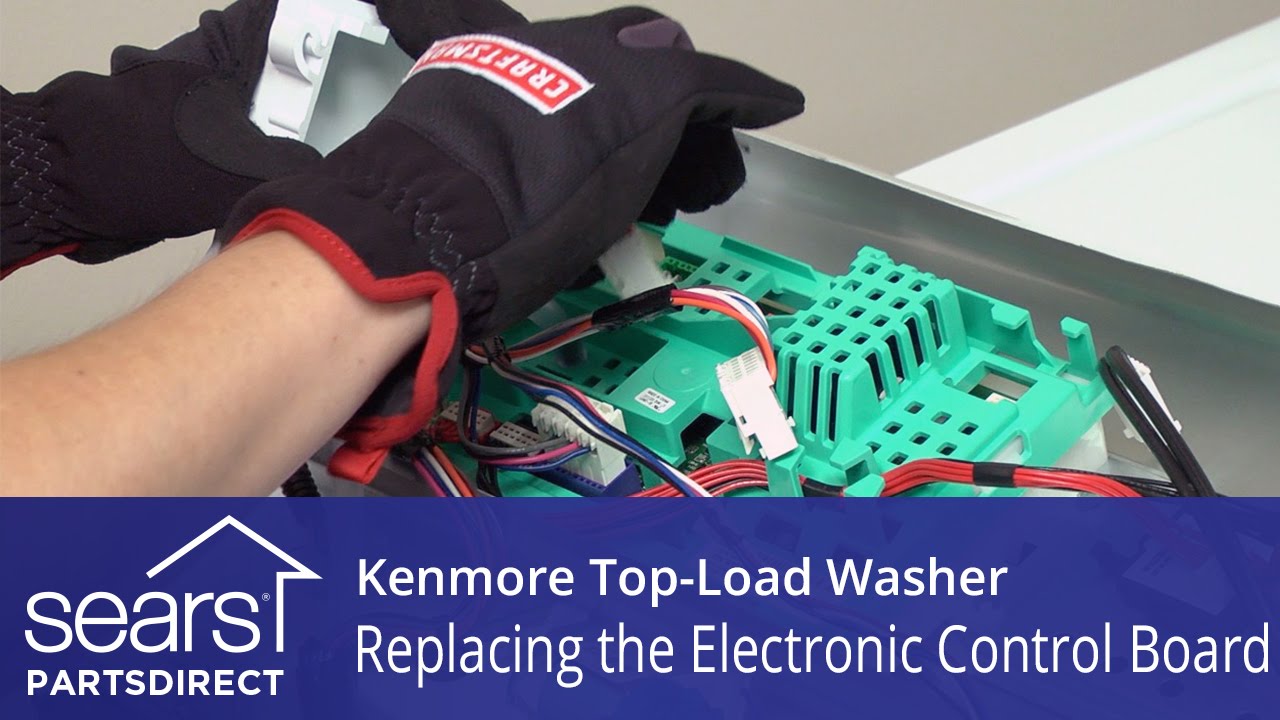
If power reaches the washer but nothing turns on, no display, no lights, the control board may be dead.
Look for the Hidden LED
Remove the top or console panel to access the control board. With the washer plugged in, look for a small LED light on the board. It should glow dimly even when the machine is off.
No light? Either power is not reaching the board, or the board is fried.
Check voltage at the board’s input terminal. Use a multimeter set to AC volts. Place one probe on the terminal, the other on ground. You should read approximately 120V. If yes but no LED, the board is likely failed.
Signs of Board Failure
Look for burn marks around components, bulging capacitors with rounded tops instead of flat, or roach droppings and corrosion common in older units.
Capacitors can sometimes be resoldered by skilled technicians, but for most users, replacement is safer. A new control board costs $150 to $350. Before buying, rule out cheaper causes like the noise filter or thermal fuse.
Warning: Static electricity can kill a new board. Touch metal before handling and take photos of all wiring before disconnecting.
Test the Noise Filter
This small component blocks electrical interference but can fail silently, cutting power to the control board.
How It Fails
The noise filter sits where the power cord connects to the machine. It has two terminals. Input from wall should have approximately 120V. Output to control board should also have approximately 120V.
Use a multimeter to test both sides. If input has voltage but output reads 0V, the filter is shorted internally.
Many users replace the $300 control board when the $40 noise filter is the real culprit.
Replace and Reconnect
Noise filters cost $30 to $60 and install in minutes. Disconnect power, unplug wires, swap units, and reconnect. No calibration needed.
This fix is often overlooked but solves no power issues in LG-manufactured Kenmore front-loaders and some Whirlpool-built models.
Check the Thermal Fuse
Kenmore washers include a thermal fuse that cuts power if the motor overheats, common when washing bulky loads like comforters.
Locate and Test
The fuse is usually near the motor or control panel. Unplug the washer. Set your multimeter to continuity mode.
Touch one probe to each end of the fuse. A good fuse beeps. No beep means it is blown.
Replace with an exact-match fuse costing $10 to $20. But if the new fuse blows immediately, stop. A short circuit exists elsewhere, possibly a failed motor or wiring fault. Call a professional.
Never bypass this fuse. It is a critical fire safety device.
Fix Motor Coupler Failure

If your washer fills, drains, and makes motor noise but won’t spin, the motor coupler is likely worn, especially in Whirlpool-built models.
What Is the Motor Coupler
It is a small rubber and plastic piece connecting the motor shaft to the transmission. Over time, the center wears down and slips, letting the motor spin freely while the drum stays still.
Key Insight: A cracked outer shell does not always mean failure. The real test is the center interface. If it is rounded or flattened, it is dead.
Replace in 5 Steps
- Unplug the washer and tip it backward.
- Remove bottom clips first. They hold the motor in place.
- Pull the motor and pump assembly away from the transmission.
- Inspect the coupler center. Replace if worn.
- Install new coupler costing $5 to $10, reassemble, and test.
Pro Tip: Temporarily bypass the lid switch with a staple to run a spin test. Remove the staple afterward. Never leave it in.
This fix works on most Kenmore 80, 90, 110, and 400 series models from the 1990s to 2000s.
Solve Drain Errors and OE Code
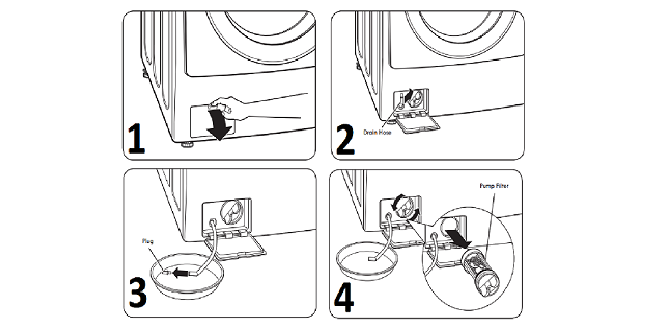
Front-load Kenmore washers will not spin if water remains in the tub, a safety feature. If you see OE on the display, it means drain error.
Clean the Drain Pump Filter
- Place towels under the front lower panel.
- Open the small access door.
- Unscrew the drain cap slowly. Water will spill out.
- Pull out the filter and remove debris like coins, hair, or socks.
- Reinstall and test.
This simple step fixes most OE errors. No part replacement needed.
Replace the Drain Pump
If cleaning does not help, the pump may be faulty. Even if it hums, it might not move water.
Unplug the washer. Remove the lower front panel. Disconnect hoses and wires. Swap pumps. Reconnect and test.
Use OEM part LG Drain Pump Motor 4681EA2001T or compatible. Cost is $50 to $100.
Diagnose Lid Switch Problems
A failed lid switch can kill power or block spin cycles, affecting approximately 13% of won’t start cases.
Symptoms
The symptoms include no click when closing the lid, flashing Lid Locked light, error codes F5 or Lid, or broken plastic striker or weak magnet.
Test with Multimeter
Unplug the washer. Access the switch, usually under the console. Set multimeter to continuity.
Close the lid. You should hear a beep. No beep? The switch is dead.
Replace it costing $30 to $80. But on newer models, you must perform a recalibration sequence after installation.
Recalibration Required
Skip this step and the washer will show errors even with a new switch.
For Kenmore 400 Series and similar, close the lid. Press Spin, Rinse, Spin, Rinse within 5 seconds. Wait for chime. Calibration complete.
Always check your model’s manual for exact steps.
Safety Warning: Never bypass the lid switch permanently. A spinning drum with an open lid is extremely dangerous.
Decode Common Error Codes
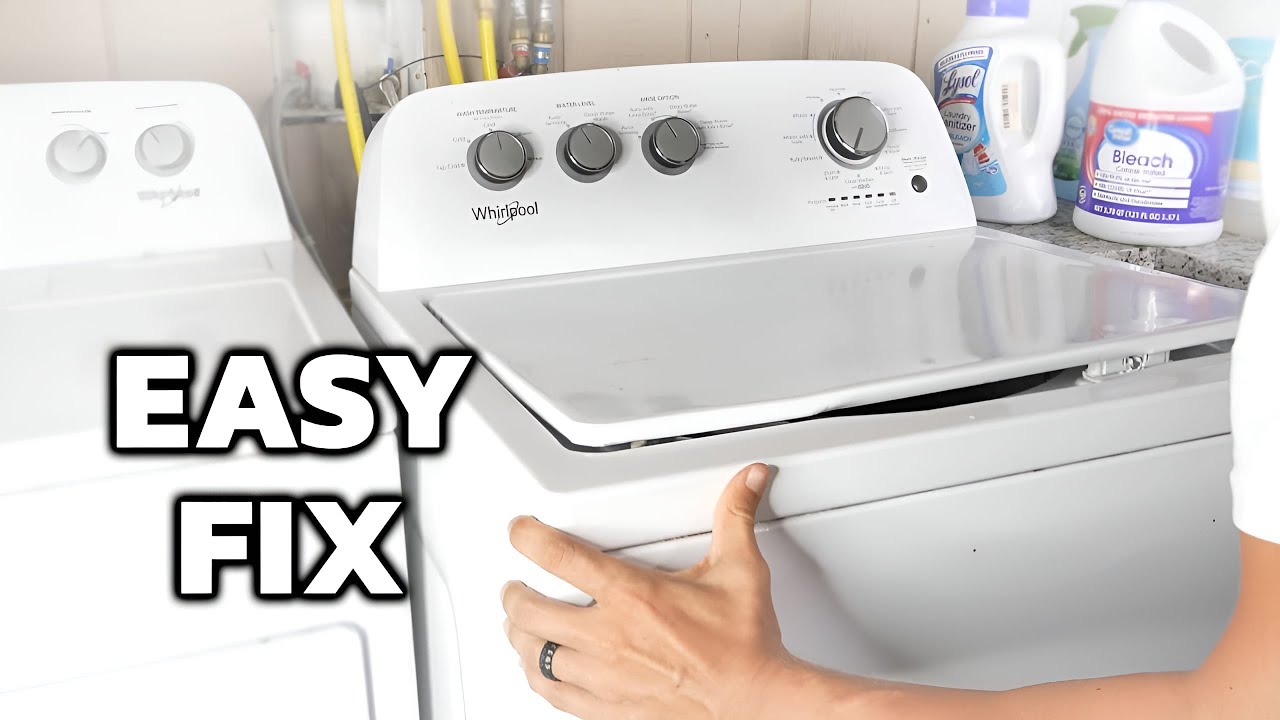
Kenmore washers use error codes to pinpoint problems. Here is what they mean.
OE: Drain Failure
The cause is a clogged pump, kinked hose, or failed drain pump. Fix by cleaning the filter first, then testing or replacing the pump.
F5 or Lid: Lid Switch Fault
The cause is a failed switch, broken striker, or weak magnet. Fix by testing the switch, replacing if needed, and recalibrating.
Three Dashes: Idle Mode
This is normal when the washer is on but not running. If unresponsive to the dial, check the control board or power supply.
Flashing Lid Lock: Lock Mechanism Jam
The cause is an obstruction or failed lock solenoid. Fix by verifying the lid is closed, checking for debris, and testing the lock mechanism.
No Spin with Motor Noise: Worn Coupler
The cause is the motor runs but the coupler slips. Fix by inspecting and replacing the coupler center.
Scraping Noise: Agitator or Bearing Wear
The cause is worn agitator dogs or failing transmission bearings. Fix by disassembling the agitator, inspecting dogs, and replacing if chipped.
Slow Fill Off Cycle: Leaky Inlet Valve
The cause is debris in solenoids or a failed valve. Fix by replacing the water inlet valve, part Kenmore 4318046.
When to Repair vs. Replace

Not every broken washer deserves a fix. Use this decision matrix to guide your choice.
Repair If
The unit is under 7 years old, the problem is low-cost under $100, it is a Whirlpool-built direct-drive from the 1990s to 2000s, or you enjoy DIY and have tools.
These models are durable and parts are affordable.
Replace If
The unit is over 7 years old, repair cost exceeds $300, or it is a post-2010 model.
Modern washers are designed for 3 to 5 year lifespans. Spending $300+ to fix a $400 machine is not smart.
Example: A $350 control board replacement on a 9-year-old Kenmore Elite? Replace the unit instead.
Essential Tools for DIY Repair
You do not need a full toolkit. Start with these items.
A digital multimeter tests voltage, continuity, and resistance. A Narwhal 6-in-1 driver removes tamper-proof screws on control panels. Pliers remove spring clips on motor assemblies. Safety glasses protect from debris and water. Towels catch water during pump access. Flush cutters trim wires if rewiring, which is rare.
Keep a phone handy to photograph wiring before disconnecting.
Prevent Future Failures
Avoid repeat breakdowns with these simple habits.
Clean the drain filter monthly to prevent OE errors. Do not overload with heavy items like comforters to avoid thermal fuse trips. Inspect the power cord annually for rodent damage. Use HE detergent only to prevent suds lock in high-efficiency models. Run a monthly cleaning cycle using vinegar or Affresh to clear buildup.
Key Takeaways for Fixing Your Kenmore Washing Machine
Most Kenmore washer failures are simple to diagnose if you start at the right place. Always begin with power supply checks. Test before replacing components. Remember that a $20 power cord fixes more dead washers than a $350 control board.
The most common issues are electrical in nature, with 45% stemming from power supply problems and 40% from control board failures. Before spending money on expensive parts, verify your outlet works, check the circuit breaker, and test the power cord.
For spin failures, the motor coupler is the prime suspect in Whirlpool-built models, while drain pump issues cause OE errors in LG-manufactured front-loaders. Clean your drain filter regularly and avoid overloading with bulky items.
With the right diagnostic approach, you can restore your machine fast or know with confidence when it is time to upgrade to a new unit.
Frequently Asked Questions About Kenmore Washing Machine Not Working
Why won’t my Kenmore washing machine turn on at all?
Start by testing the outlet with a lamp or phone charger. Check your circuit breaker and GFCI outlet in the laundry room. If those are fine, inspect the power cord for damage. These simple checks resolve approximately 45% of no-power cases.
How do I know if the control board is bad?
Look for a small LED light on the control board. It should glow dimly when the washer is plugged in. Check for burn marks, bulging capacitors, or a burnt smell. If the board receives power but shows no LED light, it likely needs replacement.
What does OE error code mean on my Kenmore front-loader?
OE means drain error. Water cannot empty from the tub, so the washer refuses to spin as a safety measure. Clean the drain pump filter first. If that does not work, inspect the drain hose for kinks or replace the drain pump.
Can I replace the motor coupler myself?
Yes. Unplug the washer, tip it backward, remove the bottom clips first, pull the motor assembly away, inspect the coupler center for rounding or flattening, and replace if worn. The part costs $5 to $10 and the repair takes about an hour.
When should I replace my Kenmore washing machine instead of repairing it?
Replace if the unit is over 7 years old and repair costs exceed $300. Modern washers are designed for 3 to 5 year lifespans. Spending more than half the cost of a new machine on repairs rarely makes economic sense.