You have found the perfect leather jacket, only to discover it has a musty, overpowering odor that won’t fade. Or perhaps the fit is boxy and unflattering. While most care labels strictly warn against machine washing, real-world experience shows that a washing machine can actually refresh and reshape leather jackets when done with precision. This guide walks you through the exact method for washing a leather jacket in a machine, including how to remove stubborn smells, achieve a fitted silhouette, and even create a stylish matte finish without cracking or ruining the material.
This process carries real risk. It is not recommended for expensive, coated, or delicate leathers. However, if you are working with a budget-friendly, full-grain leather jacket that needs a deep refresh, this method can be transformative. You will learn exactly which settings to use, when to stretch the leather during drying, and what changes to expect after the cycle completes.
Assess Your Leather Type Before Washing

Before you even think about turning on the machine, you must verify whether your jacket can survive the process. Not all leather is created equal, and choosing wrong can ruin your jacket permanently.
Full-Grain vs. Coated Leather
Only full-grain leather should be considered for machine washing. This type has the strongest fiber structure and can handle moisture and movement better than other finishes. It often feels thick, natural, and slightly textured, not plastic-like.
Coated or shiny leather, common in fast-fashion brands, has a surface layer that can crack when agitated or exposed to heat. While some users report success with coated jackets, especially lower-cost ones, the risk is significant. If preserving a glossy shine is important to you, avoid this method entirely.
When Machine Washing Makes Sense
Consider this method only if the jacket has a deep, stubborn odor that will not fade with airing out. You want a more fitted look or are willing to accept slight shrinkage. You prefer a distressed, matte finish over a glossy one. The jacket is not high-value or irreplaceable.
If your goal is preservation, stick to spot cleaning or professional leather care instead.
Prepare the Jacket for Washing
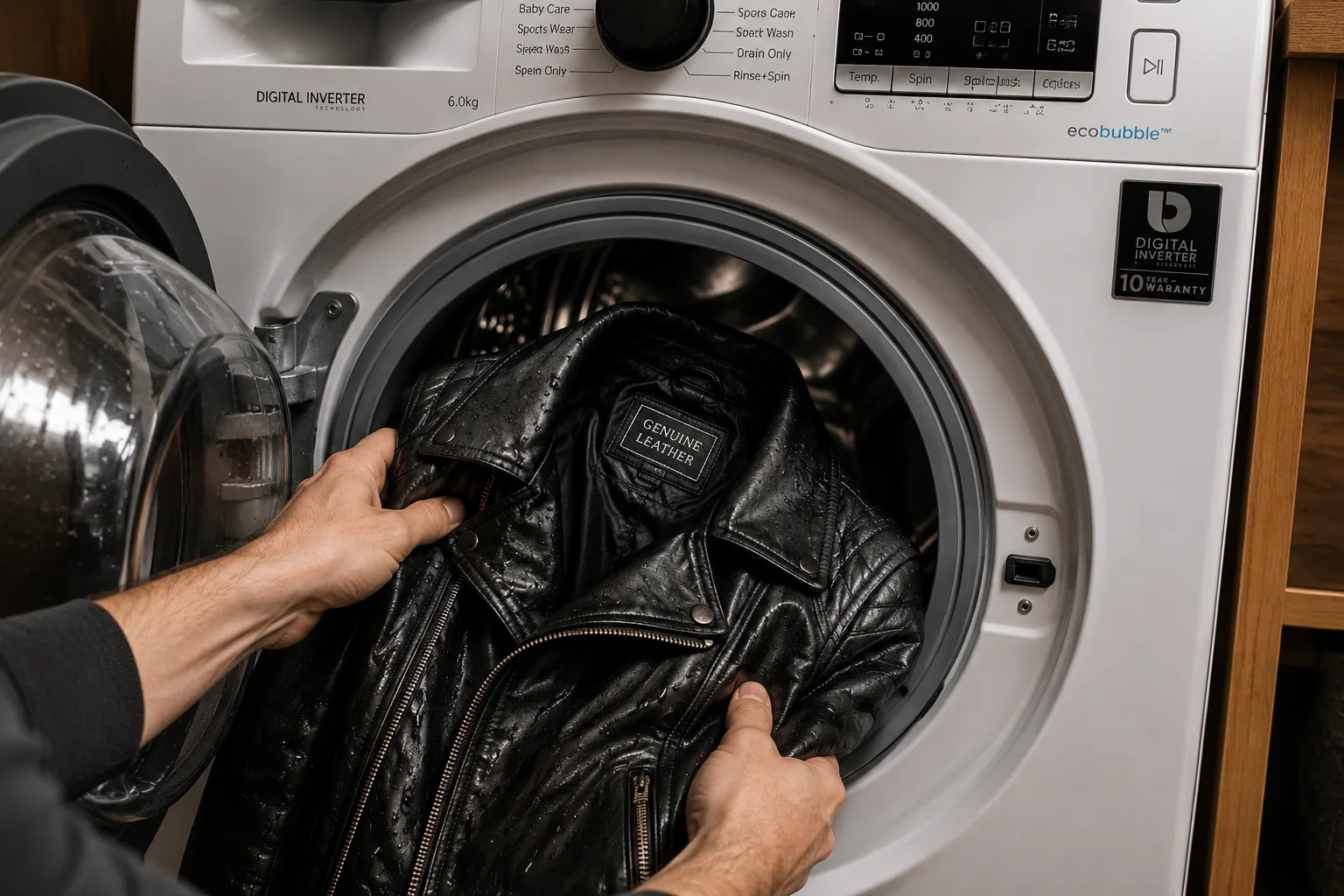
Proper preparation protects both the jacket and your washing machine. Skipping these steps increases the risk of damage significantly.
Close all zippers completely. Open zippers can snag on seams or the drum, causing tears or damage to other items in the load. Turn the jacket inside out. Inverting the jacket shields the outer grain from direct friction with the drum and other clothes, reducing surface wear and helping preserve the texture of the leather.
Never wash a leather jacket alone. It needs cushioning to prevent violent slamming during the spin cycle. Use two to three dark-colored items like black workout pants or thick cotton sweatpants. Add a few dark socks to fill space and absorb excess water. Choose dark fabrics only to prevent dye transfer onto the leather lining. This buffer absorbs impact and helps balance the load, reducing stress on the jacket.
Set the Correct Wash Cycle
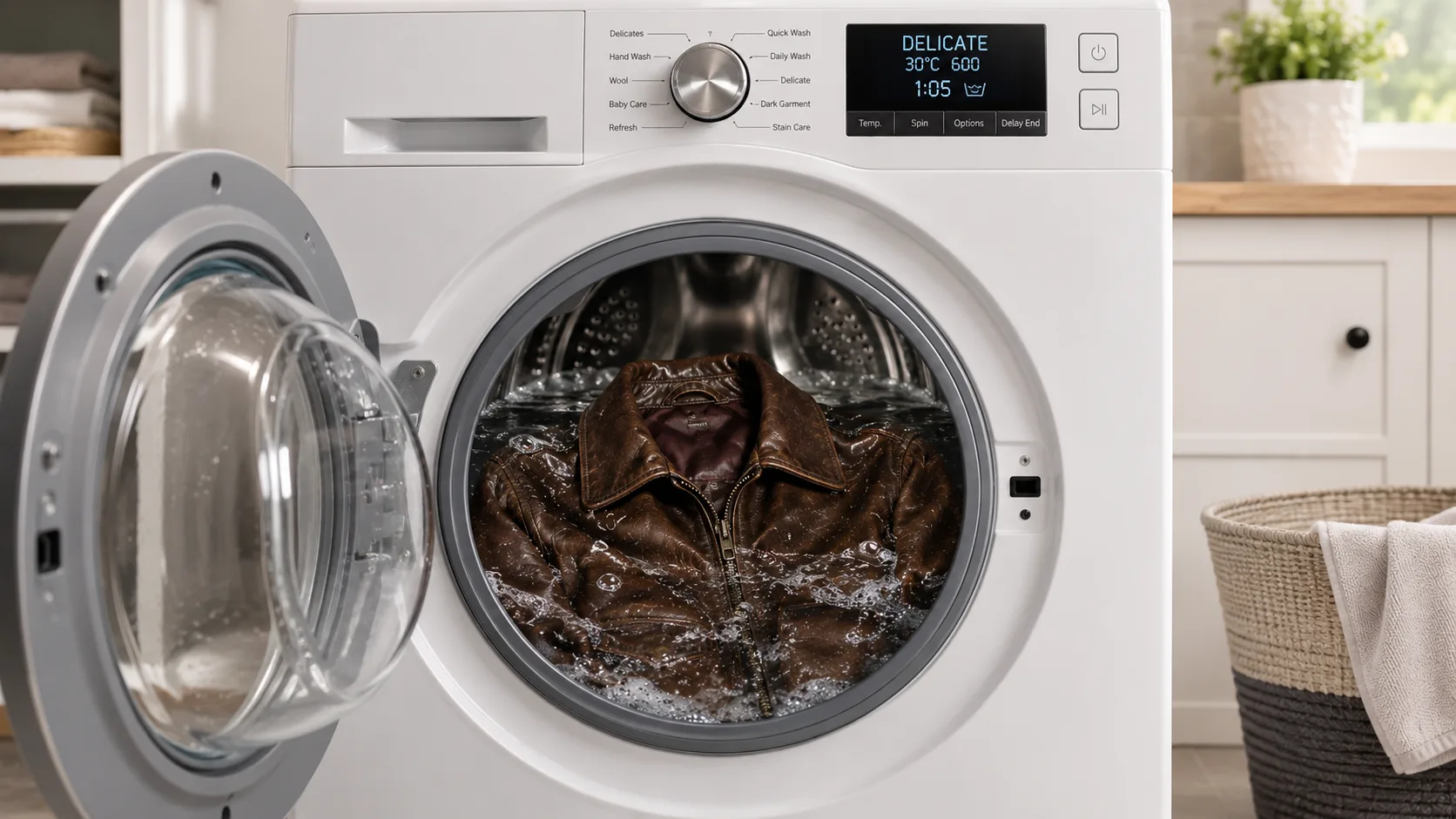
Machine settings are non-negotiable. One wrong choice can ruin the jacket entirely. Pay close attention to each parameter.
Use cold water only. Hot or warm water breaks down leather fibers, leading to stiffness, shrinkage, and cracking. Cold water preserves flexibility and minimizes damage. Select the delicate or gentle cycle. This setting limits agitation speed, reducing mechanical stress on the leather. Avoid heavy-duty, normal, or permanent press cycles entirely.
Choose the smallest load size setting. A small load adjusts the water level appropriately. Too much water can oversaturate the leather, while too little will not clean effectively. Keep wash time short. Aim for the shortest cycle available, around six minutes. Prolonged exposure to water increases the risk of waterlogging and fiber breakdown. The goal is a quick refresh, not a deep soak.
Add Detergent Carefully
Cleaning agents must be used sparingly and wisely. Too much product can saturate the leather, while the wrong type can cause staining.
Use approximately two tablespoons of detergent. That is enough to lift odors and grime without oversaturating the leather. Use standard liquid or powder detergent with no bleach and no fabric brighteners. Skip liquid softeners entirely. While some suggest adding hair conditioner or liquid fabric softener to keep leather supple, these can cause stains or leave residues that attract dirt. The risk outweighs the benefit. Save softening for the drying phase using dryer sheets instead.
Dry With Medium Heat and Monitor Closely
Drying is where the real transformation and danger occur. This is not a hands-off process. You must stay engaged throughout.
Set the dryer to medium heat. High heat causes rapid, uneven shrinkage and can crack leather. Air-dry-only settings take too long and do not allow for fit adjustment. Medium heat offers controlled drying with manageable shrinkage. Add three dryer sheets to the dryer. Dryer sheets serve two purposes: they soften the leather fibers during tumbling, and they leave a fresh scent helping eliminate lingering odors. This replaces the need for liquid additives in the wash.
Stretch Every 10 Minutes During Drying
This step is critical for controlling fit and preventing distortion. Skipping it leads to an ill-fitting jacket.
After ten minutes of drying, remove the jacket from the dryer. Turn it right-side out and try it on immediately while still warm and pliable. Gently stretch the sleeves upward and the body outward. In documented cases, sleeves grew nearly an inch with manual stretching while damp.
After stretching, turn the jacket inside out again and put it back in the dryer for another ten minutes. Repeat this check-stretch cycle every ten minutes. This gives you full control over shrinkage and ensures the fit evolves exactly how you want.
Stop at 40 Minutes or When Slightly Damp
Total drying time should be around forty minutes, but stop earlier if the jacket reaches your desired fit.
Remove the jacket before it is fully dry. Taking it out while still slightly damp prevents over-shrinking, stiff leather, and pointy shoulders from excessive heat exposure. Over-drying leads to irreversible damage.
Finish drying flat. Lay the jacket flat on a clean, dry surface, never hang it. Hanging a damp leather jacket puts weight on the shoulders, stretching them out of shape. Pointy shoulders are a common result of improper drying. Let the jacket air dry completely in a well-ventilated area away from direct sunlight or heaters.
Expect Noticeable Changes After Washing

Know what to expect after the process. This is not a stealth clean. The jacket will change in several ways.
Odor elimination is the most reliable outcome. Stubborn odors are completely gone. Even vintage jackets with a sweet, musty stench that persisted for months have been successfully deodorized using this method. The surface shine is removed, giving the jacket a vintage, broken-in look. This is ideal if you prefer a rugged aesthetic, but not if you want to maintain a glossy showroom finish.
Expect about one inch of shrinkage in chest width and body length. This creates a snugger, more tailored fit, ideal for oversized or vintage cuts. Sleeves may feel tighter at first, but stretching during drying can restore or even extend their length slightly. When stretched properly during drying, the leather stays soft and flexible, not stiff or brittle. The fiber structure remains intact, especially with full-grain leather.
Avoid These Common Mistakes
Even one misstep can ruin the jacket. Learn from others’ errors to protect your investment.
Do not use high heat. High heat dries too fast, causing leather to crack and shrink uncontrollably. Stick to medium heat only. Do not skip the stretching intervals. Letting the jacket tumble uninterrupted leads to over-shrinkage and misshapen shoulders. Active monitoring is essential. Do not hang to dry. Hanging a wet jacket distorts the shoulders permanently. Always lay flat for the final drying phase. Do not wash coated leather without accepting risk. While some budget shiny jackets survive, coated leathers are unpredictable. If the finish matters to you, do not risk it.
Weigh the Pros and Cons First
This method is not for everyone. Consider your priorities before proceeding.
The advantages include eliminating deep odors that will not fade otherwise, reshaping fit for a custom tailored feel, reducing shine for a vintage worn-in look, and providing a low-cost solution compared to professional cleaning. The disadvantages include risk of shrinkage beyond desired fit, loss of glossy finish that cannot be reversed, potential damage if steps are not followed exactly, and unsuitability for high-end or delicate leathers.
Final Thoughts on Machine Washing Leather Jackets
Washing a leather jacket in a machine can work, but only under strict conditions. This method is best suited for inexpensive, full-grain leather jackets with odor issues or loose fits. The process removes smells, shrinks the body, and gives a matte, lived-in appearance, all while keeping the leather soft, provided you stretch it during drying.
If you own a high-value, coated, or suede jacket, do not attempt this method. Stick to professional cleaning instead. But if you have a thrift find that smells like a basement and fits like a tent, this technique might just transform it into your favorite piece.
Always test this method on a jacket you are willing to lose. Success depends on leather type, machine precision, and active drying management. Follow every step closely and never walk away from the dryer.
Frequently Asked Questions About Washing Leather Jackets
Can I wash any leather jacket in a washing machine?
No. Only full-grain leather jackets should be considered for machine washing. Coated or shiny leather has a high risk of cracking during the agitation and drying process. Always verify your jacket’s leather type before attempting this method.
Will machine washing ruin my leather jacket?
It can if done incorrectly. Using hot water, high heat, or skipping the stretching process leads to shrinkage, cracking, or distortion. When done properly with cold water, delicate cycles, and active monitoring, the jacket can emerge softer and better fitting.
How much will my jacket shrink after washing?
Expect approximately one inch of shrinkage in both chest width and body length. However, you can mitigate this shrinkage by stretching the jacket manually every ten minutes during the drying phase. Sleeves can actually grow about one inch with active stretching.
Can I use fabric softener in the wash cycle?
No. Liquid fabric softener or hair conditioner can cause staining or leave residues on leather. Instead, use three dryer sheets during the drying phase to soften the leather and add a fresh scent without the staining risk.
How do I know when the jacket is dry enough to stop the dryer?
Remove the jacket from the dryer when it is still slightly damp, not fully dry. This typically occurs around the forty-minute mark, but stop earlier if you have achieved your desired fit. Over-drying leads to stiff leather and pointy shoulders.
What should I do if my jacket develops an odor after washing?
The washing method typically eliminates odors completely. If a smell persists after drying, the jacket may not be fully dry yet. Place it back in the dryer with fresh dryer sheets for another short cycle. Ensure the jacket is completely dry before storing to prevent musty odors from returning.