You’ve just finished a laundry cycle, only to find the washing machine door won’t open. It’s locked, motionless, no matter how hard you pull. This common household frustration affects front-loading machines of all brands, from Samsung to Bosch to Whirlpool. The good news is most locked-door issues can be resolved quickly and safely with the right steps. The key is knowing why the door is locked and applying the correct method without damaging the machine or risking injury.
Modern washing machines use safety interlocks that prevent the door from opening during operation, when water levels are high, or when temperatures are elevated. These locks are essential for safety but can malfunction or stay engaged due to power issues, sensor errors, or mechanical jams. This guide walks you through every step to open a washing machine door safely, from simple resets to emergency release techniques.
Wait and Reset the Machine

Before attempting physical interventions, always start with the safest and most effective step: resetting the system. Many locked doors are simply due to a timed safety lock that needs a moment to disengage.
Wait 2-5 Minutes After Cycle Ends
Even after the cycle finishes, the door may stay locked due to thermal or electronic delay. High-temperature washes trigger a cooling period, and control boards need time to send the unlock signal.
What to do:
• Wait at least 2 to 5 minutes after the cycle ends
• Watch the door lock indicator light
• Once it turns off or goes steady, gently try the handle
Pro tip: Do not force it. Waiting is safer and often all that’s needed.
Perform a Power Cycle Reset
If waiting does not work, a full power reset can clear electronic glitches.
Steps to follow:
1. Turn off the washing machine using the control panel
2. Unplug the machine from the wall outlet
3. Wait 10-15 minutes (up to an hour for stubborn locks)
4. Plug back in and try opening the door
This resets the control board and often disengages a stuck lock. Some models require a full reboot to recognize the cycle is complete.
Disable the Child Lock
A surprisingly common cause of a locked door is an accidentally activated Child Lock. This feature disables all controls and prevents the door from opening even after the cycle ends.
Unlock with the Start/Pause Button
Most brands allow you to disable the Child Lock with a simple button press.
What to do:
• Press and hold the Start/Pause button for 3 seconds
• Listen for a beep or watch for the lock icon to disappear
• Once disabled, try opening the door
Check Brand-Specific Combinations
Not all models use the same method. Here is what works for major brands:
• Whirlpool: Hold Child Lock button for 3+ seconds
• Samsung: Press and hold Power + Spin for 3 seconds
• Bosch: Hold Drain/Spin + Option for 4 seconds
• Indesit: Hold Temp + Spin for 3 seconds
If unsure, consult your user manual. But always try the Start/Pause method first.
Open During a Cycle to Add or Remove Laundry
Need to add a forgotten item or stop a cycle early? You can often open the door within the first few minutes if done correctly.
Pause and Wait for Safe Conditions
Steps to follow:
1. Press Start/Pause to halt the cycle
2. Check the door lock indicator light
3. If blinking, the machine is still too hot or full of water
4. If off or steady, it is safe to open
5. Wait 1-2 minutes for drainage or cooling if needed
Limitations of Mid-Cycle Access
Be aware of these restrictions:
• Water level: If water is above the door seal, the lock stays engaged
• High heat: Machines will not unlock if internal temperature exceeds safe limits
• Late in cycle: After approximately 5 minutes, most models disable door access for safety
Drain Water to Unlock the Door
A full drum keeps the door locked. If the machine will not drain automatically, you will need to force drainage before attempting to open it.
Run a Spin/Drain Cycle
Most machines have a dedicated function for this.
Steps to follow:
1. Select Spin Only or Drain from the menu
2. Press and hold Start/Pause to begin
3. Wait for the cycle to complete
4. Once drained, the door should unlock
This is the safest method and avoids mess or damage.
Use the Emergency Drain Hose
If the machine will not drain:
Steps to follow:
1. Locate the debris filter (bottom front, usually right side)
2. Place a shallow tray or towels underneath
3. Open the small access flap and pull out the white drain plug
4. Let water flow slowly into the container
5. Once empty, reinsert the plug and close the filter
6. Power cycle the machine
Warning: Water may be hot or dirty. Wear gloves and have plenty of towels ready.
Use the Manual Release Tab
Many front-loaders have a hidden emergency release, a simple mechanical bypass for when electronics fail.
Locate the Bottom Access Flap
What to look for:
• A small square panel at the bottom front of the machine
• It may be clipped or screwed in place
• Common on Bosch, Siemens, Neff, Hotpoint, Indesit, and Zanussi models
Pull the Release Lever
Steps to follow:
1. Open the flap
2. Inside, find a red or orange plastic tab, cord, or lever
3. Pull it downward (or as indicated by an icon)
4. While holding it, gently pull the door handle
The door should release immediately. Do not force it. If it does not work, recheck positioning. Avoid metal tools that could scratch or break the tab.
Try the Cord or Credit Card Method

When no release tab exists, these DIY techniques can manually trigger the latch from the outside.
Use a Cord to Trigger the Latch
Best for models with inward-facing handles and accessible hooks.
Steps to follow:
1. Unplug the machine
2. Cut a 1-meter length of nylon cord (fishing line works well)
3. Loop the cord around the door, sliding it into the gap between door and frame
4. Position the cord behind the latch hook inside the door frame
5. Pull both ends sharply toward the handle side
6. While pulling, pull the door handle to open
Tip: Practice with the door open first to understand the internal mechanism.
Slide a Credit Card Behind the Latch
Works best on older or top-loading models.
Steps to follow:
1. Use a stiff plastic card (old credit card works)
2. Insert it into the gap near the lock (usually top or side)
3. Slide it down and inward, aiming to go behind the latch
4. Twist or push the card to disengage the hook
5. Pull the handle while applying pressure
Limitation: Less effective on modern machines with recessed, angled locks.
Access the Lock from the Top Panel

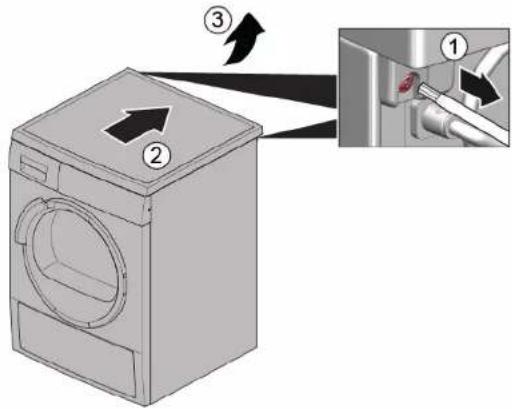
When all else fails, you may need to remove the top panel to manually release the lock from above.
Remove the Top Cover
Steps to follow:
1. Unplug the machine
2. Locate two screws at the rear top edge
3. Remove them with a Phillips or Torx screwdriver
4. Slide the panel backward and lift it off
Now you can see into the drum cavity from above.
Manually Move the Door Hook
Steps to follow:
1. Look down into the front opening and locate the door lock assembly
2. Find the metal hook that extends from the door into the lock
3. Use a flat-blade screwdriver to gently push or lever the hook aside
4. While doing this, have someone pull the door handle from the front
This method requires precision but is highly effective for jammed or broken latches.
Apply the Palm Tap Technique
Sometimes, a simple vibration is enough to free a stuck latch.
Deliver a Firm Hand Tap
What to do:
1. Place your palm flat against the door near the lock
2. Deliver a sharp, firm tap (not a punch, not a push)
3. Focus on the edge opposite the hinge or directly over the latch
4. Try opening the door immediately after
The shock can dislodge debris or free a sticky mechanism. Never use a hammer or tool. This risks cracking the glass or damaging the seal. Repeat 2-3 times if needed.
Handle Brand-Specific Scenarios

Different brands have unique features and release methods. Knowing yours can save time and prevent mistakes.
Samsung: Use AddWash or Pause Correctly
• AddWash models have a small secondary door for adding items mid-cycle
• Do not force the main door
• Press Start/Pause, wait for the blinking light to stop, then open
• If the drum is full or hot, it will not unlock
Bosch/Siemens/Neff: Pull the Bottom Release Tab
• Standard on most models
• Open the bottom flap, pull the red tab down with a screwdriver
• Hold and open the door
• If the tab is missing, use the cord method
Indesit/Zanussi: Check for Hidden Tabs
• Some models have release tabs near the door edge or under a plastic cover
• Gently pry open any suspicious panels near the latch
• Look for a small lever or cord to pull
Whirlpool: Deactivate Child Lock Properly
• Often requires holding two buttons (e.g., Soil Level + Temp) for 3+ seconds
• If unsure, unplug for 15 minutes and retry
Fisher and Paykel: Consult Manual for Release
• Similar to Indesit, many models have internal tabs
• If no tab is visible, top-panel access may be required
Troubleshoot Common Scenarios
Specific situations require targeted solutions. Match your problem to the fix.
Machine Full of Water
Never force the door. Flooding will result.
• Run a Spin/Drain cycle or use the emergency drain hose
• Only attempt manual release once the drum is empty
Power Outage Mid-Cycle
• Wait for power to return
• The lock needs electricity to disengage
• If power is delayed, drain manually and wait for the drum to cool
Broken or Loose Handle
• If the handle wiggles freely, the internal catch is likely broken
• Use the manual release tab or cord method to open
• The handle assembly will need replacement
Door Will Not Open After Cleaning Filter
• The machine may think the filter is open
• Ensure the cap and cover are fully tightened
• Power cycle the machine to reset sensors
Prevent Future Locking Issues
Avoid repeat problems with simple maintenance habits.
Clean the Door Seal and Latch Monthly
What to do:
• Wipe the rubber gasket with a damp cloth
• Remove mold, lint, and soap scum
• Check the metal latch for buildup
• Clean with a dry brush
Buildup can prevent smooth locking and unlocking.
Maintain the Drain Pump Filter
• Clean every 1-3 months
• Remove coins, hair, and debris that block drainage
• A clogged filter prevents draining, keeping the door locked
Do Not Overload or Tilt the Machine
• Overloading stresses hinges and misaligns the door
• Level the machine using adjustable feet
• Uneven placement causes binding
• Leave the door slightly ajar when not in use
When to Call a Professional
Some issues are beyond DIY fixes. Stop and call a technician if:
• All manual methods have failed
• The door glass, frame, or seal is cracked
• You suspect an electrical fault in the lock motor
• You are uncomfortable removing panels or handling internal parts
Forcing the door can lead to costly repairs or safety risks.
Frequently Asked Questions About Opening a Washing Machine Door
Why won’t my washing machine door open after the cycle ends?
The most common reason is the thermal or electronic safety lock. Most machines keep the door locked for 2-5 minutes after a cycle completes to prevent opening during high-speed spins or while internal temperatures are unsafe. Wait a few minutes and try again.
Can I force the washing machine door open if it won’t unlock?
No. Forcing the door open can damage the door seal, break the locking mechanism, misalign the hinge, and void your warranty. Always try the reset methods and manual release techniques first.
How do I open a washing machine door during a cycle?
Press the Start/Pause button to halt the cycle. Wait for the door lock indicator to stop blinking (1-2 minutes). Once it goes steady or off, the door should open. Note that the door will not unlock if water level is above the door seal or if the temperature is too high.
What is the emergency release tab on a washing machine?
Many front-loading washing machines have a hidden emergency release behind a small flap at the bottom front. Pulling this tab (usually red or orange) manually releases the door lock when electronic methods fail. It is found on Bosch, Siemens, Neff, Hotpoint, Indesit, and Zanussi models.
How do I drain water from my washing machine to open the door?
Select the Spin Only or Drain function on your machine and let it run. If that does not work, locate the debris filter at the bottom front, place a tray underneath, and open the small drain plug to manually release the water.
Why does my washing machine door stay locked after a power outage?
The door lock requires electricity to disengage. During a power outage, the control board cannot send the unlock signal. Wait for power to restore, or manually drain the water and use the emergency release tab if needed.
Key Takeaways for Opening a Stuck Washing Machine Door
Most washing machine door lock issues are fixable with patience and the right method. Always start with non-invasive steps: wait 2-5 minutes after the cycle ends, then try a power cycle reset. Check if Child Lock is activated and disable it using the Start/Pause button or brand-specific combination. If the drum is full of water, run a Spin/Drain cycle or use the emergency drain hose before attempting manual release.
Use brand-specific features like manual release tabs on Bosch and Siemens models, or the cord method on other brands. The palm tap technique works well for minor jams. Regular maintenance, including cleaning the door seal and drain pump filter monthly, prevents future locking issues. When all methods fail or if you suspect electrical faults, stop and call a professional to avoid costly damage.