You’ve worn your leather gloves through winter commutes, weekend hikes, and garden work. Now they’re grimy, smelly, or stained—and you’re wondering: Can I just toss them in the washing machine? It’s a common question, especially when time is short and stains are stubborn.
The truth is, leather gloves should not be washed in a washing machine. While some sources suggest it’s technically possible under strict conditions, the overwhelming expert consensus is clear: machine washing risks irreversible damage. Agitation, heat, and standard detergents strip natural oils, cause shrinking, hardening, cracking, and color fading. In most cases, it’s a shortcut that ruins your gloves.
Why Machine Washing Damages Leather Gloves

Leather is not fabric. It’s a natural, porous material with fibers that respond poorly to mechanical force and moisture. Washing machines are designed for cotton and synthetics, not delicate hides.
Leather Structure Breaks Down Under Agitation
Machine agitation pulls, twists, and drags leather, distorting its grain and stressing seams. Even gentle cycles expose gloves to more movement than they can handle. The result is misshapen fingers, split stitching, and surface scarring that cannot be repaired.
Heat and Detergents Strip Essential Oils
Most laundry detergents are alkaline and too harsh for leather. They dissolve the natural fats that keep leather soft and supple. Warm or hot water accelerates this process, leaving gloves stiff and brittle. Once those oils are gone, the leather cannot recover without intensive conditioning treatment.
Water Causes Shrinking and Warping
Leather absorbs water unevenly. Prolonged soaking swells the fibers, and improper drying leads to permanent shrinkage. Unlike fabric, leather does not bounce back. Once it loses its form, it is often unusable.
Color Fades or Bleeds
Agitation rubs dye from the surface. Dark gloves may bleed onto lighter linings. Suede and nubuck are especially prone to water spots and discoloration when exposed to moisture.
Bottom line: Machine washing is a high-risk gamble. For 99% of leather gloves, it is not worth the risk.
The One Exception: When Machine Washing Might Work
There is one narrow scenario where machine washing might be acceptable, but only if all conditions are met perfectly.
Only for Specific Washable Leather Gloves
Some gloves, especially heavy-duty work gloves or washable kidskin, are treated or labeled for machine washing. Check the care tag first. If it says “do not wash,” stop here and use hand cleaning methods instead.
If the care label explicitly permits machine washing, proceed with extreme caution.
Required Machine Washing Protocol
Even if permitted, follow these steps to minimize damage:
• Turn gloves inside out to protect the outer surface from direct friction
• Place gloves inside a zippered mesh garment bag to reduce tumbling
• Use cold water only—never warm or hot
• Select the gentlest cycle labeled “delicate,” “hand wash,” or “wool”
• Use a leather-safe detergent like Lexol, Bick 1, or Chamberlain’s No. 1
• Apply leather conditioner within 24 hours after drying
Important: Even when done correctly, this method is not ideal. It should only be used as a last resort for heavily soiled linings on durable gloves.
How to Hand Wash Leather Gloves Properly
:max_bytes(150000):strip_icc()/how-to-wash-leather-gloves-5270589-08-c0f8647ab1594c67aec958398f467a54.JPG)
Forget the washing machine. These proven hand-cleaning methods protect your gloves while removing dirt, sweat, and stains effectively.
Check Leather Type First
Not all leather is the same. Use this guide to determine your glove type:
• Suede, Chamois, Nubuck: No water saturation. Use dry brushing only
• Full-Grain, Top-Grain, Goatskin: Can handle light damp cleaning
• Kidskin, Deerskin: Delicate. Use minimal moisture
• Pigskin, Buckskin: Tougher, but still avoid soaking
When in doubt, spot test first before applying any cleaner to the entire surface.
Perform a Spot Test
Before applying any cleaning solution:
- Dampen a soft cloth with your cleaning solution
- Rub gently on an inconspicuous area like inside the cuff or a seam
- Wait 5 minutes and check for color transfer, fading, or texture changes
- If no damage occurs, proceed with full cleaning
Brush Off Surface Dirt
Use a natural horsehair brush or soft microfiber cloth to sweep away dust, dry soil, or pollen. For suede, brush in the direction of the nap to lift fibers. Avoid scrubbing—gentle strokes only.
Wipe With Damp Cloth
For light soiling or fingerprints:
- Dampen a microfiber cloth with lukewarm water and wring until barely damp
- Wipe the glove surface gently without rubbing
- Use your hand inside the glove to reach seams and crevices
- Dab dry immediately with a clean towel
Pro Tip: Never soak the leather. Less water is always better.
Soap and Water Deep Clean
For grimy work gloves or stained areas:
- Mix a few drops of pH-neutral soap in a bowl of lukewarm water
- Dip a soft cloth or sponge and wring well
- Gently wipe the glove in circular motions
- Focus on high-wear areas like fingertips, palms, and seams
- Use a separate damp cloth to wipe off soap residue
- Pat dry with a clean towel
Time Estimate: 10 to 15 minutes per pair.
Deep Cleaning Leather Gloves with Saddle Soap
Ideal for gardening, motorcycle, or work gloves that have accumulated heavy grime.
Why Saddle Soap Works
Saddle soap is formulated to lift oil, grease, and deep dirt without over-drying the leather. It has been used for centuries to maintain leather goods.
How to Apply Saddle Soap
- Dampen a cloth or sponge with water
- Rub it on the saddle soap to create a lather
- Massage the lather into the leather using small circular motions
- Let sit 2 to 3 minutes, but do not let it dry completely
- Wipe off with a clean, damp cloth
- Dry thoroughly before conditioning
Frequency: Every 4 to 6 weeks for heavy use, or seasonally for moderate use.
Cleaning Leather Glove Interiors
The inside gets the most wear from sweat and skin oils. Clean it separately from the exterior.
Vinegar Solution for Odor Killing
- Mix equal parts white vinegar and cold water
- Turn gloves inside out
- Lightly spray or wipe the lining—do not soak
- Let sit 20 minutes
- Wipe with a dry microfiber cloth
- Air dry completely before wearing
Why it works: Vinegar kills bacteria and neutralizes odors naturally without leaving chemical residues.
Baking Soda for Oil and Mold
- Sprinkle 1 to 2 tablespoons of baking soda inside each glove
- Shake to coat palms and fingers evenly
- Let sit 3 to 4 hours, or overnight for strong smells
- Turn inside out and brush out powder with a soft brush
- Vacuum remaining powder with an upholstery attachment
Bonus: Baking soda absorbs grease and moisture effectively.
Freeze Method for Sap or Sticky Residue
- Place gloves in a plastic bag
- Freeze overnight
- Once hardened, gently chip off sap or gum with a blunt tool
Works on: Tree sap, tar, chewing gum, and other sticky substances.
Drying Leather Gloves Without Damage
Drying is where most people fail. Heat destroys leather—slow, natural drying is essential for maintaining glove integrity.
Step-by-Step Drying Process
- Blot excess moisture with a clean, absorbent towel
- Lay flat on a dry towel in a well-ventilated room
- Avoid direct sunlight, radiators, or heating vents
- Reshape regularly by putting gloves on your hands every hour
- Stuff with tissue paper to maintain shape during drying
Drying Time: 6 to 12 hours depending on thickness.
Never Make These Drying Mistakes
• Do not use a hair dryer
• Do not place near a heater or radiator
• Do not hang with clothespins
• Do not leave in a hot car
• Do not use a tumble dryer
Heat causes rapid dehydration, leading to cracks and stiffness that cannot be reversed.
Conditioning Leather Gloves After Cleaning
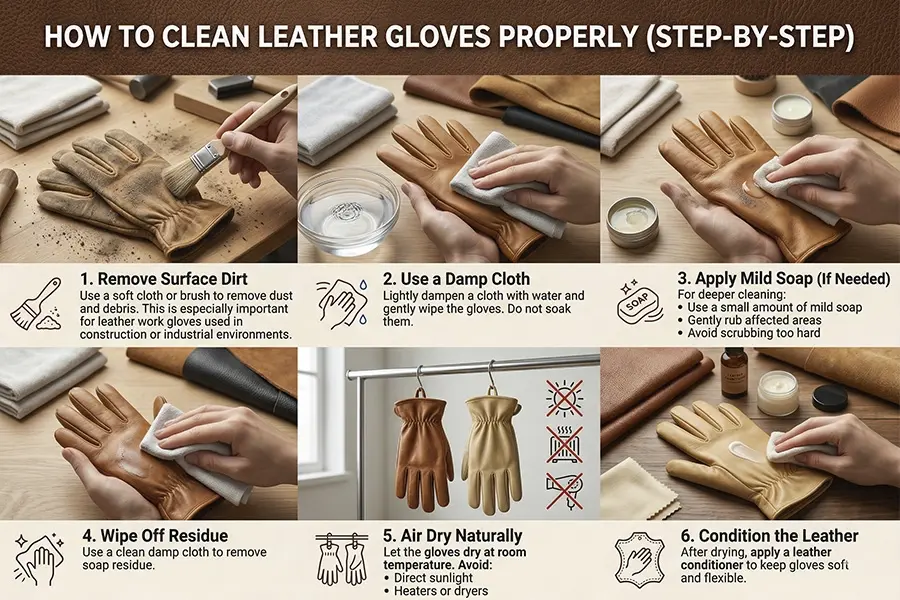
Cleaning removes natural oils. Conditioning replaces them—this step is non-negotiable for maintaining leather quality.
Choose the Right Conditioner
| Leather Type | Recommended Product |
|---|---|
| General Use | Lexol Leather Conditioner |
| Suede/Nubuck | Saphir Omni’Nettoyant or Collonil Suede Spray |
| Goatskin | Bickmore Bick 4 |
| Deerskin | Skidmore’s Leather Cream |
| Work Gloves | Neatsfoot Oil or Mink Oil |
| Pigskin | Chamberlain’s Leather Milk |
How to Apply Conditioner
- Wait until gloves are completely dry
- Put a pea-sized amount on a soft cloth
- Rub in small circles, focusing on stiff or dry areas
- Let absorb for 15 to 30 minutes
- Buff with a clean, dry cloth
Frequency: After every deep clean, or monthly with heavy use.
Storing Leather Gloves for Long-Term Care
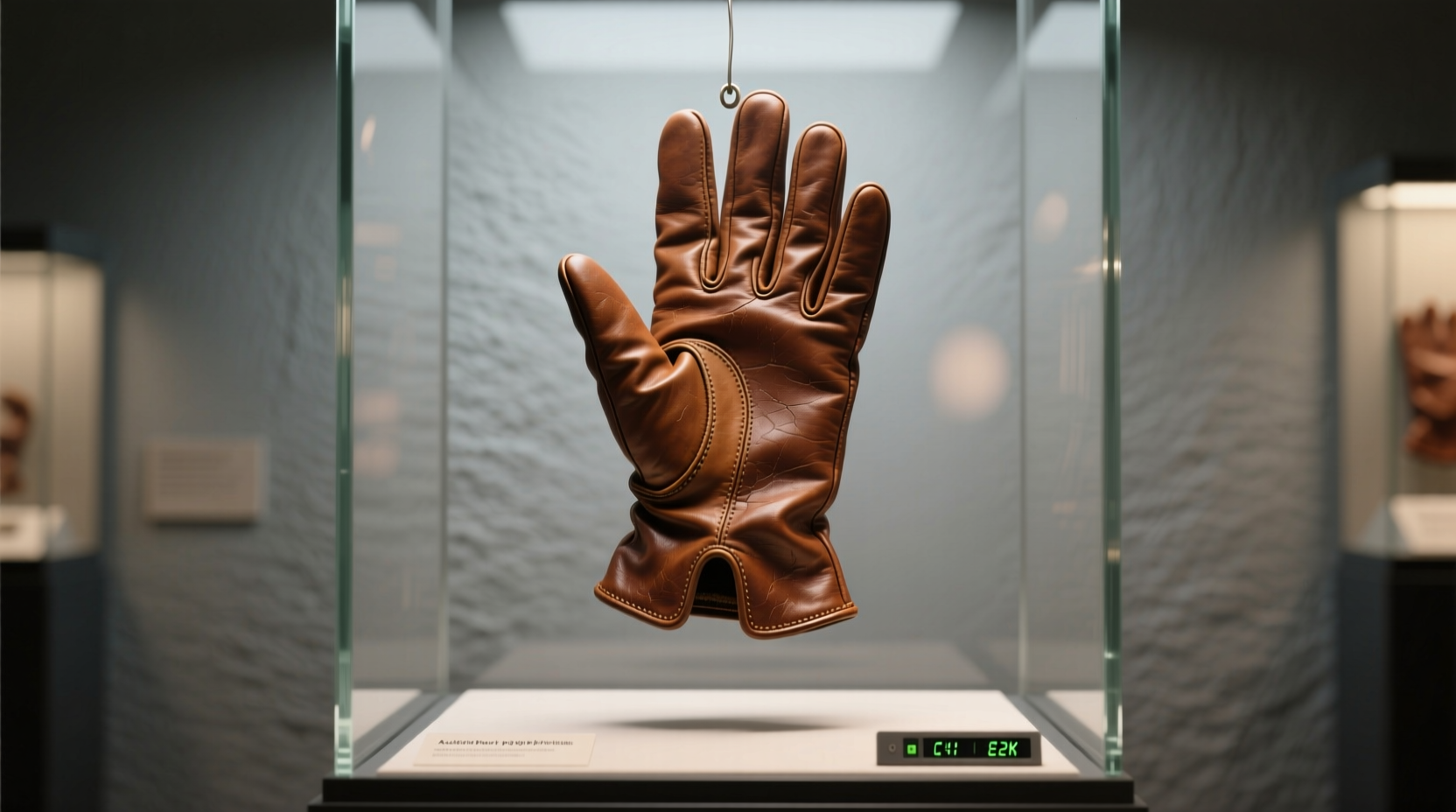
Proper storage prevents mold, dryness, and creasing that shorten glove lifespan.
Ideal Storage Conditions
• Cool, dry, dark place like a drawer or closet
• Away from direct sunlight and humidity
• Lay flat or hang by cuffs if designed for hanging
• Stuff with tissue paper to maintain shape
Seasonal Storage Tip
Before storing for months, clean and condition gloves thoroughly. Add a sachet of silica gel packets to absorb excess moisture and prevent mold growth.
Frequently Asked Questions About Washing Leather Gloves
Can I wash leather gloves in a washing machine at all?
Only if the care label explicitly permits machine washing. Even then, use cold water, a delicate cycle, a mesh bag, and leather-specific detergent. This method carries significant risk and should be a last resort.
What happens if I machine wash leather gloves incorrectly?
Machine washing can cause irreversible damage including shrinking, hardening, cracking, color fading, and loss of shape. The heat and agitation strip essential oils from the leather, leaving it brittle and unwearable.
How do I clean the inside of leather gloves?
Turn gloves inside out and use a vinegar solution (equal parts water and white vinegar) to kill bacteria and neutralize odors. Alternatively, sprinkle baking soda inside, let sit for several hours, then brush out thoroughly.
Can I use regular laundry detergent on leather gloves?
No. Regular laundry detergents are too alkaline and strip natural oils from leather. Use only pH-balanced leather cleaners like Lexol, Bick 1, or Chamberlain’s No. 1.
How often should I condition leather gloves?
Condition leather gloves after every deep clean, or monthly with regular use. Conditioning restores oils removed during cleaning and prevents cracking and stiffness.
What is the best way to remove oil stains from leather gloves?
Sprinkle cornstarch or talcum powder on the stain and let sit overnight to absorb the oil. Brush off in the morning and repeat if necessary before conditioning the area.
Key Takeaways for Cleaning Leather Gloves
Leather is an investment. Treat it with care, and it will reward you with unmatched comfort and durability for years to come.
The bottom line: Skip the washing machine shortcut. Instead, follow this proven routine for glove longevity:
- Spot test any cleaner on an inconspicuous area first
- Clean by hand using a damp cloth, mild soap, or saddle soap
- Deodorize the interior with vinegar or baking soda
- Dry slowly at room temperature away from heat sources
- Condition immediately after drying to restore essential oils
This method preserves the leather’s softness, shape, and color, extending the life of your gloves from months to 5 or more years with regular care. Your gloves—and your hands—will thank you for the extra effort.