Putting a leather bag in the washing machine might seem like a quick fix for a dirty purse, but it’s a risky move that could ruin your favorite accessory. While some cleaning enthusiasts claim success using gentle cycles and natural soaps, leather experts warn against it. The truth is that washing a leather bag in the machine is not recommended, but if you’re determined to try, there are strict rules to follow to minimize damage.
Leather is a natural, porous material designed to breathe, not endure spin cycles and detergent. When soaked and agitated, it can warp, shrink, crack, or bleed color permanently. Metal hardware can rust, stitching can unravel, and the soft texture you love can turn stiff and lifeless. This guide breaks down the real risks, shares the only method that might work, and offers safer alternatives to clean your bag without sacrificing its lifespan.
Why Machine Washing Damages Leather

Before hitting start, understand what your washing machine can do to leather. Unlike cotton or polyester, leather reacts poorly to water, agitation, and detergent, three things every wash cycle delivers.
Water Causes Leather to Warp and Shrink
Leather absorbs water like a sponge. During a wash, it swells as moisture penetrates deep into the fibers. Then, during the spin cycle, rapid dehydration can cause uneven shrinking. The result is a misshapen, stiff bag that no longer holds its form. Once distorted, leather rarely bounces back.
Detergent Strips Natural Oils
Leather stays soft thanks to natural oils within its fibers. Standard laundry detergents, especially those with enzymes or bleach, strip these oils away. Without them, leather dries out, becomes brittle, and cracks easily. Unlike fabric, leather cannot regenerate these oils on its own.
Color Bleeding and Fading
Many leather dyes are not water-resistant. Cold water helps, but even then, color can run, especially on dark or red bags. This ruins the bag’s appearance and can stain other items in the same load. Once faded or streaked, color damage is usually permanent.
Hardware and Stitching Get Damaged
Zippers, clasps, and metal logos can corrode when exposed to water and soap. Over time, this leads to rust, tarnishing, or breakage. Meanwhile, the tumbling action can fray seams or pop stitches, especially on older bags. A single loose seam can lead to complete structural failure.
Faux Leather Warps Even Faster
Faux leather is not safer. It is often worse. Made from plastic-coated fabric, it tends to crease, bubble, or crack when wet and agitated. High heat from drying can melt or harden the coating, leaving permanent damage. Never assume synthetic means machine-washable.
When Machine Washing Might Be Worth the Risk
Despite the risks, there are rare cases where machine washing might be considered, but only under strict conditions.
Only for Low-Value, Heavily Soiled Bags
If your bag is old, grimy, and no longer in regular use, machine washing becomes a last-resort option. Think of a thrift-store find caked in dirt or a bag you were planning to donate. Never attempt this on designer, vintage, or sentimental pieces.
Unstructured Leather Has Better Odds
Soft, floppy leather bags without internal frames or stiff lining have a better chance of surviving a machine wash. Structured bags rely on shape integrity. Once waterlogged, they may never regain their form.
You Must Accept Full Risk
You must be okay with the possibility of total loss. Even following all precautions, results vary. Some bags come out fine. Others are destroyed. There is no guarantee.
How to Wash a Leather Bag in the Machine (At Your Own Risk)
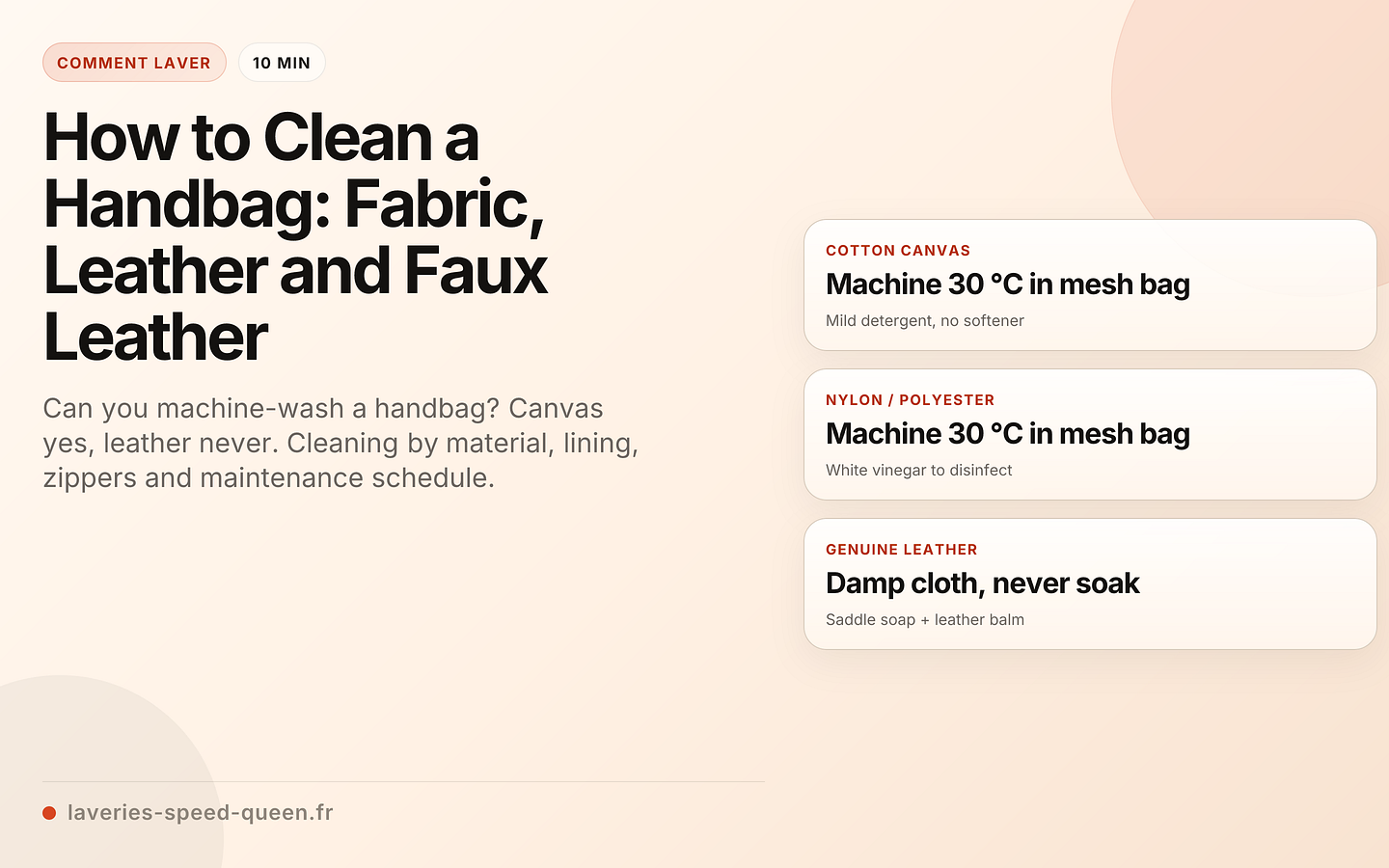
If you accept the risk, here is the only method reported in anecdotal successes, based on real cleaning trials using controlled variables.
Empty and Isolate the Bag Completely
Remove all contents. Take out wallets, keys, tissues, and any inserts. Wash the bag alone, never with other clothes. This prevents color transfer and reduces physical impact from tumbling items. If cleaning multiple similar bags, wash them together in a mesh laundry bag for added protection.
Use Gentle, Oil-Based Soap Only
Never use regular detergent. Choose one of these options instead. Use approximately one-quarter cup of Murphy’s Oil Soap, which cleans without aggressively stripping oils. Alternatively, use Castile soap, a plant-based, pH-balanced alternative. Both are milder than laundry detergents and slightly nourishing. Avoid anything with bleach, enzymes, or strong fragrances.
Set Machine to Cold and Delicate
Use these exact settings for the best chance of success. Select the Delicate, Hand Wash, or Gentle cycle. Set water temperature to cold only. Choose the lowest spin speed if adjustable. Warm or hot water increases shrinkage and dye loss. High agitation damages fibers and seams.
Limit Wash Time to Under 10 Minutes
Keep the cycle short. If your machine allows, skip the rinse and spin cycles. The less time submerged, the lower the water absorption. Prolonged exposure to water is what causes most of the damage.
The Critical Drying Step
How you dry the bag matters more than the wash itself. Rushing this step causes cracking, warping, and stiffness that cannot be reversed.
Air Dry at Room Temperature
Lay the bag flat on a clean towel in a well-ventilated, shaded area. Reshape it gently to maintain its original form. Flip it every few hours to ensure even drying. This process can take 24 to 48 hours. Be patient. Rushing leads to permanent damage.
Optional Low-Heat Tumble Dry With Caution
Some users report brief tumble drying, 3 to 5 minutes, on low heat with 2 to 3 clean towels. The towels absorb moisture and cushion the bag. Never leave it unattended. Remove immediately if the bag feels warm. Do not use this method for faux leather or bags with glued components.
Never Use Direct Heat Sources
Avoid radiators, hairdryers, sunlight, or heaters. Rapid drying pulls moisture too fast, causing the leather to crack. Even warm air can damage delicate fibers. Patience is the key to successful drying.
Safer Alternatives to Machine Washing

For most leather bags, manual cleaning is faster, safer, and more effective than any machine method.
Spot Clean With a Damp Cloth
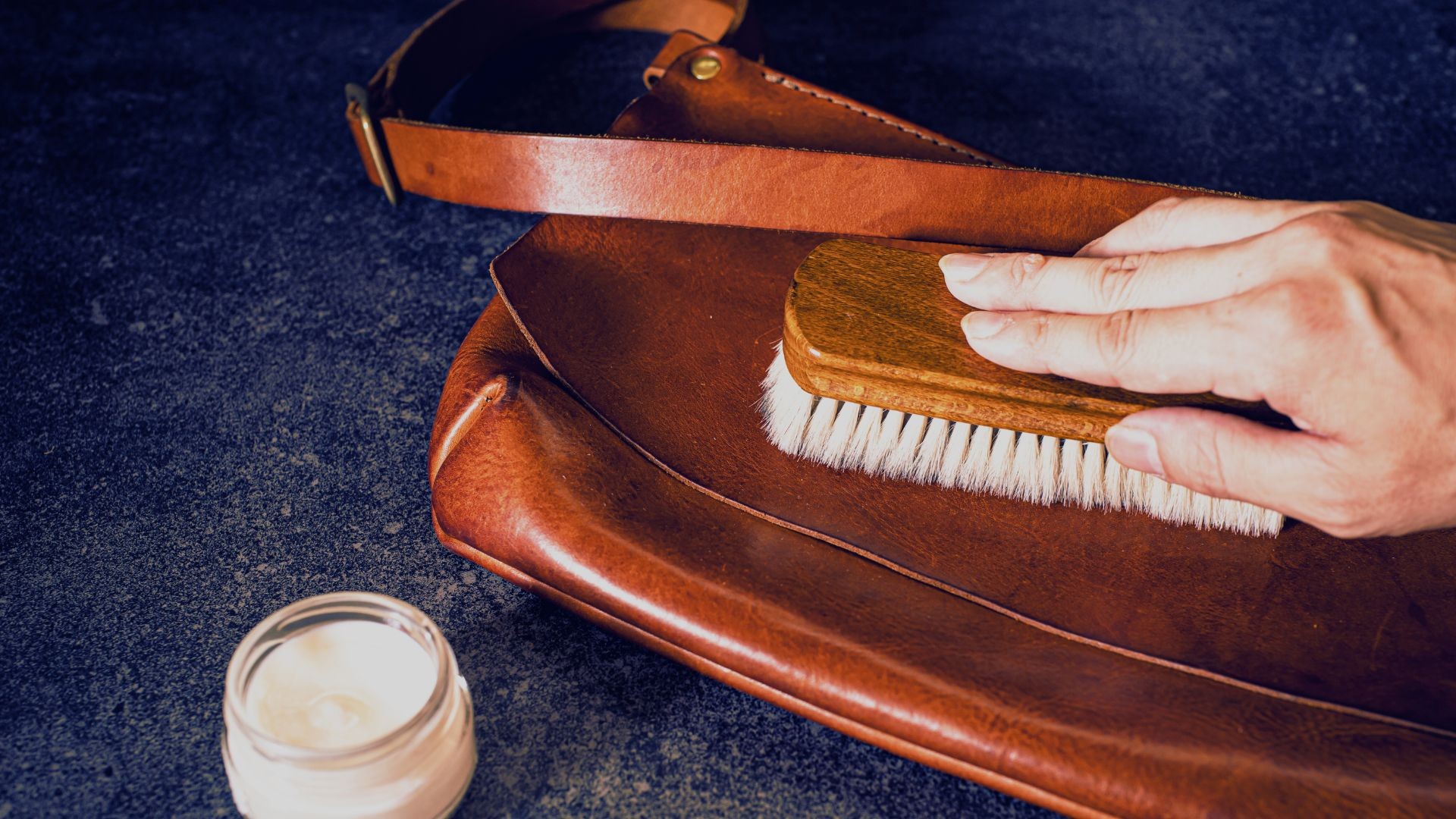
For light dirt or spills, dampen a soft microfiber cloth with water. Wipe the surface gently in circular motions. Dry immediately with a second clean cloth. Never saturate the leather. This method removes surface grime without risking structural damage.
Use pH-Balanced Leather Cleaner
For deeper cleaning, test the cleaner on a hidden area first, like the bottom or inside pocket. Apply a small amount to a lint-free cloth. Clean in small sections using light pressure. Wipe off residue with a damp cloth, then dry. Choose a cleaner formulated for your specific leather type, whether genuine, suede, or nubuck.
Condition After Every Clean
Cleaning removes natural oils. Replenish them within 24 hours. Apply a pea-sized amount of leather conditioner. Rub in with fingers or a soft cloth using circular motions. Let absorb for 15 to 30 minutes, then buff lightly. Regular conditioning every 3 to 6 months prevents drying and extends bag life significantly.
Apply a Protective Spray
Use a leather protectant to guard against future stains and water spots. Spray evenly from 6 inches away. Let dry completely before using the bag. Reapply every few months. This is ideal for bags used daily or in rainy climates.
When to Call a Professional
Some situations demand expert care, not DIY risks.
High-Value or Designer Bags Need Special Care
Louis Vuitton, Coach, Gucci, or vintage pieces should never be machine washed. Professionals use specialized solvents and techniques to clean without damage. The cost of professional cleaning is far less than replacing a ruined designer bag.
Stubborn Stains or Odors Require Experts
Ink, oil, or mildew require targeted treatments. Home remedies can set stains deeper, making them permanent. A professional cleaner diagnoses the issue and applies the correct solution. This is often the difference between saving and ruining your bag.
Suede and Nubuck Are Extremely Sensitive
These textured leathers are extremely sensitive to water. Water mats the nap permanently, ruining the texture. Use a suede brush and eraser instead, or visit a specialist. UGG, for example, advises professional cleaning for their sheepskin products.
Unknown Leather Type Means Stop
If you do not know whether it is real, faux, or treated leather, do not guess. When in doubt, go gentle. Spot clean, condition, or consult a professional. Guessing leads to permanent damage.
Material-Specific Cleaning Recommendations

Not all leather is the same. Here is how to handle the most common types.
Genuine Leather
This is the most common type. It can tolerate light cleaning but never machine wash unless you accept the risk. Use a damp cloth and conditioner for regular maintenance.
Suede and Nubuck
Avoid water entirely. Use a suede brush and eraser. Never machine wash these materials. Water causes permanent damage to the nap.
Faux Leather
This material is prone to cracking and warping. Clean with a damp cloth and mild soap. Never submerge or use heat. The plastic coating breaks down easily.
Patent Leather
This glossy finish wipes clean with a slightly damp cloth. Then buff with a dry cloth. Avoid oils and conditioners, which can damage the shine.
Final Verdict on Machine Washing Leather Bags
Do not wash a leather bag in the washing machine. The risks far outweigh the benefits. Even with the gentlest settings, you are gambling with water absorption, oil loss, and mechanical stress, all of which degrade leather over time.
The only acceptable case is a low-value, unstructured leather bag that is already heavily soiled and not worth professional cleaning. Even then, results are unpredictable. Your leather bag is an investment. While machine washing might sound convenient, it is a shortcut that often leads to permanent damage.
Stick to gentle manual methods or professional services to keep your bag looking great for years. If you do attempt machine washing, treat it as an experiment, not a solution.
Frequently Asked Questions About Washing Leather Bags
Can I wash a leather bag in the washing machine?
You can, but you should not. Most leather experts recommend against it due to risks of shrinking, cracking, color bleeding, and hardware damage. If you must try, use cold water, gentle soap, and the delicate cycle, and accept that damage may occur.
What happens if I wash leather in the washing machine?
Leather can shrink, warp, lose its natural oils, crack, and bleed color. Metal hardware may rust, and stitching may loosen or break. The results are often irreversible, leaving your bag permanently damaged.
What is the safest way to clean a leather bag?
Spot clean with a damp cloth for light dirt. Use a pH-balanced leather cleaner for deeper cleaning. Always condition after cleaning. For valuable or heavily soiled bags, hire a professional leather cleaner.
Can I put a faux leather bag in the washing machine?
No. Faux leather is prone to warping, creasing, and cracking in the washing machine. The plastic coating often peels or melts. Clean faux leather by wiping with a damp cloth and mild soap instead.
How often should I condition my leather bag?
Condition your leather bag every 3 to 6 months, or more often if you use it daily or live in a dry climate. Regular conditioning prevents drying, cracking, and extends the life of your bag.
Can I dry my leather bag in the dryer?
Never tumble dry leather. The heat causes shrinking, cracking, and warping. Air dry at room temperature instead, reshaping the bag as it dries. Keep it away from direct heat sources like radiators or sunlight.
Key Takeaways for Cleaning Your Leather Bag
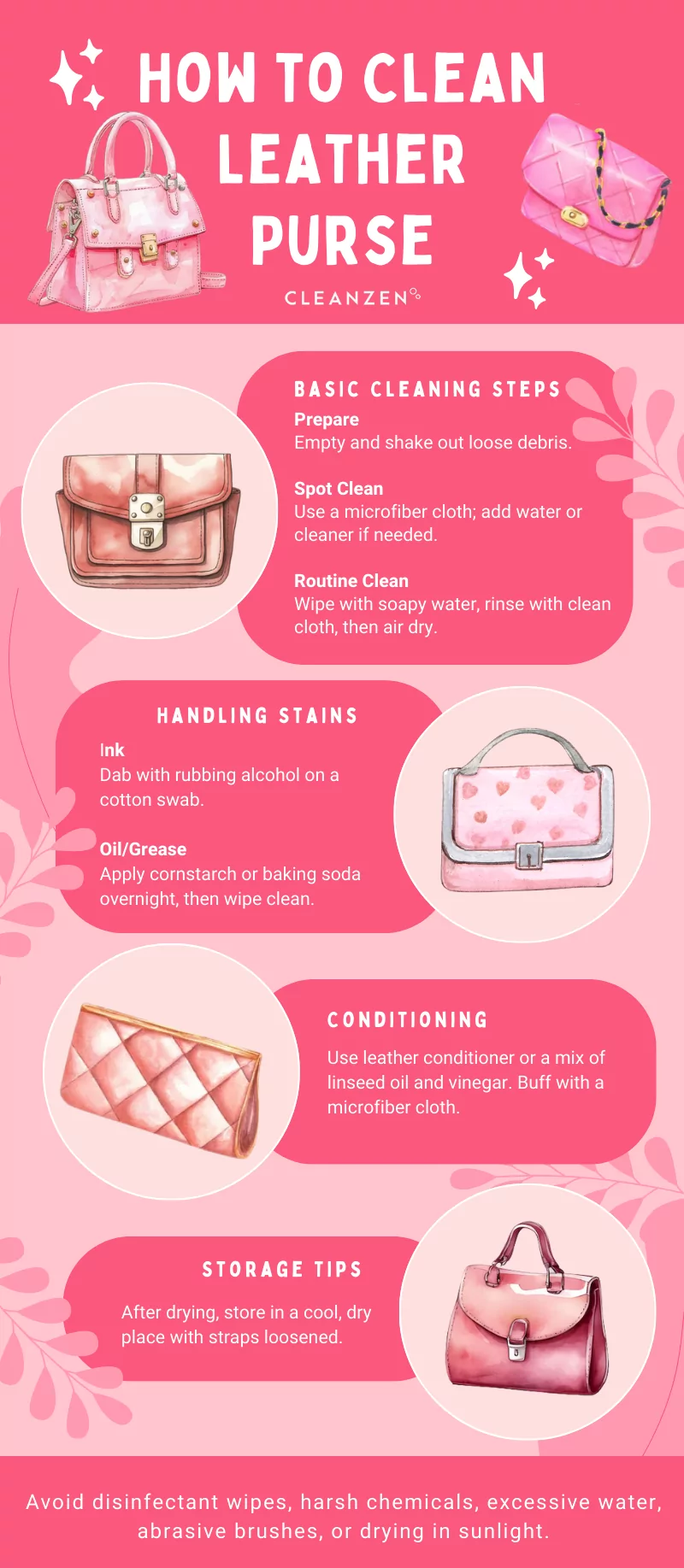
Machine washing a leather bag carries significant risks that often outweigh any convenience. Water causes leather to swell, shrink, and lose its shape permanently. Detergents strip the natural oils that keep leather soft and supple. Color bleeding, hardware rusting, and stitching damage are common outcomes.
The only scenario where machine washing might be acceptable is for low-value, unstructured bags that are already heavily soiled and not worth professional cleaning. Even then, use cold water, gentle oil-based soap, and the delicate cycle. Air dry only, never using direct heat.
For most leather bags, stick to safer methods. Spot clean with a damp cloth, use pH-balanced leather cleaners, and condition regularly every 3 to 6 months. Apply a protective spray to prevent future stains. For designer bags, vintage pieces, or stubborn stains, hire a professional cleaner. Your leather bag is an investment worth protecting with proper care.