You load up your GE washing machine, press start, and walk away, only to return to soaking wet clothes. The drum did not spin. It is frustrating, especially when you are on a tight schedule. But here is the good news: 90% of GE washing machines that will not spin have simple, fixable issues, most under $50 and solvable in less than 30 minutes. You likely do not need a technician.
The spin cycle is blocked by safety systems. If the lid is not sealed, water remains, or a belt breaks, the machine locks out spinning to prevent damage. This guide walks you through step-by-step fixes for every common cause, from faulty lid switches to clogged pumps. Whether you are dealing with a GTW460ASJ7WW or any other GE model, you will learn how to diagnose, repair, and prevent spin failures, saving time, money, and stress.
Identify Your Exact Symptom First
Before tearing anything apart, identify your exact issue. Match what your washer is doing to these common patterns.
Washer Fills and Agitates But Drum Never Spins
If your GE washer fills with water and agitates but the drum never spins, the lid switch or door lock is the most likely culprit, responsible for 50% of no-spin cases. This safety sensor tells the machine the lid is closed. If it fails, the spin cycle is blocked.
Quick Check: Open and close the lid. Does the interior light turn off immediately? If it stays on or flickers, the switch may be bad. Also, listen for a click when closing. No click? Likely a faulty switch.
Spin Starts Then Stops Abruptly
Does the drum spin for 5 to 7 seconds then halt? This points to a speed sensor failure or slipping drive belt. The control board detects no drum movement and cancels the cycle.
What to Do: Unplug the machine and inspect the drive belt. Look for cracks, glazing, or looseness. If the belt looks fine, the speed sensor may be dirty or damaged.
Clothes Come Out Soaking Wet
If clothes come out drenched, first rule out an unbalanced load. Heavy items like towels bunched on one side trigger imbalance sensors, stopping the spin.
Fix: Pause the cycle, redistribute clothes evenly, and restart. Reduce the load size by 25%. If the problem persists, check the drive belt or motor coupling.
No Motor Noise During Spin
When the drum will not spin and you hear no motor hum, the motor coupling may be broken. This part is designed to fail under stress to protect the motor.
Visual Clue: Open the cabinet. If you find broken plastic pieces near the motor, the coupling has failed.
Gurgling Sound With Water Not Draining
A gurgling noise during the spin attempt means water is still in the tub. GE washers skip spinning if water remains to avoid damaging bearings.
Cause: Clogged drain pump, filter, or kinked hose. Check the pump filter, a common trap for socks, coins, and lint.
Fix the Lid Switch or Door Lock

This is the number one cause of GE washers not spinning. The lid switch or door lock must signal closure before spin engages.
Test Lid Switch with a Multimeter
- Unplug the washer.
- Locate the switch, usually under the top casing near the lid opening.
- Disconnect wires from the switch, noting their positions.
- Set multimeter to continuity.
- Test the wires per your model diagram.
- No beep when closed? Replace the switch.
Pro Tip: Some models let you test by manually pressing the plunger. If the pump runs but spin does not start, the switch is faulty.
Replace Door Lock on Front-Load Models
Front-loaders use an electronic door lock. If the door does not click shut or the light flashes, it is likely failed.
Steps: Unplug washer, remove top panel, then front upper panel. Disconnect lock wiring. Unscrew and remove old lock. Install new one matching your part number. Reassemble.
Cost: $20 to $40. Time: 15 minutes. Difficulty: Easy.
Never bypass this switch. It is a critical safety feature.
Inspect and Replace the Drive Belt
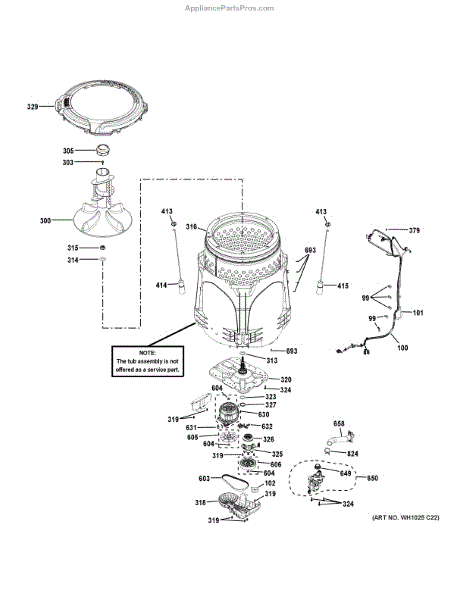
A broken or worn drive belt stops power from reaching the drum. Responsible for 35% of spin failures, this is the second most common issue.
Find and Check the Belt
- Unplug washer.
- Lay it on its side with a tarp protecting your floor.
- Remove back panel on top-loaders or front lower panel on front-loaders.
- Locate the belt looping between motor and drum pulley.
Look for: Cracks, fraying, or missing chunks. Glazing, which is shiny hardened rubber. Slack or misalignment. Black rubber dust, which is a sign of wear.
If broken: Replace immediately.
Install New Drive Belt
- Order correct belt for your model.
- Loop new belt around motor and drum pulleys.
- Ensure grooves align. Do not twist.
- Reattach panels.
Pro Tip: Use a pulley puller if removing the pulley. Never hammer it. Shaft damage can cost 200 dollars or more in transmission repairs.
Cost: $15 to $40. Time: 20 minutes. DIY Save: 100 to 200 dollars versus professional repair.
Clear Clogged Drain Pump and Filter
Standing water in the tub? The washer skips spinning. A clogged drain pump or filter is often the reason.
Clean the Pump Filter on Front-Loaders
- Place towels and a pan under the lower front access panel.
- Open the panel.
- Unscrew filter cap slowly. Water will drain.
- Remove debris like socks, coins, and hair.
- Check impeller. Spin it. If stuck, clear with a small drill bit turned by hand.
- Reinstall filter.
Clean monthly to prevent spin lockouts.
Check the Drain Hose
Ensure the hose is not kinked. Ensure it is not inserted more than 4 inches into the standpipe, which causes siphoning. Ensure it is not clogged.
Test: Blow through it. If air does not pass, clear with a plumber snake.
Pump Replacement: If the pump hums but water does not move, the motor is seized. Replace the pump.
Clear the Water Level Tube

This small rubber tube connects the tub to the pressure switch. If clogged with soap scum, the machine thinks the tub is full even when drained, so it skips spin.
Clear the Pressure Tube
- Unplug washer.
- Locate tube running from tub to control board.
- Disconnect from tub end.
- Blow hard through it. If blocked, resistance or no airflow confirms clog.
- Clear with pipe cleaner or small drill bit.
- Reconnect.
Cost: Zero. Time: 5 minutes. Highly effective for silent spin failures with no error codes.
Test and Replace the Speed Sensor
If the spin starts and stops after 5 to 7 seconds, the speed sensor may be faulty. It tells the control board the drum is rotating.
Diagnose Sensor Failure
- Enter diagnostic mode per your model instructions.
- Check for fault codes like Sens or E3.
- Inspect sensor location near motor or drum shaft.
- Look for damage, corrosion, loose wires, or debris.
Fix: Replace sensor only. Avoid expensive harness kits.
- Order sensor for 20 to 30 dollars.
- Splice into existing wiring.
- Secure connections.
Save over 100 dollars by not buying full kit.
Replace Failed Motor Coupling
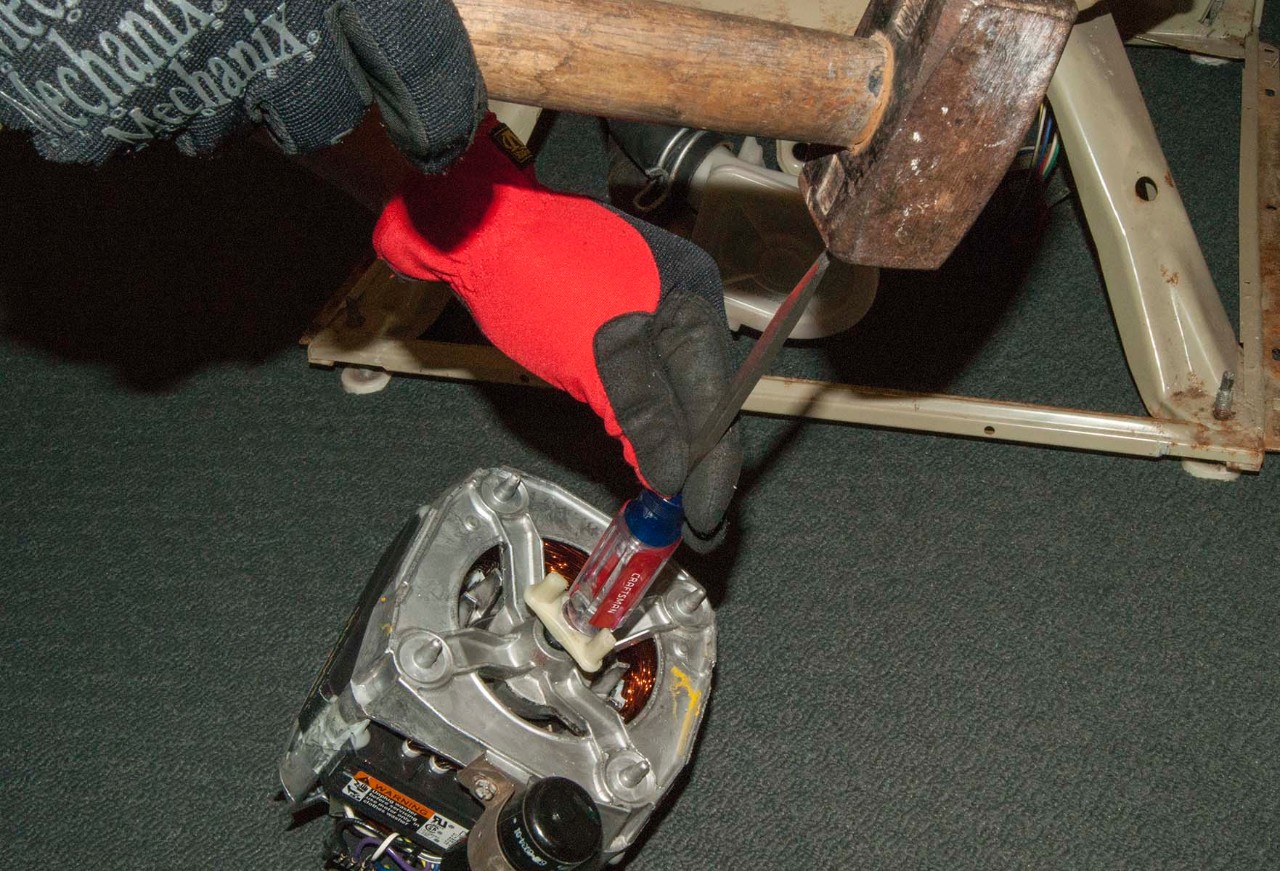
Found broken plastic pieces under the washer? The motor coupling has failed. Common in older GE models.
Confirm Coupling Failure
- Unplug washer.
- Remove cabinet.
- Inspect coupling between motor and transmission.
- Check for cracked rubber or broken plastic fins.
If damaged, replace.
Install New Coupling
- Order correct part, typically 10 to 30 dollars.
- Remove motor slightly to access.
- Slide off old coupling.
- Press on new one.
- Reassemble.
Time: 45 minutes or more. Difficulty: Medium. Professional repair cost: 150 to 300 dollars.
Reset the Control Board
After a power surge, the control board can glitch, blocking the spin cycle.
Perform a Hard Reset
- Unplug washer or turn off breaker.
- Wait 10 minutes. This fully discharges capacitors.
- Plug back in.
- Restart cycle.
For some models: Try a lid-lift reset by opening and closing the lid 6 times within 12 seconds.
If error codes persist, investigate further.
Decode GE Error Codes
Error codes narrow down the issue quickly.
| Code | Meaning | Action |
|---|---|---|
| F02 | Drain error | Clear pump, check hose |
| F04 | Water inlet issue | Check supply valves |
| F06 or LE | Door lock failure | Test or replace lock |
| F10 | Control board fault | Reset. If persists, replace |
| UE | Unbalanced load | Redistribute clothes |
| E1 or E2 | Sensor or control fault | Reset, retest, check wiring |
Never ignore codes. They point directly to the system at fault.
Prevent Future Spin Failures
Avoid repeat issues with simple maintenance.
Monthly Tasks: Clean drain pump filter on front-loaders. Wipe door gasket to prevent mold. Run vinegar cycle to clear residue. Check detergent drawer for buildup.
Annual Checks: Inspect drive belt for wear. Verify washer is level using a bubble level. Adjust legs if wobbling. Test lid switch response.
Load Best Practices: Do not overload. Fill no more than three-quarters full. Balance heavy items with smaller ones. Remove shipping bolts if still installed, as they cause vibration and spin lockouts.
Repair or Replace? Make the Smart Choice

Before spending hundreds, decide: fix it or buy new?
Repair If: Machine is under 8 to 10 years old. Repair cost is less than 50% of new unit price. Only one major component is faulty.
Example: A 40-dollar belt on a 5-year-old washer? Definitely repair.
Replace If: Machine is over 10 years old. Control board or transmission failure. Second major repair in two years.
Example: A 350-dollar control board on a 12-year-old washer? Replace.
Frequently Asked Questions About GE Washing Machines Not Spinning
Why does my GE washer fill with water but not spin?
The most likely cause is a faulty lid switch or door lock. This safety component tells the machine the lid is securely closed. If it fails, the spin cycle is blocked to prevent injury. Test the switch with a multimeter and replace if defective.
How much does it cost to fix a GE washing machine that will not spin?
Most common repairs cost between 15 and 50 dollars for parts. A lid switch costs 20 to 40 dollars. A drive belt costs 15 to 40 dollars. Professional repair adds 100 to 200 dollars in labor, so DIY saves significant money.
Can I run my GE washing machine without spinning to drain it?
No. GE washers are designed to skip the spin cycle if water remains in the tub to prevent motor and bearing damage. If water will not drain, the machine will not spin. You must clear the drain pump filter or hose blockage first.
How do I reset my GE washing machine control board?
Unplug the washer or turn off the breaker. Wait 10 minutes to fully discharge the capacitors. Plug back in and restart the cycle. Some models also respond to a lid-lift reset, opening and closing the lid 6 times within 12 seconds.
Why does my GE washer spin for a few seconds then stop?
This typically indicates a failed speed sensor or slipping drive belt. The sensor detects drum rotation. If it sends no signal, the control board halts the cycle. Inspect the belt for wear and test the speed sensor with a multimeter.
Key Takeaways for Fixing Your GE Washing Machine
Most GE washing machines that will not spin suffer from simple, low-cost issues. The lid switch or door lock causes 50% of all spin failures, followed by worn drive belts at 35%. Both are inexpensive to replace and can be fixed in under 30 minutes with basic tools. Always unplug the machine before working, test components with a multimeter, and use only OEM parts for reliable repairs. With this guide, you have the knowledge to fix it fast, no technician needed. Get that drum spinning again and enjoy dry clothes on the first try.