Washing a rubber backed rug in the washing machine might seem like a quick fix for a dirty doormat or kitchen runner, but it is a decision that can cost you more than just clean floors. Many homeowners have learned the hard way: when rubber disintegrates mid-cycle, it does not just ruin the rug. It can clog pumps, destroy drain lines, and leave you with a flooded laundry room. While some small, synthetic rubber backed rugs can survive a machine wash, the risks are real and often outweigh the convenience.
The key to safely cleaning these rugs lies in three factors: checking the care label, knowing the material, and following strict washing rules. Not all rubber backed rugs are created equal. Those made with wool, jute, silk, or shag fibers should never go near a washing machine. Even for safe materials like cotton or polyester, heat, harsh detergents, and high spin speeds can damage the rubber backing or cause irreversible warping.
Check the Care Label Before Washing

The care label is your single most important reference before attempting any wash. If the tag says hand wash only or does not specify machine washing, do not risk it. Washing an unlabeled or non-machine-washable rubber backed rug can lead to rubber backing breaking apart, permanent damage to fibers, and costly washing machine repairs. Only proceed if the label clearly states machine washable.
Confirm Machine Washability
Before doing anything, check the manufacturer care tag. This step determines whether your rug can survive the agitation and water exposure of a washing machine. Some rugs have labels that explicitly warn against machine washing, and ignoring this warning voids any chance of saving the rug or protecting your appliance.
Identify Fiber Type
Not all fibers tolerate machine washing. Safe options include cotton, polyester, nylon, polypropylene, acrylic, and chenille. Unsafe materials include wool, silk, jute, and shag rugs. Wool and natural fibers absorb water heavily, become misshapen, and may felt during agitation. Shag rugs tangle easily and pull apart. Stick to synthetic or tightly woven cotton rugs for machine cleaning.
Prep the Rug Properly
Dirt trapped under the rug turns into mud during washing and clogs your machine. Always vacuum thoroughly before washing to prevent this.
Vacuum Both Sides
Use no beater bar because it can fray edges or pull fibers loose. Flip the rug and vacuum the rubber side to remove grit. For large rugs, shake outdoors first to dislodge dust. This two-sided vacuuming ensures loose debris does not become trapped mud during the wash cycle.
Spot Clean Stains
Treat stains before machine washing by mixing mild soap with water, dampening a cloth, and blotting the stain without rubbing. Let the solution sit for five to ten minutes, then blot with a clean, damp cloth to remove residue. Always test the cleaner on a hidden corner first to ensure colorfastness.
Deodorize with Baking Soda
For smelly bathroom or entryway mats, sprinkle baking soda over the surface, wait fifteen minutes, and vacuum completely. This lifts odors and breaks up surface grime without damaging rubber. Baking soda is a gentle deodorizer that will not harm the backing when vacuumed away.
Use the Right Washing Machine Settings

Overloading causes imbalance and stress on the machine and the rug. Wash one rug at a time and add two to three clean towels to balance the load. Ensure the drum is not packed. Leave room for movement so the rug can agitate freely.
Load Strategically
Never force a large rug into a small washer. The weight of a soaked rug can throw off the balance of the entire load, causing the washing machine to shake violently or stop mid-cycle. Smaller rugs work best in standard residential machines.
Choose Cold Water Only
Hot water melts rubber. Always use cold water to protect the backing from warping, cracking, or losing grip. Warm water may seem gentle, but even slight heat weakens the bond between fiber and rubber over time. Cold water is non-negotiable for rubber backed rugs.
Select Gentle Cycle
Use the delicate, hand wash, or light cycle setting with low agitation. Avoid heavy-duty cycles, extra spin, or turbo wash options. These create too much friction and can tear the backing loose from the fiber layer.
Use Safe Detergents Only
Certain cleaners destroy rubber and should never be used on these rugs.
Avoid Harmful Chemicals
Never use bleach because it causes rubber to crack and fades colors. Skip fabric softener because it leaves residue that degrades rubber. Avoid lanolin-containing products because they break down rubber backing. Steer clear of harsh solvents or stain removers that can weaken the rubber bond.
Use Mild Detergent
Stick to liquid or powder mild laundry detergent that is lanolin-free and bleach-free. Use a small amount because excess suds do not rinse well and leave buildup on both the fibers and the rubber backing.
Skip the Spin Cycle
High-speed spinning twists and stretches the rubber, potentially separating it from the fabric layer. If possible, disable the spin cycle entirely or select the lowest spin speed available. After washing, gently press the rug to remove water instead of spinning.
Prevent Backing Damage
The rubber backing is designed for floor grip, not mechanical stress. Aggressive spinning can tear the rubber or cause it to separate from the rug surface entirely. This damage is irreversible and ruins the rug.
Dry Flat, Not in the Sun
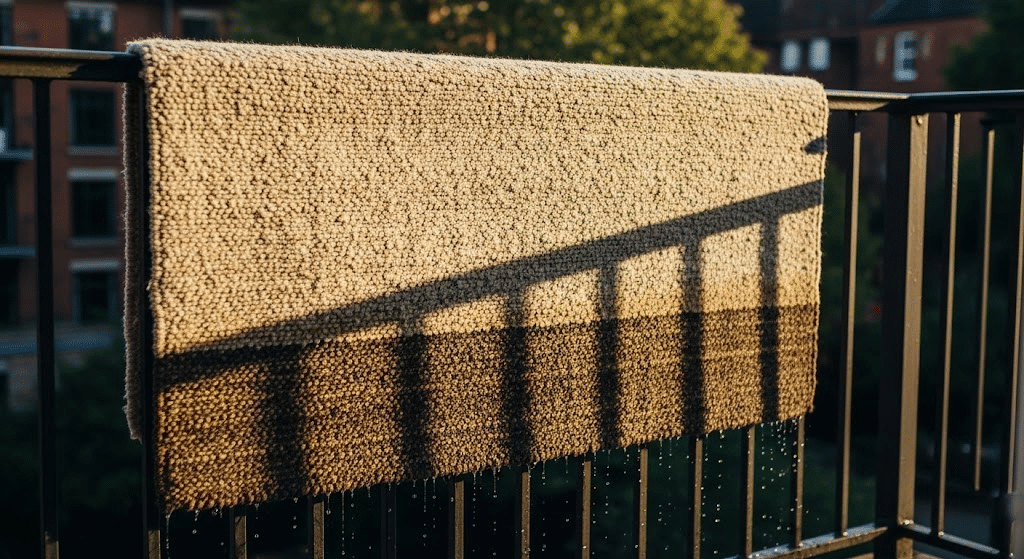
Drying is just as critical as washing. Lay flat on a clean surface or hang over a railing, but never by one corner alone. Ensure good airflow to prevent mildew from forming in the damp fibers.
Air Dry Indoors or in Shade
Never dry in direct sunlight because UV rays degrade rubber, making it brittle and prone to crumbling. Choose a shaded, well-ventilated area indoors for the safest drying results.
Never Wring or Twist
Wringing destroys the rubber backing. Instead, press down with your hands to squeeze out water, then roll the rug in dry towels to absorb moisture. Repeat with fresh towels as needed.
Machine Drying Only If Labeled Safe
Only attempt tumble drying if the care tag explicitly allows it. Use no heat or air fluff setting and remove promptly to avoid creasing. When in doubt, air dry. It is safer and preserves the rug longer.
Fluff and Restore After Drying
Once fully dry, use a soft-bristle brush or comb to brush in the direction of the pile. This loosens flattened areas to restore texture and keeps the rug looking fresh. Regular brushing helps maintain the non-slip performance of the backing.
Brush Fibers Gently
Fibers can become matted after washing and drying. Gentle brushing restores the rug appearance and ensures the rubber backing can grip the floor properly once placed back in service.
Hand Wash Large or Delicate Rugs
For rugs too big, too old, or made of wool or jute, hand washing is the better method. No care label, too thick or heavy, or valuable and decorative rugs should all be hand washed or professionally cleaned instead of machine washed.
Fill a Tub with Suds
Fill a bathtub or large container with warm, not hot, water and add a capful of mild detergent. Submerge the rug completely to ensure even cleaning.
Scrub Gently
Use a soft brush on the top side, then flip and clean the rubber backing with a damp cloth. For stuck-on dirt, use an old toothbrush with lanolin-free soap. Work gently to avoid damaging the backing.
Rinse Until Water Runs Clear
Drain and refill with clean water. Swish the rug gently until no suds remain. Residual soap attracts dirt and can leave the rug feeling sticky once dry.
Remove Water Without Wringing
Same rule applies: no twisting. Press between towels, roll in multiple dry towels and walk on it to extract water, then hang or lay flat to dry.
Avoid These Common Mistakes
Several mistakes repeatedly cause rug and machine damage. Avoiding these protects your investment.
Using Bleach or Fabric Softener
Even a little bleach weakens rubber and fades colors. Fabric softener coats fibers and backing, reducing grip and trapping odors. These products do more harm than good on rubber backed rugs.
Washing in Hot Water
Heat is the enemy of rubber. It causes warping, melting, and permanent loss of non-slip properties. Always use cold.
Ignoring Drain Clogs After Washing
If your washer will not drain after a rug cycle, unplug the machine, check the drain pump filter, and remove rubber fragments manually. This blockage can worsen if ignored and lead to more expensive repairs.
Leaving Rug Damp
A partially dry rug breeds mold and mildew underneath. Always ensure one hundred percent dryness before placing the rug back on the floor.
Troubleshoot Washer Damage
If the rug broke apart during washing, several symptoms will appear. The washer will not drain, you may hear loud grinding or humming during spin, rubber chunks appear in the drum or door seal, and water pools at the base.
Clean the Drain Pump
To fix this yourself, unplug the machine and move it away from the wall. Remove the rear or front lower panel to locate the drain pump with the rubber hose attached. Place towels under the filter plug, turn it counterclockwise slowly, and water will spill out. Pull out the filter and remove all rubber debris. Clear the impeller of any stuck pieces, reinstall the filter, replace the panel, and plug in the machine. Run an empty cycle to test. This repair takes thirty to sixty minutes, and prevention is faster and cheaper.
Follow a Maintenance Schedule
Reduce deep cleaning frequency with routine care. Vacuum both sides weekly and wipe the rubber backing with a damp cloth bi-weekly. Deep clean every three months and rotate the rug every six months for even wear.
Store Properly When Not in Use
Clean before storing, roll do not fold to avoid creases, and keep in a dry, ventilated area away from sunlight. Avoid plastic bags and use breathable cotton covers instead.
Final Checklist Before Washing
Before washing, verify these items. The care label must say machine washable. The rug should be small or medium like a doormat or kitchen runner. It must be made of cotton or synthetic fiber with no wool, silk, jute, or shag texture. Have mild, bleach-free, lanolin-free detergent ready. Select cold water and gentle cycle. Skip or set spin to lowest. Prepare indoor or shaded air-drying space. If any box is unchecked, hand wash or professional clean instead.
Frequently Asked Questions About Washing Rubber Backed Rugs
Can I wash a rubber backed rug in my washing machine?
Only if the care label explicitly states machine washable. Even then, use cold water, gentle cycle, and skip the spin cycle to protect the rubber backing from damage.
What happens if I wash a rubber backed rug in hot water?
Hot water causes the rubber backing to warp, melt, or lose its non-slip grip. The damage is permanent and ruins the rug. Always use cold water only.
How do I know if my rug backing is rubber or latex?
Check the care label or feel the underside. Rubber backing feels smooth and slightly tacky. Latex backing feels similar but may be thinner. Both require the same care restrictions.
Why does my washing machine not drain after washing a rug?
The rubber backing likely disintegrated during the wash cycle. Fragments clogged the drain pump and filter. You must manually clean the drain pump to restore function.
Can I put a rubber backed rug in the dryer?
Only if the care label explicitly permits it. Use no heat or air fluff setting only. When in doubt, air dry away from direct sunlight to prevent backing damage.
How often should I wash rubber backed rugs?
Vacuum weekly and deep clean every three months for high-traffic areas. Less frequent washing extends the life of the rubber backing and prevents premature wear.
Key Takeaways for Washing Rubber Backed Rugs

While you can wash some rubber backed rugs in the washing machine, the safest and most reliable method is hand washing, especially for anything larger than a bath mat. Machine washing should be reserved for small, labeled, synthetic rugs, and even then, treated with extreme caution. Always check the care label first, use cold water only, skip the spin cycle, and air dry away from sunlight. By following these steps, you will protect both your rug and your appliance from costly damage. When in doubt, hand wash or hire a professional cleaner.