If you own a washer-dryer combo, you likely want to maximize its space-saving design without wasting energy. The dry washing machine feature lets you dry clothes without running a full wash cycle first. This is perfect for refreshing stored garments, drying hand-washed delicates, or handling items that only need a quick dry after air drying. Many users never discover this handy mode, leaving valuable drying capacity unused.
This guide walks you through every step of using the dry-only function correctly. You will learn how to sort laundry for optimal drying, activate dry-only mode on major brands, choose the right settings, and maintain your machine for safe and efficient performance. Every recommendation comes from actual appliance specifications to ensure your clothes dry properly without damage or wasted energy.
Sort Laundry by Fabric Type and Weight
Proper sorting prevents uneven drying, shrinkage, and fabric damage, even when clothes are already clean.
Separate Delicates from Heavy Items
Heavy items like jeans, towels, and denim retain more moisture and need longer drying times. Mixing them with delicate fabrics causes overheating and damage to lighter materials. Place silk, lace, spandex, and fine knits in mesh laundry bags for extra protection during drying cycles.
Check Care Labels First
Always inspect garment tags before drying. Look for warnings like “Line Dry Only” or “Do Not Tumble Dry.” Ignoring these instructions causes elastic breakdown, shrinking, or melted synthetic fibers. Save yourself the frustration of ruined clothes by taking 30 seconds to read the label.
Air-Dry These Items Instead
Even gentle machine drying damages certain fabrics. Skip the dry washing machine for swimsuits (heat breaks down Lycra), wool sweaters (risk of felting), bras (underwire warps), and clothes with sequins or glue-based prints. A simple drying rack protects these items and extends their lifespan.
Load the Drum Without Overfilling
Overloading is the most common cause of poor drying performance and increased energy consumption.
Respect Drying Capacity Limits
Washing capacity and drying capacity are not the same. While your machine may handle 7-9 kg for washing, drying capacity is typically 50-70% of that amount. A 7 kg washer-dryer usually handles only 3-4 kg for drying. Exceeding this limit leaves clothes damp in the center and strains the motor.
Distribute Clothes Evenly
Spread garments loosely around the drum rather than cramming them together. Balling items up blocks hot air circulation and traps moisture inside the load. The drum should have enough empty space that you can rotate it by hand after loading.
Leave Room for Tumbling
Front-loading washer-dryers need room for clothes to lift and fall freely. This tumbling action is essential for efficient condensation drying. If the drum feels tight or won’t turn easily by hand, remove one or two items before starting the cycle.
Activate the Dry-Only Mode by Brand
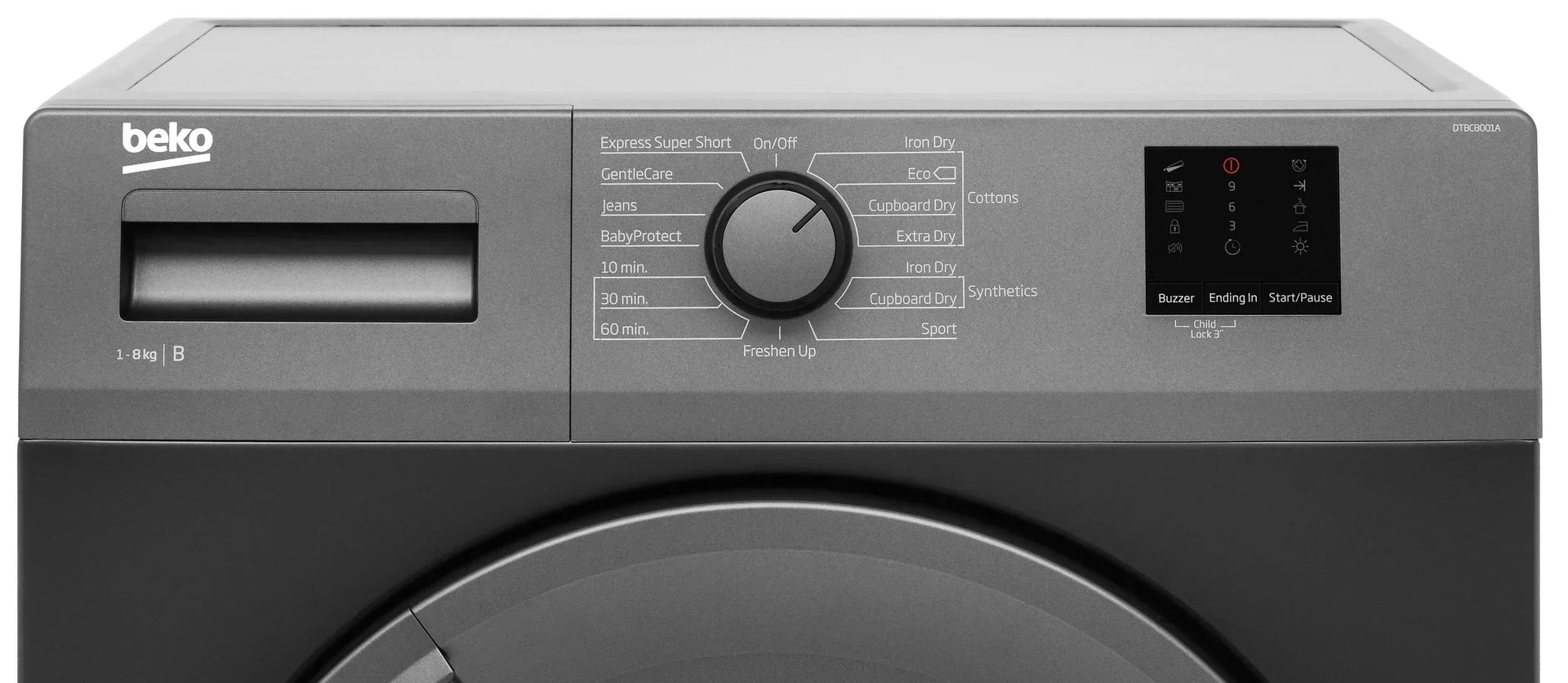
Washer-dryers handle dry-only mode differently depending on the manufacturer. Here is how to activate this function on popular brands.
Beko Washer Dryers
Turn the dial to Synthetic Dry for loads up to 3 kg or Cotton Dry for loads up to 4 kg. Choose Sensor Dry for automatic shutoff or Manual Time for a fixed duration. Press Start and the machine skips the wash cycle entirely.
Samsung Washer Dryers
Select Cotton Dry (up to 4-6 kg depending on your model). Choose Cup Dry for storage-ready dryness or Iron Dry for slightly damp clothes ready for ironing. The Air Wash option deodorizes items without moisture removal.
Hotpoint Washer Dryers
Choose your fabric type first, then press the dedicated Dry Only button to disable washing. Select your dry level: A3 for cup dry, A2 for hanger dry, or A1 for iron dry. You can also use Manual Time for custom durations.
Bosch Washer Dryers
Select Intensive Dry for cottons or Gentle Dry for delicates. Press the Drying Target button to choose Cup Dry Plus, Cup Dry, or Iron Dry. Use Time Dry to set 10-minute increments for precise control.
Set the Right Dryness Level
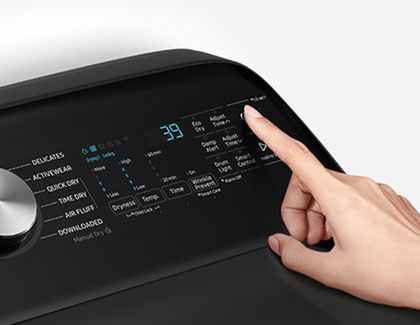
Choosing the correct endpoint prevents over-drying (which damages fibers) or under-drying (which leads to mold and mildew).
Sensor Dry vs Manual Time
Sensor Dry uses moisture sensors to stop automatically when clothes reach the selected dryness level. This method saves energy and protects fabrics from heat damage. Use Manual Time only when you know your load’s exact moisture content and need precise control.
Understand Dryness Settings
Different settings serve different purposes. Cup Dry provides fully dry clothes cool to the touch, perfect for storage. Hanger Dry prevents wrinkles so clothes are ready to hang immediately. Iron Dry leaves fabric slightly damp, ideal for cotton shirts and linens that will be ironed right away.
Start and Monitor the Cycle
With settings configured, begin the dry-only cycle safely and efficiently.
Pre-Start Checklist
Verify the drum is loaded evenly. Confirm the door is closed and latched securely. Check that the lint filter is clean. Ensure the correct program is selected. This 30-second check prevents most common drying problems.
What to Watch For During Drying
Most models display estimated time remaining (typically 60-150 minutes). A door lock light confirms the cycle is active. When the cycle completes, most machines beep to signal removal is needed. If you notice a burning smell, stop the machine immediately and check the lint filter and vent area.
Clean the Lint Filter After Every Use
A clogged lint filter is a serious fire hazard and reduces drying efficiency by up to 30%.
Simple Filter Cleaning Steps
Locate the filter (usually behind a small door near the drum or inside the front seal). Pull it out carefully (it may contain water). Rinse under warm water and remove all lint buildup. Reinsert securely before starting your next drying cycle.
Why This Step Matters
Clean filters prevent overheating and motor strain. They reduce drying time significantly and lower energy costs. Most importantly, they eliminate the mold and musty odors that develop when moisture cannot escape properly.
Maintain Your Machine Monthly
Regular upkeep keeps your washer-dryer safe, efficient, and odor-free for years.
Essential Monthly Tasks
Wipe the door seal after every cycle to remove moisture and detergent residue. Clean the detergent drawer by removing it and rinsing under warm water. Run a drum clean cycle monthly using one cup of white vinegar or a washing machine cleaner tablet at 90°C to sanitize internal components.
Troubleshoot Common Drying Issues
Even with correct use, problems can occur. Here is how to fix them fast.
Clothes Still Damp After Cycle
This usually means the drum was overloaded or the lint filter is clogged. Redistribute the load more loosely, clean the filter thoroughly, and restart with Sensor Dry mode selected.
Extended Drying Times
High moisture content in heavy items or incorrect heat settings cause long cycles. Use Cotton Dry with High Heat for towels and jeans. Switch to Synthetics with Low Heat for delicates and synthetic fabrics.
Musty Smell in Clothes
Mold in the seal, detergent drawer, or condenser causes unpleasant odors. Run a drum clean cycle immediately. Wipe the seal after each use and ensure the filter is always clean before starting.
Shrunken Garments
Excessive heat or over-drying causes shrinking. Always use Low Heat for synthetics and delicates. Avoid repeatedly drying items that are already dry to the touch.
Optimize for Energy Savings and Fabric Care

Smart settings save money on electricity while extending the life of your clothes.
Best Efficiency Combination
Use Cup Dry combined with Sensor Dry mode. This pairing stops the cycle the moment clothes reach dryness, preventing wasted energy. This combination is up to 20% more efficient than timed drying programs.
Load Size Matters
Half-empty drums waste energy significantly. Wait until you have at least 2-3 kg of laundry before starting a dry cycle. This ensures the machine operates at optimal efficiency.
When to Skip the Dryer
Air-drying on a rack preserves fabric quality, reduces pilling, and eliminates electricity use entirely. Reserve the dry washing machine function for urgent drying needs or bulky items like towels and bedding.
Use Manufacturer Apps for Additional Support

Modern washer-dryers connect to smartphone apps that simplify operation and maintenance.
App Benefits
Download your brand’s app (Samsung SmartThings, Beko OneTouch, or similar) to access model-specific user manuals instantly. Get real-time cycle alerts on your phone. Use built-in troubleshooting guides to diagnose issues without searching online. Some apps even allow remote starting and pausing of cycles.
Frequently Asked Questions About Dry Washing Machines
Can I use the dry-only function on already clean clothes?
Yes, the dry-only mode is specifically designed for clean laundry. It skips the wash cycle entirely and focuses only on removing moisture. This is ideal for drying hand-washed delicates, refreshing stored seasonal clothing, or drying items that were air-dried but still slightly damp.
How much can I dry at once in a washer-dryer combo?
Drying capacity is typically 50-70% of your machine’s wash capacity. For most 7 kg washer-dryers, the maximum drying load is 3-4 kg. For larger 9 kg models, you can dry up to 6 kg. Exceeding this limit leads to damp spots and longer drying times.
Is it safe to leave the dryer running while I’m not at home?
It is generally not recommended to leave any dryer unattended while operating. However, modern machines have safety features like auto shut-off and overheat protection. If you must leave, ensure the lint filter is clean and the machine is not overloaded. Consider using a smart plug to monitor the cycle remotely.
Why does my dryer take so long to complete a cycle?
Long drying times usually stem from three causes: overloading the drum, a clogged lint filter, or using incorrect heat settings for your load type. Check the lint filter first, then ensure you are not exceeding the drying capacity limit. Heavy items like towels may need high heat rather than the delicate setting.
What happens if I don’t clean the lint filter?
A clogged lint filter creates a serious fire hazard. It also forces your machine to work harder, increasing energy consumption by up to 30% and extending drying times significantly. Over time, lint buildup can damage the heating element and motor, leading to costly repairs.
Can I dry all fabric types in my washer-dryer?
No. Certain items require air-drying to prevent damage. Never dry silk, lace, spandex, swimsuits, wool sweaters, or items with sequins and heat-sensitive decorations. Check care labels for “Line Dry Only” or “Do Not Tumble Dry” warnings. A simple drying rack handles these items safely.
Key Takeaways for Using Your Dry Washing Machine
Mastering the dry-only function transforms your washer-dryer combo into a truly versatile appliance. Always sort laundry by fabric weight before drying, as mixing delicates with heavy items causes uneven results and potential damage. Respect the drying capacity limits, which are significantly lower than washing capacity, to ensure clothes dry evenly without overworking the motor.
Clean the lint filter after every single drying cycle without exception. This simple habit prevents fire hazards, reduces energy waste, and keeps your machine running efficiently for years. Use Sensor Dry with Cup Dry setting for the best combination of energy efficiency and fabric protection. By following these practices, your dry washing machine will save you time, space, and energy while keeping your clothes in excellent condition.