Your GE washing machine won’t start. No lights. No spin. Maybe it fills with water but stops there. You’re staring at a pile of laundry, frustrated and wondering what went wrong, especially if you’ve relied on this machine for years. The good news? Over 70% of GE washer problems can be diagnosed and often fixed without a technician, especially if you know where to start.
Most issues fall into predictable patterns: power failures, lid lock errors, drainage blocks, or sensor glitches. And many aren’t mechanical at all. A simple reset or clogged filter can get your washer running again in under 10 minutes. Whether your model is a top-loader with a classic agitator or a modern front-load HE unit, this guide walks you through step-by-step troubleshooting, error code meanings, and cost-effective fixes based on real service data and repair trends.
Power Cycle and Reset Procedures
Before tearing anything apart, perform these quick resets. They resolve up to 30% of dead washer issues, especially after power surges or electrical glitches.
Unplug for a Hard Reset
A full power cycle clears temporary errors in the control board.
Steps:
- Unplug the washer from the wall outlet.
- Wait at least 2 to 3 minutes. This allows capacitors to discharge and the system to fully reset.
- Plug it back in directly. No extension cords or power strips.
- Try starting a cycle.
Why it works: Modern GE washers use microprocessors that can freeze or misread inputs. A hard reset forces a reboot, like restarting a computer.
Test the Outlet and Breaker
If the washer still shows no signs of life:
• Plug in a lamp or phone charger to test the outlet.
• Check your home’s circuit breaker panel. If the laundry room breaker tripped, reset it.
• Avoid daisy-chained outlets or shared circuits. Washers need dedicated 120V power.
Perform Lid Switch Reset for Top Loaders
For unresponsive top-load GE models, the lid switch may be stuck in open mode.
Fix: Lift and close the lid six times within 30 seconds. This triggers the control board to recheck lid status.
If the machine still won’t start, the lid switch or striker tab is likely faulty. This is a very common failure point on GE top-loaders.
Access Hidden Diagnostic Mode

GE washers hide a field service mode that reveals error codes, tests components, and isolates faults. This is your best tool for accurate diagnosis.
Enter Service Mode on Top Loaders
Use this sequence on most GE top-load models like GTW and GFW series:
- Ensure the washer is plugged in and powered on.
- Press and hold the Start/Pause button.
- While holding, rotate the cycle dial seven clicks clockwise. About 180 degrees.
- Release the button. You’ll hear a click and lights will flash. You’re now in service mode.
Navigate Test Positions
Rotate the dial to access these functions:
• Position 1: Displays stored error codes.
• Position 2: Runs fill and pressure sensor test.
• Position 3: Activates agitate and spin motors. Mechanical check.
• Position 4: Tests lid lock engagement.
Pro Tip: If the motor runs in Position 3 but not during a normal cycle, the issue is likely a sensor or safety lock, not the motor itself.
Retrieve and Clear Error Codes
To read codes:
• Press and hold Start/Pause for 10 seconds.
• Watch indicator lights like Lid Lock or Prewash for blinking patterns.
• Each flash sequence corresponds to a code. For example, 3 flashes means F03.
To clear codes:
• Turn the dial counterclockwise from Position 1.
• Press and hold Start/Pause for 3 seconds.
• Only reappearing codes after reset are active faults.
Fix Washer That Won’t Start

No power? No response? Let’s pinpoint why your GE washer won’t begin a cycle.
Check Power Supply First
• Confirm the outlet works with another device.
• Inspect the power cord for burn marks, fraying, or melted insulation.
• If the control panel is dead, test voltage at the outlet with a multimeter. It should read around 120V.
Never use an extension cord. It can cause voltage drop, tripped breakers, or fire hazards.
Inspect Control Board for Damage
Open the console after unplugging:
• Look for burnt traces, bulging capacitors, or scorch marks on the main board.
• These indicate electrical failure. Replace the board. Cost ranges from $130 to $300.
On older mechanical models, a failed timer can mimic power issues. Replace if stuck or unresponsive.
Test Lid Lock and Striker Alignment
The washer won’t start if it doesn’t detect a closed lid.
Visual checks:
• Is the lid warped or misaligned?
• Does the metal striker tab on the lid fully engage the lock?
• If the lid doesn’t sit flush, the lock won’t activate.
Replace faulty lock or striker:
- Remove the white bezel by pressing outward tabs.
- Press the release tab on the switch and slide left to remove.
- Install new assembly, slide into place, and lock.
- Reattach bezel using guide pegs.
Always replace striker and lock together. One often fails shortly after the other.
Verify Water Supply
The washer checks for water flow before starting. If none is detected:
• Ensure both hot and cold hoses are connected and not kinked.
• Clean mesh filters inside the inlet valve. Remove hose, scrub with toothbrush.
• Confirm household water pressure is above 20 PSI. Low pressure prevents cycle start.
Diagnose Fills But Won’t Spin
The machine fills, drains, but won’t enter high-speed spin. This is a safety lockout. Here’s what triggers it.
Test Lid Switch or Door Lock
This is the number one cause of no-spin issues. It accounts for 50% of cases.
Symptoms:
• Lid light stays on or flashes.
• Diagnostic mode shows no change when lid is opened or closed.
Quick test:
• Press and hold Power for 3 seconds while toggling the lid.
• If display doesn’t respond, the switch is dead.
Fix: Replace the lid switch assembly. Cost is $20 to $40. Don’t try to repair internal contacts. They’re not user-serviceable.
Inspect Drive Belt and Pulleys
If the motor runs but the drum doesn’t spin:
• Tilt the washer backward. Place a box under the front feet for support.
• Remove the bottom panel. Three screws, one with grounding strap.
• Check the belt for cracks or glazing, fraying or oil contamination, missing teeth or black rubber dust.
Replace the belt if damaged. Cost is $12 to $13. Clean pulleys with rubbing alcohol before installation.
Use a pulley puller. Never hammer the pulley. It can damage the transmission shaft.
Clear Drain Pump and Check for Water
The washer won’t spin if water remains in the tub.
Steps:
- Remove front bottom panel.
- Place towels and a shallow pan underneath.
- Open the drain pump filter. Twist counterclockwise.
- Remove debris. Socks, coins, bobby pins, wire.
If the pump runs but doesn’t drain:
• Impeller may be broken.
• Motor could be dead.
• Replace the pump. Cost is $30 to $100.
Also check:
• Drain hose isn’t kinked.
• Standpipe isn’t clogged.
• Hose isn’t inserted more than 4 inches into standpipe. This prevents siphoning.
Unclog Pressure Tube
A blocked pressure tube sends a false tub full signal.
Diagnose:
• Locate the thin plastic tube running from the tub to the pressure switch.
• Disconnect it from the switch.
• Blow through it. Resistance means blockage.
Clear it:
• Use a 1/16-inch drill bit turned by hand. No power tools.
• Gently rotate to clear soap scum or lint.
• Reconnect securely.
Solve Water Flow and Drain Problems
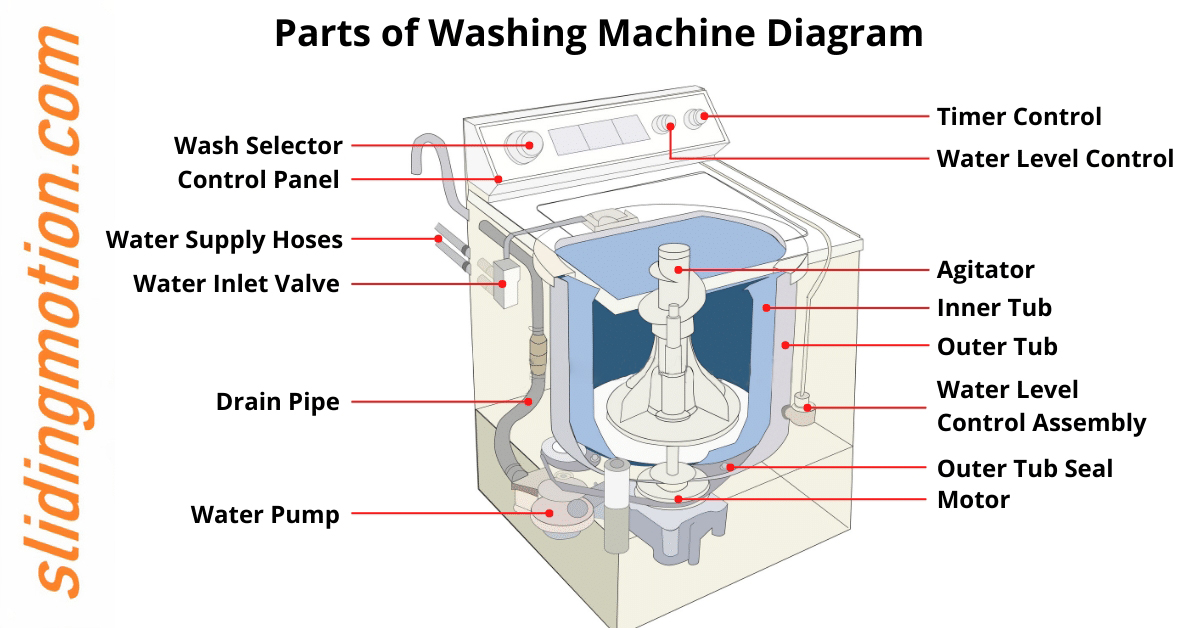
No water? Leaks? Standing water? These are among the most common GE washer complaints.
No Water Enters the Drum
Primary suspect: Water inlet valve.
Check:
• Are hoses kinked?
• Are filters clogged?
• Is water pressure between 20 and 120 PSI?
Fix: Do not disassemble the valve. Replace it. Cost is $30 to $100. Also test lid switch and water level sensor as secondary causes.
Stop Leaks Fast
Unplug and shut off water. Then inspect:
| Leak Source | Fix |
|---|---|
| Drain pump | Tighten hose clamps or replace cracked pump |
| Fill hoses | Replace if cracked. Hand-tighten fittings. Use pliers if needed. |
| Door gasket front load | Clean debris. Replace if torn. Cost is $60 to $150. |
| Inlet valve | Tighten rear connections. Replace if leaking. |
| Tub seal | Requires tub removal. Replace if water pools under machine. Cost is $90 to $140. |
Most leaks cost under $100 to fix. Don’t panic.
Fix Drainage Failure
If water remains after cycle:
• Run diagnostic Position 3 to test drain function.
• Check for excessive suds. Caused by non-HE detergent.
• Run a rinse-only cycle to clear suds lock.
Also verify:
• Lid switch or door lock works.
• Control board sends drain command.
• House drain is not clogged.
Silence Noise and Vibration
Loud thumps? Grinding? Squeals? Let’s quiet things down.
Fix Grinding or Screeching
Worn tub bearings cost $80 to $120:
• Noise increases during spin.
• Requires full tub disassembly. Best for experienced DIYers or pros.
Agitator dogs on top loaders:
• Clicking or grinding during wash.
• Remove agitator cap, pull out old dogs, insert new ones. Cost is $5 to $20.
Stop Thumping and Shaking
Unbalanced load accounts for 50% of cases:
• Redistribute clothes evenly.
• Don’t overload.
Suspension rods or shocks:
• Worn rods cause violent shaking.
• Replace in sets. Cost is $30 to $60.
Shipping bolts still installed:
• Some users forget to remove them after setup.
• Leaving them in destroys suspension and tub.
Foreign objects:
• Coins or small items stuck between inner and outer tub.
• Remove agitator or front panel to retrieve.
Eliminate Squeaking
Usually a drive belt issue:
• Belt is stretched, glazed, or dry.
• Clean pulleys and replace belt.
• Lubrication is not recommended. Belts rely on friction.
Replace Key Components: Cost and Tools

Knowing what to replace and what tools you need saves time and money.
Essential Tools List
• Multimeter. Test continuity and resistance.
• Screwdrivers. Phillips and flat-blade.
• Socket wrench. 3/8 inch, 9/16 inch, 15mm.
• Pliers and flashlight.
• 1/16 inch drill bit. Hand-turned only.
• Pulley puller. For clutch and pulley removal.
Common Parts and Prices
| Part | Cost | Notes |
|---|---|---|
| Lid switch or door lock | $20 to $40 | Replace with striker |
| Drive belt | $12 to $13 | Clean pulleys first |
| Drain pump | $30 to $100 | Clean filter before replacing |
| Speed sensor | $20 to $30 | Splice into existing harness |
| Suspension rods | $30 to $60 | Sold in sets |
| Tub bearings | $80 to $120 | Labor intensive |
| Control board | $130 to $300 | Last resort |
| Water inlet valve | $30 to $100 | Do not clean internally |
Prevent Future Failures
Keep your GE washer running smoothly with these habits.
Use HE Detergent Only
Non-HE detergent creates excessive suds, triggering suds lock and drainage errors. Always use High-Efficiency detergent, even in top-loaders.
Clean Pump Filter Monthly
Prevents clogs and pump strain. Remove, rinse, and reinstall. Do it every 4 weeks.
Replace Worn Parts Early
• Check belt condition every 6 months.
• Inspect hoses annually.
• Replace before they fail completely.
Level the Machine
Use a bubble level. Adjust front legs until the washer doesn’t rock. Prevents vibration and bearing wear.
When to Call a Pro
Some jobs are best left to experts:
• Tub bearing replacement
• Control board soldering
• Internal wiring repairs
• Recalls or fire hazard models. Check CPSC.gov.
Contact GE Appliance Service at 1-800-GECares or 1-800-432-2737, Monday through Friday, 8 a.m. to 8 p.m. ET.
Frequently Asked Questions About GE Washing Machine Problems
Why does my GE washing machine won’t start at all?
The most common causes are power supply issues, a faulty lid switch or door lock, or a control board malfunction. Start by checking if the outlet has power, then test the lid switch mechanism. If those check out, the control board may need replacement.
What does it mean when my GE washer fills with water but won’t spin?
This indicates a safety lockout triggered by a faulty lid switch, drive belt failure, drain pump blockage, or speed sensor malfunction. About 50% of cases stem from lid switch issues. Check these components in order to diagnose the problem.
How do I reset my GE washing machine?
Unplug the washer for 2 to 3 minutes to perform a hard reset. For top-loaders, also try lifting and lowering the lid six times within 30 seconds. This recalibrates the lid switch and clears temporary control board errors.
Can I repair my GE washer myself?
Yes. Approximately 80% of GE washer problems can be fixed with DIY repairs. Common fixes include replacing the lid switch, drive belt, or drain pump. These repairs typically cost $20 to $100 in parts and require basic tools.
Why is my GE washing machine making loud grinding noises?
Grinding noises usually indicate worn tub bearings, which require tub replacement. Clicking or grinding during wash agitation often means worn agitator dogs, which are inexpensive to replace. Address these noises promptly to prevent further damage.
How much does it cost to repair a GE washing machine?
Most repairs cost between $20 and $100 for parts. Control board replacements run $130 to $300. Professional labor adds $75 to $200. Many common issues like lid switches, belts, and drain pumps are DIY-friendly and can save significant money.
Key Takeaways for Fixing Your GE Washing Machine
Most GE washing machine problems have simple fixes. Start with resets by unplugging the machine for 2 to 3 minutes and checking the lid switch operation. Access hidden diagnostic mode to retrieve error codes that pinpoint the exact failing component. With basic tools and this guide, you can solve 80% of issues yourself, saving time, money, and getting your laundry back on track.