If you’re shopping for a new washing machine, you are facing more choices than ever. From top-load agitators to front-load high-efficiency models and compact all-in-one units, the different types of washing machines vary significantly in performance, efficiency, and user experience. Understanding these differences is crucial not only to make a smart purchase but also to save time, energy, and money over the machine lifespan.
This guide breaks down every major type, how they work, their pros and cons, and who they are best suited for so you can confidently choose the right one for your home.
Top-Load Agitator Washers Explained
The classic design most Americans recognize, top-load agitator washers have been around for decades and remain popular due to their simplicity and affordability.
How It Cleans Clothes
A central agitator post twists back and forth, pushing clothes through a full tub of water. This creates a torus-shaped water flow that mimics hand-scrubbing. While effective for basic stains, this aggressive motion can be harsh on fabrics.
Key Features and Performance
The following specs define this category:
- Price ranges from $450 to $1,500, making it the most budget-friendly option
- Cycle times span 35 to 105 minutes
- Capacity reaches up to 5.4 cubic feet
- Water usage sits high at 15 to 20 gallons per load
- Spin speed ranges from 680 to 850 RPM, leaving clothes wetter
Who Should Choose This
This type suits users who want the lowest upfront cost, need fast wash cycles, have mobility issues since no bending is required, or prefer simple operation and repairs.
Common Problems to Avoid
Overloading or using too much detergent can reduce cleaning performance and cause excessive vibration. The agitator also limits usable space, so bulky items like comforters may not fit well.
Pro Tip: Only fill the drum three-quarters full and leave space around the agitator for optimal movement.
Front-Load Washers: Efficiency Champions

Front-load washers dominate the high-end market and are standard across Europe due to superior cleaning and resource savings.
Gravity-Powered Tumbling Action
With a horizontal drum, clothes are lifted by paddles and dropped using gravity. This tumbling action creates friction between garments, removing dirt with less water and gentler treatment.
Why It Outperforms Others
Front-loaders offer significant advantages:
- Water use as low as 7 gallons per load
- Energy efficiency 50% less than agitator models
- Spin speed from 1,160 to 1,600 RPM for maximum moisture extraction
- Capacity up to 5.8 cubic feet, the largest available
- Best-in-class stain and odor removal
Ideal For
Large families needing big loads, eco-conscious buyers, homes with stackable or under-counter setups, and those washing delicate or performance fabrics will benefit most from this type.
Maintenance Must-Knows
Front-loaders require regular care to prevent problems:
- Wipe the door gasket after each use
- Leave the door open to allow drying
- Run monthly cleaning cycles
- Use only HE detergent
Neglecting maintenance can lead to mold and odors in the airtight seal.
Expert Note: Some models offer Add-Wash features, like Samsung and LG mid-cycle doors, that let you toss in forgotten items mid-cycle.
HE Top-Load Impeller Washers: The Middle Ground
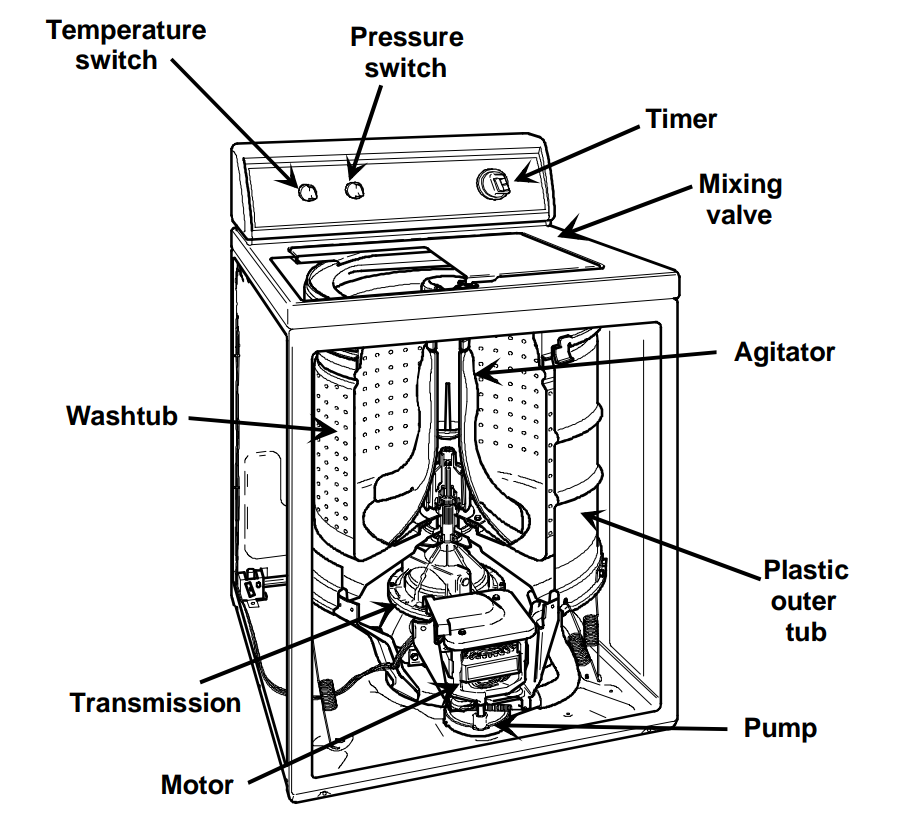
These look like traditional top-loaders but lack a central agitator, using a low-profile impeller at the drum base instead.
How Water Circulation Works
The impeller spins to create a donut-shaped current. Water moves inward, outward, and upward, carrying clothes along. The drum often rotates in the opposite direction to boost turbulence.
Performance Snapshot
- Price ranges from $500 to $1,200
- Water use between 12 and 17 gallons per load
- Capacity up to 5.5 cubic feet
- Quieter operation than agitator models
Pros and Limitations
Advantages include more efficiency than agitators, larger tub for bulky items, and easier loading than front-loaders.
Drawbacks include requiring proper loading technique (never pack the center), possible struggles with heavy soil, and prone to imbalance errors if overloaded.
User Success Depends On Technique
To get good results with impeller washers, load clothes evenly around the drum, leave a hole in the center, and avoid nesting large items like towels together.
Warning: Overloading blocks water flow and leads to poor cleaning. This is the number one user error with impeller models.
Compact Front-Load Washers for Small Spaces
Designed for apartments, studios, or secondary laundry areas, these maintain full-size efficiency in a smaller footprint.
Space-Saving Specs
- Width approximately 24 inches versus 27 inches standard
- Capacity 1.9 to 2.8 cubic feet
- Price from $880 to $2,900, higher cost per cubic foot
Who Benefits Most
Urban dwellers with limited space, renters without full laundry hookups, and seniors downsizing to smaller homes benefit most from these units.
Despite smaller size, these units retain high spin speeds, Energy Star efficiency, and quiet direct-drive motors. They can be stacked with a dryer or installed under counters, perfect for kitchens or closets.
All-in-One Washer-Dryer Combos
One unit handles both washing and drying, ideal where space or venting is limited.
How It Works
These units use condenser drying, which requires no external vent. Moisture is cooled and drained, allowing installation anywhere with water and power.
Key Trade-Offs
Pros include no vent required, saves floor space, and eliminates the need for a separate dryer.
Cons include drying takes longer, higher energy use per cycle, and dry capacity is approximately half of wash capacity.
Cycle time totals 3 to 6 hours. Capacity allows washing up to 5.3 cubic feet but drying only about half that.
Best for studio apartments, secondary laundry rooms, and travel trailers with proper hookups.
Note: Not ideal for large families due to drying limitations.
Stackable Washer-Dryer Units
Maximize vertical space by stacking a front-load washer and compatible dryer.
Installation Requirements
You must use matching models from the same brand, need a stacking kit (usually included), and require at least 70 inches of vertical clearance.
Benefits Over Side-by-Side
This configuration keeps footprint to just 27 inches wide, frees up room in narrow laundry closets, and maintains full-size performance.
Available in both electric and gas configurations.
Pro Tip: Place on a pedestal for easier access and additional storage.
Portable Washers: Laundry Without Hookups
These compact units connect directly to a kitchen or bathroom sink.
How to Use
Attach the inlet hose to the faucet. Place the drain hose into the sink or tub. Set up manually before each use and tear down after.
Best For
Dorm rooms, RVs, temporary housing, and rentals without laundry access benefit most from these units.
Realistic Expectations
Capacity is small, handling 1 to 2 person loads. Newer models approach front-loader quality. Limitations include tying up the sink and no drying function.
While niche, they offer real utility when traditional laundry is not an option.
Twin-Tub Machines: A Niche Option
Still found in some older homes or off-grid settings, twin-tubs have two separate basins.
Two-Tub Operation
The wash tub agitates clothes in soapy water. The spin tub uses centrifugation to remove water. Users must manually transfer clothes between tubs, making this semi-automatic operation.
Where They Are Used
Rural areas without standard plumbing, campers or cabins, and budget-conscious buyers overseas use these machines.
Rare in the US, but durable and repairable with basic tools.
Capacity: How Big Should Your Drum Be
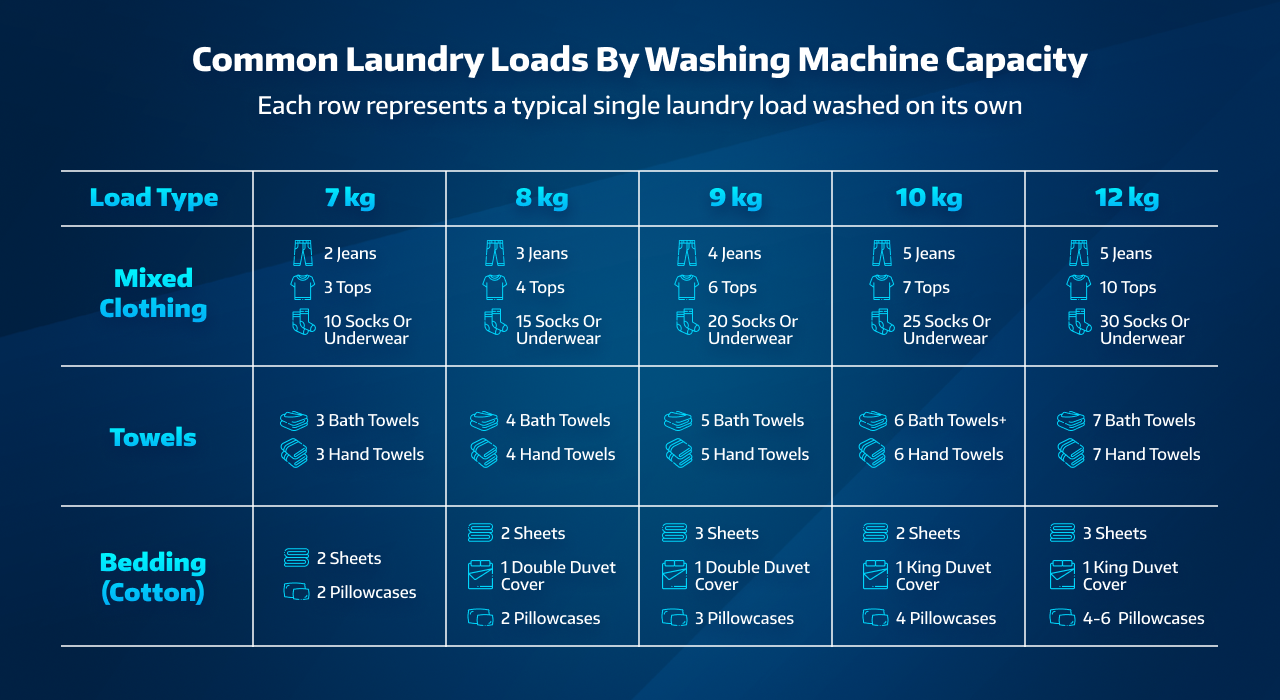
Size matters when choosing among the different types of washing machines.
Capacity Guidelines
- 1.9 to 2.8 cubic feet suits singles, couples, and small spaces
- 3.0 to 4.5 cubic feet works for small families with 2 to 3 people
- 4.5 plus cubic feet accommodates large families, king bedding, and bulky items
Important: Front-loaders use 100% of their rated capacity. Agitator models lose usable space to the central post.
Water and Energy Efficiency Compared
Your washer type has a major impact on utility bills.
Water Usage by Type
- Front-load uses approximately 7 gallons per load
- HE top-load uses 12 to 17 gallons per load
- Agitator top-load uses 15 to 20 gallons per load
Front-loaders save up to 50% on water and energy annually, ideal for drought-prone areas or eco-focused households.
Why Cold Water Works Better in HE Models
High-efficiency machines rely on longer wash times, advanced detergent chemistry, and internal heaters in some front-loaders. This allows excellent cleaning even with cold water, cutting energy use significantly.
Spin Speed and Drying Time Savings
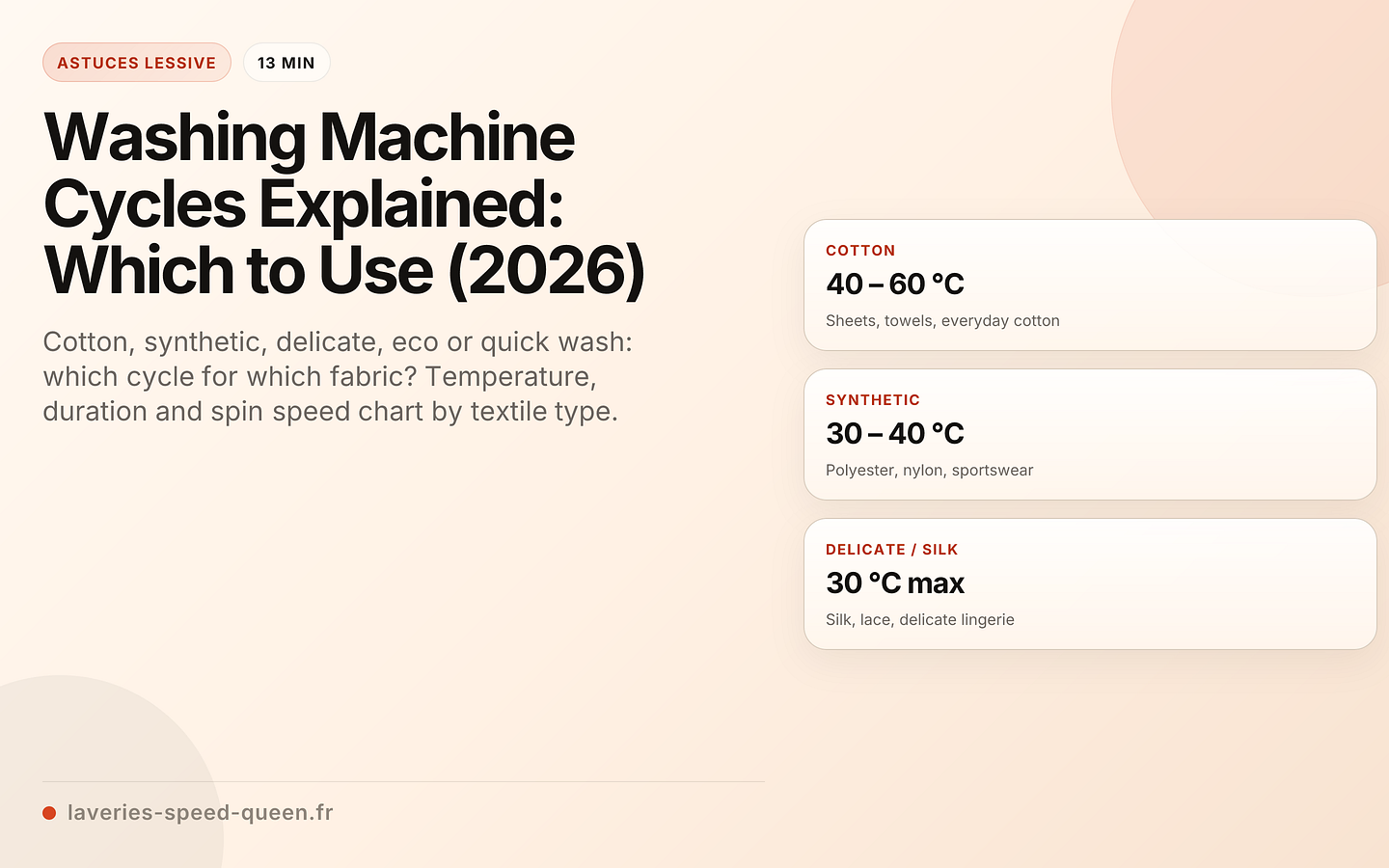
Higher RPM means drier clothes and shorter dryer time.
| Type | Spin Speed | Drying Impact |
|---|---|---|
| Top-Load Agitator | 680 to 850 RPM | Clothes stay damp, longer drying |
| HE Top-Load | Varies | Moderate moisture extraction |
| Front-Load | 1,160 to 1,600 RPM | Up to 30% less dryer time |
Savings Tip: A front-loader can reduce drying energy by hundreds of dollars over its lifetime.
Motor Types: Belt vs. Direct Drive
The drive system affects noise, vibration, and longevity.
Belt-Drive Systems
These use motor, belt, and pulley. Found in many top and front loaders, they offer lower cost and easy belt replacement but are noisier with more vibration and shorter motor life.
Direct Drive Motors
The motor connects directly to the drum shaft. Introduced by Fisher and Paykel in 1991, these offer quieter operation, less vibration, and fewer parts to fail. Cost to repair is higher if the motor fails.
Many brands now offer 10 to 20 year motor warranties on direct-drive models.
Smart Features and Modern Innovations
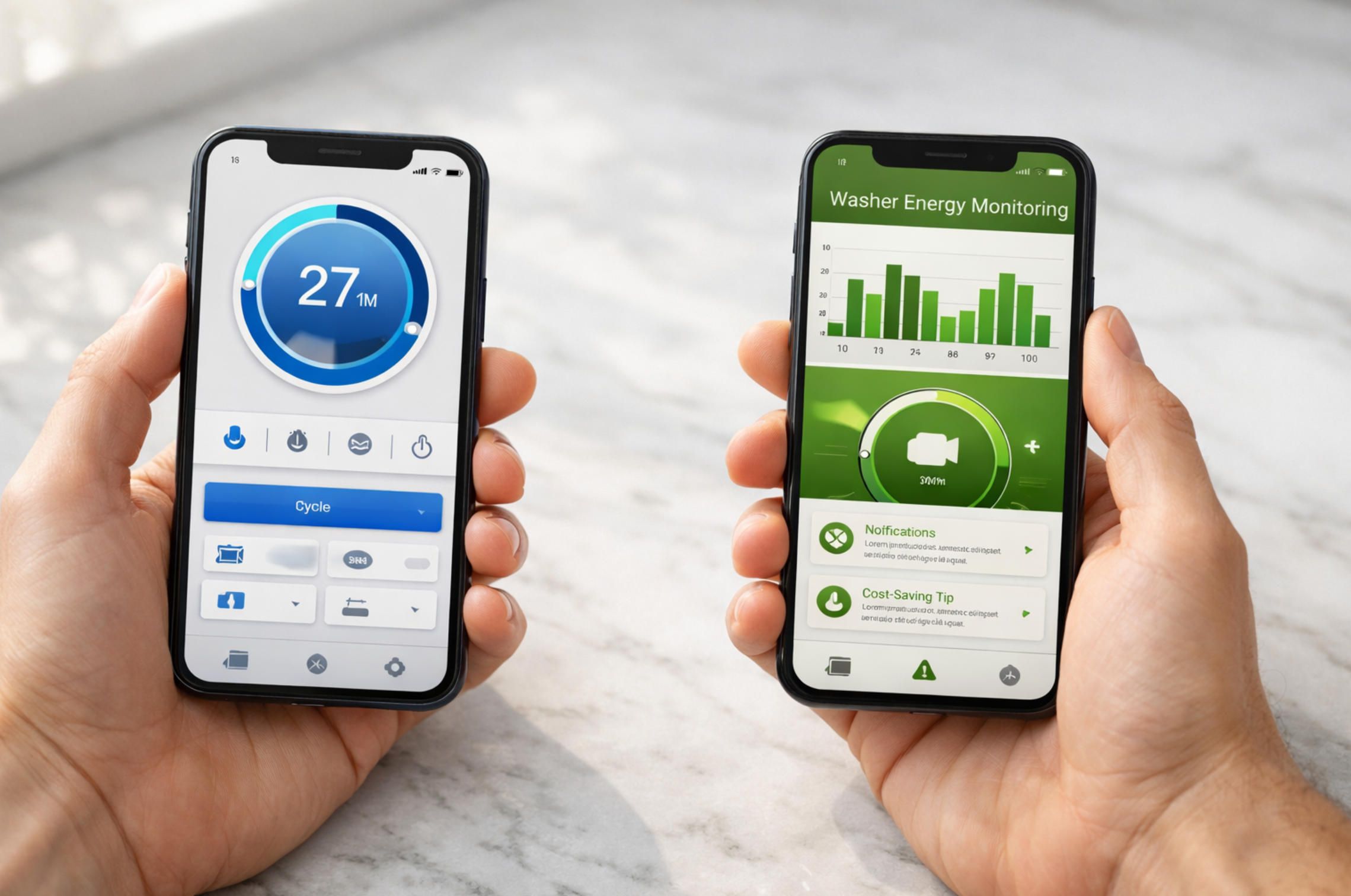
Today’s washers go beyond basic cleaning.
Smart Connectivity
WiFi and app control allow you to start, monitor, or troubleshoot remotely. Cycle alerts notify you when loads finish. Energy tracking monitors usage over time.
AI and Sensor Technology
Modern units auto-detect load size and fabric type, adjusting water, time, and spin accordingly. This reduces waste and improves cleaning.
Advanced Dispensing
Automatic dispensers hold detergent for several months and release precise amounts automatically. These require HE detergent only.
Warning: Using regular detergent in HE machines causes oversudsing and can damage internal components.
Sanitation and Special Cycles
Modern washers offer powerful cleaning beyond soap and water.
Steam and Air Wash
These features use steam or ozone to kill bacteria, reduce wrinkles and odors, and work great for baby clothes or allergy sufferers.
High-Temp Wash Cycles
Cycles reach 150 to 170 degrees Fahrenheit, eliminating the need for bleach and effectively treating germs and allergens.
Quick Wash Options
Cycles as fast as 15 to 30 minutes work best for lightly soiled items. Samsung QuickDrive cuts time by 50% using counter-rotating impellers.
Maintenance Tips for Every Type
Proper care extends lifespan and prevents odors.
Universal Best Practices
Run cleaning cycles monthly using vinegar, bleach, or cleaner. Clean the detergent drawer every month. Check filters periodically. Level the machine to prevent walking.
Type-Specific Advice
Front-loaders need gasket wiping and door left open. Top-load agitators require agitator dog inspection and cleaning under the agitator. Impeller top-loaders need avoidance of overloading and monthly deep cleaning. All-in-one units need regular condenser descaling. Portable units require hose flushing after each use.
Reliability and Lifespan Outlook
With proper care, most washers last 10 to 12 years.
Common Failure Points
Front-loaders commonly face mold in gaskets and drum bearing failure. Top-loaders often have transmission issues and worn agitator dogs. Impeller models suffer imbalance errors from improper loading.
Repair Cost Reality
Front-loaders cost more to repair due to complex disassembly. Top-load agitators are simpler but may need frequent fixes. Direct-drive motors often come with long warranties of 10 to 20 years.
Fact: Overloading and wrong detergent are the top causes of early failure.
Choosing the Right Type: Decision Framework
Use this checklist to match your needs.
Ask Yourself
Consider whether you have space for a full-size unit, if venting is available for a dryer, whether you wash king-size bedding, if water and energy costs are a concern, if you need quiet operation, and whether you can bend to load a front-loader.
Quick Match Guide
- Lowest price needs point to top-load agitator
- Best cleaning points to front-load
- Small space points to compact front-load or all-in-one
- No venting points to washer-dryer combo
- Easy loading points to top-load or pedestal-mounted front-loader
- Eco-friendly points to front-load or HE top-load
- Large family points to front-load at 4.5 plus cubic feet
Key Takeaways for Choosing Different Types of Washing Machines
The different types of washing machines each serve distinct needs. Top-load agitators are budget-friendly and user-simple but inefficient and tough on clothes. HE top-load impellers offer a middle ground with better efficiency and easier loading, though performance depends on correct use. Front-load washers lead in cleaning, efficiency, and capacity, though they require maintenance and a higher initial investment. Compact, stackable, and all-in-one units solve space challenges without sacrificing core performance.
For most households, a front-load washer delivers the best long-term value through superior cleaning, fabric care, and resource savings. However, if upfront cost or mobility is your priority, a top-loader may be the smarter fit. No matter which type you choose, follow maintenance routines, use the right detergent, and load properly. Your machine and clothes will thank you for years to come.
Frequently Asked Questions About Different Types of Washing Machines
What is the most reliable type of washing machine?
Front-load washers generally offer the best reliability when properly maintained, with direct-drive motors often carrying 10 to 20 year warranties. However, top-load agitator models are simpler to repair when problems occur.
Which washing machine type uses the least water?
Front-load washers use the least water at approximately 7 gallons per load, compared to 12 to 17 gallons for HE top-loaders and 15 to 20 gallons for traditional agitator models.
Can I stack any front-load washer with any dryer?
No, you must use matching models from the same brand and use a compatible stacking kit. Not all front-loaders are designed to be stacked with all dryers.
Do front-load washers really get moldy?
Front-loaders can develop mold if the door remains closed after use. Leaving the door open, wiping the gasket after each cycle, and running monthly cleaning cycles prevents this common issue.
Are HE top-loaders better than agitator top-loaders?
HE top-loaders with impellers are more efficient and gentler on clothes than agitator models, but they require specific loading techniques. Users who do not load them properly often experience poor cleaning results.
How long do washing machines typically last?
With proper maintenance, most washing machines last 10 to 12 years. Direct-drive motors often outlast the machine itself, with some warranties extending 10 to 20 years.