Choosing the right washing machine can feel overwhelming with dozens of models, features, and price points. But the best washer for you isn’t not just the most expensive or feature-packed one. It is the one that fits your household size, laundry habits, space, and budget. Whether you are replacing an old unit or setting up a new laundry space, understanding what truly matters can save you time, money, and years of frustration. In this guide, you will learn how to cut through the marketing noise and pick a washer that cleans effectively, lasts for years, and fits seamlessly into your lifestyle.
Front-Load vs. Top-Load: Key Differences
:max_bytes(150000):strip_icc()/top-load-washer-vs-front-load-2145868-v5-6606d79a51e446be957069689296fc44.png)
The first major decision you will face is choosing between a front-load and top-load washer. Each type has distinct advantages and trade-offs in cleaning performance, efficiency, and daily usability.
Front-Load Washers
Front-load washers are the top performers when it comes to cleaning efficiency and energy savings. They tumble clothes through a small pool of water, using gravity to agitate fabrics gently yet thoroughly. This method uses about 25% less water than traditional top-loaders and spins at higher speeds, extracting more moisture and cutting drying time significantly.
These machines typically offer larger capacities, up to 5.8 cubic feet, making them ideal for families or anyone who frequently washes bulky items like comforters. However, they come with some drawbacks. They cost more upfront, cycle times are longer ranging from 65 to 120 minutes, and loading requires bending unless you install a pedestal. The door gasket can also trap moisture, leading to mold if not wiped down regularly.
Pro Tip: Look for models with automatic venting systems like GE’s UltraFresh Vent, which opens a vent after each cycle to dry the drum and reduce mildew risk.
Top-Load Agitator Washers
Agitator top-loaders are the classic design featuring a central post that twists and turns clothes through a full tub of water. They are easy to load, do not require bending, and offer fast cycle times as low as 35 minutes. They are also great for heavy-duty cleaning, making them a solid choice for active families or those dealing with muddy work clothes.
However, agitators are less efficient. They use more water and energy, and the aggressive motion can wear out fabrics over time. The agitator itself takes up drum space, reducing usable capacity compared to other types. Still, they are more affordable, typically starting around $450, and allow you to add clothes mid-cycle, a convenience many users appreciate.
Note: Despite their reputation for being harsh, some modern agitators like the Speed Queen TR7 are engineered to be surprisingly gentle on fabrics while maintaining strong cleaning power.
HE Top-Load Impeller Washers
High-efficiency top-loaders replace the central agitator with a low-profile cone or disc at the drum’s base. This impeller creates currents that move clothes through water, offering a gentler wash than agitators while maintaining speed and ease of access.
With capacities up to 5.5 cubic feet, they provide more usable space than agitator models and are easier to load than front-loaders. They are also more water and energy efficient. However, their spin speeds are lower than front-loaders, so clothes come out damper and take longer to dry. Many models include a Deep Fill option to add extra water for heavily soiled loads or better rinsing.
Capacity: Pick the Right Size for Your Household
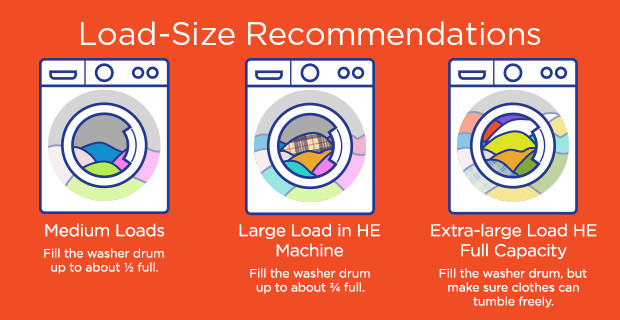
Choosing the right capacity prevents overloading, reduces energy waste, and ensures you can wash bulky items without hassle. Capacity is measured in cubic feet, and getting the right size for your household is essential.
Compact Washers
Compact washers, typically 24 inches wide, are perfect for singles, couples, or small apartments. They handle light to moderate loads and are energy-efficient, but they lack the power and features of full-sized models. Most cannot fit a king-size comforter and may require more frequent washing. These are often front-load or all-in-one combo units.
Standard Capacity Washers
A standard 4.0 to 4.4 cubic foot washer suits households of 3 to 4 people. It handles everyday laundry, shirts, jeans, towels, and standard bedding, without needing multiple loads. This size balances performance and footprint, making it a popular choice for average-sized homes.
Large Capacity Washers
Families of 4 to 6 should opt for a large-capacity washer at 4.5 to 5.2 cubic feet. These models handle bulky items like comforters, sports gear, and cloth diapers with ease. Fewer loads mean less wear on clothes and lower utility bills over time.
Key Fact: You need at least 4.5 cubic feet to wash a king-size comforter effectively.
Extra Large Capacity Washers
For households with six or more members, extra-large washers at 5.3 to 6.0+ cubic feet are ideal. They reduce laundry frequency and often come with premium features like steam cleaning, smart dispensers, and AI sensing. These are typically front-load or impeller top-load models.
Essential Features That Matter
:max_bytes(150000):strip_icc()/washer-steam-feature-1908409-02-6ce8ea1c519049b09dfbf72186d6b60b.jpg)
Modern washers come with many features, but not all are worth the extra cost. Focus on the ones that deliver real benefits in cleaning, convenience, and fabric care.
Steam Cleaning
Steam cycles use hot vapor to penetrate fabric fibers, lifting tough stains, killing allergens, and reducing wrinkles. Models with steam can remove over 95% of pet dander and dust mites, making them ideal for allergy sufferers. Steam is also used in Wrinkle Care cycles, which tumble clothes with steam after the wash to prevent creases.
Automatic Dispensers
Smart dispensing systems store months worth of detergent and fabric softener, automatically releasing the right amount based on load size and soil level. This prevents overdosing, reduces waste, and ensures optimal cleaning. Some even support dual reservoirs, one for regular detergent and one for delicates.
AI and Load Sensing
AI-powered washers detect fabric type, load weight, and soil level to adjust water, cycle time, and agitation automatically. This prevents over-washing delicate items and ensures heavily soiled clothes get extra attention. These systems improve efficiency and extend garment life, though they add cost.
Specialty Cycles to Look For
Look for built-in specialty cycles you will actually use. Sanitize cycles kill germs with high-temperature water, ideal for baby clothes or workout gear. Quick Wash cleans lightly soiled clothes in 15 to 30 minutes. Allergen cycles remove pollen, pet dander, and dust mites. Delicate and Hand-Wash cycles are gentle on silk, lace, and fine knits. Pet Hair Removal cycles include extra agitation and rinsing to pull out stubborn fur.
Avoid models that require a smartphone app to access essential cycles. Your washer should work fully without WiFi connectivity.
Smart Features: Worth the Upgrade

Smart washers connect via WiFi, letting you control cycles, get alerts, and monitor energy use from your phone.
Remote Control and Alerts
Start, pause, or stop a cycle remotely. Get a notification when the load is done, no more guessing or forgetting wet clothes in the drum. Some models send maintenance reminders like Clean the filter or Run Tub Clean, helping you keep the machine in top shape.
Energy Monitoring and Diagnostics
Track your washer’s energy consumption over time. If something goes wrong, the machine can run self-diagnostics and send error codes to your phone or technician, speeding up repairs.
Smart Pairing with Dryers
High-end pairs let the washer communicate with the dryer. After washing, the dryer automatically selects the best cycle based on fabric type and moisture level.
Reality Check: Smart features add $200 to $500 to the price. If you do not use apps daily, skip them. The washer should function perfectly without connectivity.
Performance: Cleaning, Gentleness, and Spin Efficiency
Do not just rely on marketing. Look at real performance metrics when evaluating how a washer cleans.
Stain Removal
Front-loaders generally lead in stain removal thanks to longer wash times and tumbling action. However, some HE top-loaders with impellers are closing the gap. Agitators still excel at removing heavy soil like mud or grease. A top-performing machine removes over 90% of common stains.
Fabric Gentleness
Gentleness is measured by washing cotton swatches with small cuts and counting how many threads fray. Front-loaders and impeller models typically win here, as their tumbling or swirling action is less abrasive. Surprisingly, some agitator models like Speed Queen are engineered to be gentle despite their aggressive appearance.
Spin Efficiency
Higher spin speeds extract more water, reducing dryer time and energy use. Front-loaders often spin at 1,200 to 1,600 RPM, leaving clothes noticeably drier than top-loaders at 800 to 1,100 RPM. Some models extract so well that drying time drops by 30%.
Energy and Water Efficiency
An Energy Star-certified washer uses less water and electricity, saving you money and reducing environmental impact.
Annual Operating Cost
Efficient models cost as little as $10 to $13 per year in electricity. Less efficient ones may cost $20 or more. Over 10 years, that is a $100+ difference. Front-loaders are typically more efficient, but HE top-loaders with load-sensing technology also perform well.
Water Usage
Front-loaders use 15 to 30 gallons per load. Top-loaders use 30 to 45 gallons, though newer HE models adjust water levels based on load size. If you live in a drought-prone area or pay high water rates, efficiency matters.
Installation and Space Planning
Measure twice, install once. A washer that will not fit through your hallway is a costly mistake.
Dimensions and Clearance
Standard washers are about 27 inches wide. Compacts are 24 inches. Allow 6 inches behind for hoses and hookups, 1 inch on each side for airflow, and space for full door swing in front. Front-loaders are deeper, top-loaders are taller. Check ceiling height if stacking or placing under a counter.
Stacking and Pedestals
Front-loaders can be stacked with a matching dryer using a stacking kit, ideal for small spaces. Some pedestals include storage or a mini-washer. WashTowers, integrated washer-dryer units with a single control panel, offer ultimate convenience and space savings.
Utility Requirements
All washers need hot and cold water lines and a 120V outlet. Most combos use 120V, but some high-capacity vented combos may need 240V. Vented dryers and combos require external venting. Ventless models do not, great for apartments or basements without ducts.
Maintenance and Longevity
A well-maintained washer can last 10 to 15 years. Neglect it, and you will face mold, odors, and breakdowns.
Monthly Tub Cleaning
Run a hot water Tub Clean cycle with a washing machine cleaner or vinegar-baking soda mix to remove soap scum, mildew, and residue.
Gasket and Dispenser Care
Wipe the front-loader’s door gasket after each use. Clean the detergent drawer monthly to prevent clogs.
Filter Cleaning
Front-loaders have a pump filter that traps lint and debris. Check it every few months and clean as needed. Top-loaders may have inlet filters at the hose connection. Clean these to maintain water flow.
Odor Prevention
Use cycles like Dry Drum or Anti-Bacteria Rinse to keep the interior dry and fresh. Avoid using too much detergent, which can leave residue and cause smells.
Warranty and Reliability
Warranty length and coverage are strong indicators of durability.
Motor Warranties
LG offers 10 to 12 years on direct drive motors. Samsung provides a 20-year warranty on digital inverter motors for select models. Speed Queen includes a 7-year comprehensive warranty. GE and Maytag offer 1 to 5 years, varying by model. A long motor warranty suggests confidence in reliability.
Drum and Parts
Some brands offer lifetime warranties on stainless steel drums, important since rust can ruin a machine. Stainless steel drums last longer than plastic or porcelain-coated ones and resist odors.
Brand Reliability
Consumer surveys show Speed Queen, LG, and Samsung consistently rank high in long-term reliability. Whirlpool and GE are solid mid-tier options. Avoid brands with frequent repair complaints or short warranties.
Top Picks by User Profile
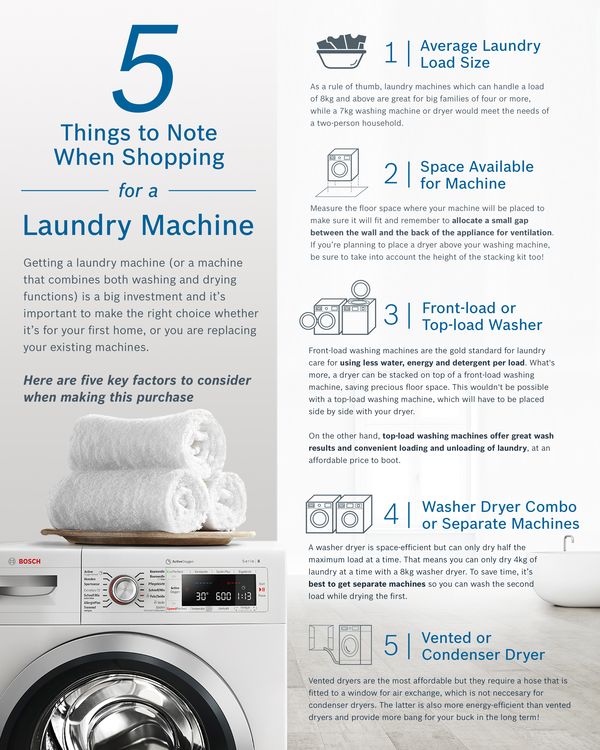
Match your needs to the best washer type for your situation.
Large Families
Choose a front-load or impeller top-load with 5.3+ cubic feet capacity. Prioritize fast cycles, bulk dispensers, and strong spin efficiency. Models like the LG 5.0 cubic feet or GE Profile 5.4 cubic feet top-loader are excellent choices.
Apartment Dwellers
Go for a compact front-load or all-in-one combo. Look for 24-inch width, low noise under 50 dB, and no venting requirement. Samsung’s Bespoke AI combo is fast and vented, drying loads in under an hour.
Budget Buyers
A top-load agitator under $900 offers reliable cleaning without smart features. The Maytag 4.5 cubic feet with Deep Fill is a durable, affordable option.
Allergy Sufferers
Choose a front-load with steam and an allergen cycle. The Whirlpool Smart Front Load with FreshFlow removes 95%+ of dander and includes an antimicrobial gasket.
Durability Seekers
Pick a Speed Queen agitator. Built with commercial-grade parts, it comes with a 7-year warranty and is designed to last decades.
Tech Lovers
Opt for a smart front-load with AI sensing, auto-dispensing, and app control. The LG or Samsung 8300 series offer seamless integration and remote monitoring.
Mobility-Impaired Users
Use a front-load on a pedestal or a shallow-depth top-load. Pedestals raise the drum to waist height, reducing strain. Look for clear controls and easy-reach drums.
Frequently Asked Questions About Choosing a Washing Machine
What is the most reliable brand for washing machines?
Consumer surveys consistently show Speed Queen, LG, and Samsung as the most reliable brands over a 10-year period. Speed Queen is particularly noted for durability, while LG and Samsung excel in features and technology. Whirlpool and GE offer solid mid-range options with good reliability records.
How much capacity do I need for a family of four?
A family of 4 should look for a washer with 4.5 to 5.2 cubic feet of capacity. This size handles everyday laundry, towels, and bedding without needing multiple loads. If you frequently wash bulky items like comforters, lean toward the larger end of this range.
Are front-load washers better than top-loaders?
Front-loaders generally offer better cleaning performance, greater energy efficiency, and gentler fabric care. They also have higher spin speeds, reducing drying time. However, top-loaders are more affordable, easier to load, and have shorter cycle times. The best choice depends on your priorities and budget.
Do I really need smart features on a washing machine?
Smart features are not essential. They add $200 to $500 to the price and may not be worth it if you do not use apps daily. Most washers work perfectly well without WiFi connectivity. If you value remote monitoring, energy tracking, or automatic cycle selection, smart features can be worthwhile.
How long do washing machines typically last?
With proper maintenance, a washing machine typically lasts 10 to 15 years. Front-loaders may require more maintenance to prevent mold and odor issues. Top-loaders with agitators tend to have simpler mechanics and can sometimes last longer with fewer repairs.
What features are most important for allergy sufferers?
Look for a front-load washer with steam cleaning and an allergen cycle. Steam can remove over 95% of pet dander and dust mites. High-temperature sanitize cycles kill germs and bacteria. Models with antimicrobial door gaskets and automatic venting systems help prevent mold that can aggravate allergies.
Final Thoughts on Choosing Your Washing Machine
Choosing the right washing machine comes down to matching your lifestyle with the right combination of capacity, type, features, and reliability. Front-loaders offer the best cleaning and efficiency, but top-loaders provide ease of use and lower upfront cost. Prioritize features that solve real problems, like steam for allergies or auto-dispensing for convenience, and always check dimensions and warranty coverage before buying.
Take time to measure your space, consider your household size and laundry habits, and think about what matters most to you. With the right choice, your washer will deliver clean clothes, lower utility bills, and years of trouble-free service. Do not get swayed by flashy features you will never use. Instead, focus on the fundamentals, and you will find a machine that fits perfectly into your home and your life.