Is your dishwasher not starting, leaking, or leaving dishes dirty? You are not alone. Most dishwasher problems are simple fixes that take less than 15 minutes to resolve. Whether your machine will not drain, will not fill, or just is not cleaning well, this guide will help you fix dishwasher issues fast using proven diagnostic steps and easy repairs. No tools? No problem. Many fixes require only a toothpick, vinegar, or a quick reset. By the end, you will know how to diagnose, clean, and repair your dishwasher like a pro.
Diagnose Dishwasher Problems Before Repair

Before tearing anything apart, identify the core issue. Use this quick-reference symptom checker to narrow down the cause.
Dishwasher Has No Power or Will Not Start
If your dishwasher is completely unresponsive, check these common issues:
• Power source: Verify it is plugged in (for portable models) or check if the circuit breaker tripped. Dishwashers often share a breaker with the garbage disposal.
• Door latch: A faulty or misaligned latch prevents startup. Close the door firmly and listen for a click. Try opening and closing it several times.
• Control lock: If buttons are not responding, your unit may be in Control Lock mode. Hold the Control Lock button for 3 seconds to unlock.
• Reset the control board: Turn off power at the breaker for 2 minutes, then restore. This clears electronic glitches.
Pro Tip: If the display is blank but the house has power, the control board may be dead. Try the reset first because this fixes many no power cases.
Dishwasher Water Not Filling
No water? Your dishwasher cannot clean. Start here with these checks:
Check Water Supply First
• Ensure the shut-off valve under the sink is fully open.
• Inspect the inlet hose for kinks or crushing behind the unit.
Test the Water Inlet Valve
The water inlet valve opens to let water in. If it fails, no fill occurs.
• Listen: During the fill cycle, you should hear a gentle hum or click.
• Inspect: Turn off power and water. Remove the lower panel. Locate the valve at the front bottom. Check for leaks or corrosion.
• Clean the screen: Inside the valve is a small filter. Remove it and soak in white vinegar to dissolve mineral buildup.
Warning: Always shut off water and power before accessing internal parts.
Float Switch Stuck
A safety float prevents overfilling. If stuck in the up position, it thinks the tub is full and blocks water entry.
• Open the dishwasher and look at the bottom center of the tub.
• Lift and release the float, which is a plastic cylinder. It should move smoothly.
• Clean debris around it with a damp cloth.
Fix a Dishwasher That Is Not Draining
A puddle at the bottom means poor drainage, which is the second most common dishwasher issue.
Clean the Filter First
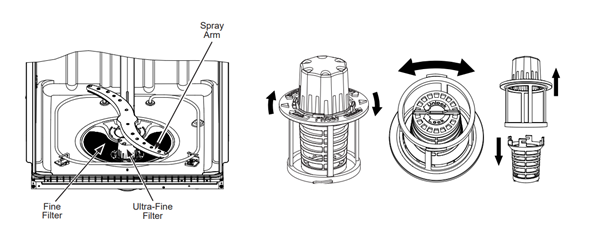
The filter traps food. When clogged, water cannot drain.
• Remove the lower rack.
• Twist or lift out the filter assembly at the tub base.
• Rinse under warm water. Use a soft brush for stuck grime.
• Reinstall securely because misaligned filters cause leaks and poor draining.
Frequency: Clean every 1 to 3 months, or weekly with heavy use.
Check the Drain Hose and Pump
Inspect the Drain Hose
• Pull the dishwasher out carefully.
• Look for kinks, pinches, or clogs in the hose.
• Ensure it connects tightly to the sink drain or garbage disposal.
Garbage Disposal Blockage
If your dishwasher drains into a disposal:
• Run the disposal with cold water to clear debris.
• Use a plunger or drain snake if clogged.
Air Gap Clogged
Some models have a small air gap on the countertop near the sink.
• Remove the chrome cap.
• Clean out gunk with a pipe cleaner or small brush.
• Flush with hot water.
Test the Drain Pump
If the filter and hose are clear but water remains:
• Listen during the drain cycle.
• Humming but no drainage? The impeller may be jammed.
• Silent? The motor could be dead.
Action: Remove the lower panel. Look into the pump housing. Clear any visible debris such as forks or bone fragments. Test pump continuity with a multimeter if comfortable.
Fix Dishes Not Getting Clean
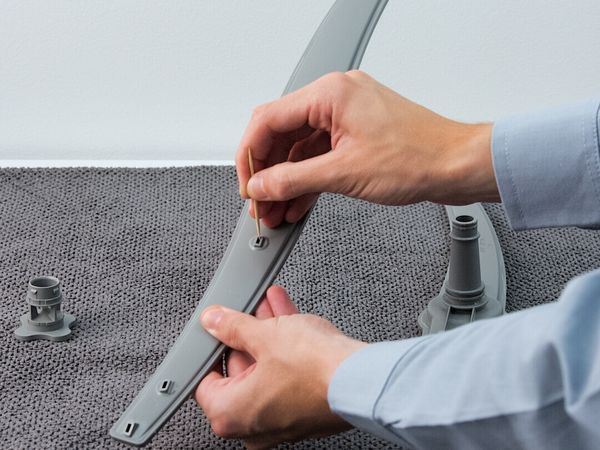
Dirty dishes after a cycle? It is rarely the machine. Usually it is user error or maintenance issues.
Unclog Spray Arms
Spray arms must rotate and spray freely.
Remove and Inspect Spray Arms
• Twist off the lower and upper spray arms.
• Hold under running water. Spin by hand.
• Use a toothpick or needle to clear clogged holes.
• Soak in vinegar if mineral buildup is visible.
Note: Cracked or warped arms will not spray properly. Replace them.
Load Dishes Correctly
Even the best machine fails with bad loading.
Do This
• Face soiled surfaces toward the spray arms.
• Place bowls and cups upside down.
• Space items so water reaches all surfaces.
• Put large items on the sides, not blocking the spray.
Avoid This
• Do not let metals touch such as silverware touching steel because this causes corrosion.
• Do not overload racks because water needs circulation.
• Do not place items where they block spray arm rotation.
Check Water Temperature
Cold water will not dissolve grease.
• Run the kitchen tap until hot (120°F minimum).
• Then start the dishwasher.
• Or select the Hot Start or Sanitize cycle if available.
Ideal temp: 120 to 140°F. Below 120°F, grease will not break down.
Use the Right Detergent
Using hand soap? Stop it because it causes suds and flooding.
Only Use
• Automatic dishwasher detergent (powder, gel, or pods).
• Rinse aid to prevent spots and improve drying.
Adjust for Hard Water
• Hard water over 12 grains: Use detergent with phosphorus or add 1 teaspoon extra per grain.
• Soft water: Standard detergent is fine.
• Over 15 grains? Install a water softener because no detergent will fix poor performance.
Fix Dishwasher Leaking From the Door
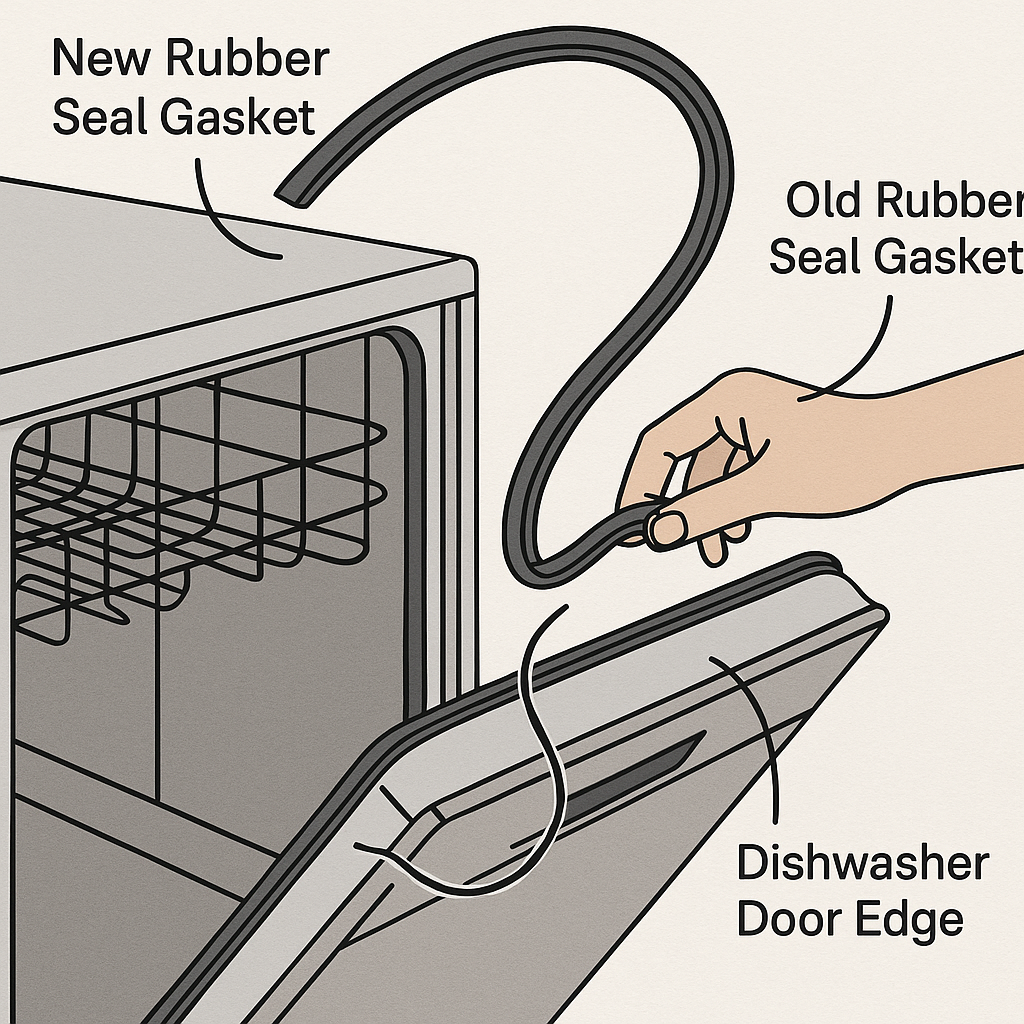
Water pooling under the dishwasher? Check the seal.
Inspect the Door Gasket
The rubber gasket around the door creates a watertight seal.
• Wipe it clean because food debris or grease can break the seal.
• Look for cracks, tears, or brittleness.
• Replace if damaged. Costs $15 to $30.
Quick Fix: Clean the gasket weekly with vinegar and a soft cloth to extend life.
Check Door Alignment
A misaligned door will not seal.
• Is the door level with the cabinet?
• Does it close smoothly?
• Are hinges loose or bent?
Adjust: Tighten hinge screws or replace if stripped.
Failed Inlet Valve
A stuck-open inlet valve floods the tub.
• If water fills even when off, replace the inlet valve.
• Turn off water supply immediately to prevent overflow.
Fix Unusual Dishwasher Noises
Grinding, rattling, or humming? Do not ignore it.
Normal vs. Abnormal Sounds
• Grinding (brief): Normal if your model has a macerator to grind food.
• Grinding (continuous): Something is stuck. Check the pump.
• Rattling: Loose spray arm or foreign object.
• Humming: Motor trying to run but blocked or seized.
Remove Foreign Objects
• Empty the dishwasher.
• Feel around the bottom sump for utensils, twist ties, or bottle caps.
• Remove and retest.
Tighten Spray Arms
• Reattach arms securely.
• Ensure rotors spin freely.
Pro Tip: If noise persists after clearing debris, the pump or motor may need replacement.
Fix Detergent Not Dispensing
The cup stays full after the cycle? Likely a release failure.
Common Causes
• Bi-metal release failed.
• Wax motor malfunction.
• Timer not advancing.
Quick Checks
• Manually open the detergent cup after a cycle ends. Is it wet inside?
• If dry, the cup did not open.
• If wet, it likely released. Check detergent type because some pods dissolve slowly.
Test: Run a cycle with manual detergent added to the bottom tub. If cleaning improves, the dispenser is faulty.
Fix Poor Dishwasher Drying Performance

Wet dishes after Heated Dry? Here is why.
Check the Rinse Aid
• Is the dispenser empty?
• Refill with rinse aid because this reduces water tension and improves drying.
Tip: Use the Extra Dry or Fan Assist setting if available.
Failed Heating Element
Found at the tub bottom.
• Look for visible damage such as cracks or burn marks.
• Test for continuity with a multimeter.
• Replace if open circuit.
Note: Some models use condensation drying (cool-dry). These rely on plastic tubs and residual heat. Dishes dry slower in these models.
Reset and Restart: Easy Fixes That Work
Before calling a pro, try these non-invasive solutions.
Press Cancel or Reset
Many models have a Cancel or Start Over button.
• Press and hold for 3 to 5 seconds.
• This clears temporary software glitches.
Power Cycle the Unit
This resets the control board.
-
Turn off power at the breaker (usually shared with disposal).
-
Wait 2 to 3 minutes.
-
Turn back on.
-
Restart the dishwasher.
Why it works: Clears stuck timers, frozen displays, and sensor errors.
When to Call a Professional
Most repairs are DIY, but some require expertise.
Seek Help If
• The control board needs replacement.
• Heating element or motor is faulty and you are uncomfortable with wiring.
• You have cleaned, reset, and checked all components but the problem persists.
• You are unsure about electrical safety.
Fact: 80% of dishwasher repairs are easy. The other 20% involve complex electronics or sealed components.
Prevent Problems: Maintenance Schedule
Keep your dishwasher running like new with routine care.
Weekly Tasks
• Wipe the door gasket with vinegar.
• Check for foreign objects in the sump.
• Empty and clean the filter if heavily used.
Monthly Tasks
• Remove and clean spray arms.
• Inspect the inlet hose for kinks.
• Refill rinse aid.
Every 3 to 6 Months
• Clean the inlet valve screen (turn off water first).
• Run a clean cycle with dishwasher cleaner or vinegar.
• Check door latch and hinges for wear.
Bonus Tip: Run an empty cycle with 1 cup white vinegar in a bowl on the top rack monthly to deodorize and descale.
Frequently Asked Questions About Fixing Dishwashers
Why will my dishwasher not start at all?
Check the power source first. Verify the unit is plugged in and the circuit breaker has not tripped. Also check the door latch because a misaligned or faulty latch prevents the safety switch from engaging. Try resetting the control board by turning off power at the breaker for 2 minutes.
How do I fix a dishwasher that will not drain?
Start by cleaning the filter at the bottom of the tub because debris buildup is the most common cause. Check the drain hose for kinks or clogs. If connected to a garbage disposal, run the disposal to clear any blockage. Test the drain pump by listening for a humming sound during the drain cycle.
What causes dishes to come out dirty after washing?
Clogged spray arms are a frequent culprit. Remove them and clear clogged holes with a toothpick. Also check your loading technique because dishes must face the spray arms and not be overcrowded. Ensure water temperature is at least 120°F because cold water will not dissolve grease.
How do I stop my dishwasher from leaking?
Inspect the door gasket for cracks, tears, or debris preventing a seal. Clean it weekly with vinegar. Check door alignment because misaligned hinges prevent proper sealing. If water fills even when the machine is off, the inlet valve may be stuck open and needs replacement.
Why is my dishwasher making grinding noises?
Brief grinding is normal if your model has a food macerator. Continuous grinding indicates something is stuck in the pump. Check the sump area for foreign objects such as utensils or bottle caps. Remove any debris and retest. If noise persists, the pump or motor may need replacement.
How often should I clean my dishwasher filter?
Clean the filter every 1 to 3 months depending on usage. If you run the dishwasher daily or have hard water, clean monthly. Weekly cleaning is recommended for heavy use. A clogged filter causes poor drainage and dirty dishes.
Key Takeaways for Fixing Your Dishwasher
You can fix dishwasher problems faster than you think. Start with the simplest fixes: reset the control board, clean the filter, and check the door seal. Most issues stem from clogs, incorrect loading, or minor malfunctions, not broken machines. Use this guide to diagnose, clean, and repair with confidence.
The majority of dishwasher repairs are rated easy and take less than 15 minutes. With regular maintenance including cleaning the filter, spray arms, and gasket, your dishwasher can last 10 years or more. Always disconnect power and water before working on internal components, and use a multimeter to test electrical parts if you are comfortable doing so.
Now go reclaim sparkling clean dishes. No service call needed.