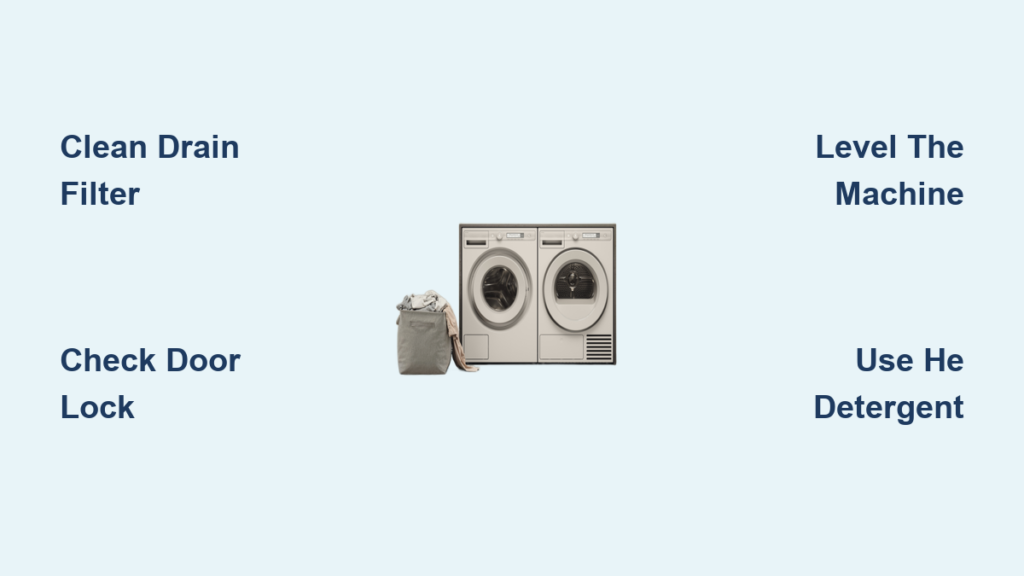
If your Beko washing machine won’t drain, won’t spin, or makes loud banging noises, you are not alone. Beko washing machine repair is a common need, especially for front-loaders like the BWM7200X and WMY10148C2. While Beko blends European efficiency with smart features like ProSmart Inverter motors and AllergyPlus cycles, even reliable machines develop problems over time. The good news? Most issues stem from a handful of recurring faults that are easy to diagnose and often affordable to fix.
This guide walks you through the most frequent Beko washing machine problems, their root causes, and step-by-step repair strategies. Whether you are dealing with a drainage error, a silent spin cycle, or mysterious leaks, you will learn how to identify what is wrong and whether it is worth repairing or time to replace. We will also cover essential maintenance to prevent future breakdowns and help you avoid costly service calls.
Decode Beko Error Symptoms
No Drain After Cycle
If water remains in the drum after the wash, the issue is likely drain-related. Beko machines often display no formal error code, but the cycle stalls at the end. This is one of the most common reasons for service calls.
What to check:
- Drain pump filter clog. Coins, hair ties, or lint block the filter behind the front access panel.
- Kinked drain hose. The hose may be bent behind the machine, preventing water outflow.
- Failed drain pump. If the pump hums but does not move water, the impeller could be jammed or the motor burned out.
Pro Tip: Always unplug the washer and place towels underneath before opening the filter. Residual water will spill out.
Spin Cycle Not Starting
Clothes come out soaking wet. The machine fills and agitates but skips high-speed spinning. This is a classic sign of worn motor brushes, especially in older Beko front-loaders.
Common culprits:
- Motor brush wear. Carbon brushes degrade over time. When too short, they lose contact with the motor commutator.
- Faulty door lock. The machine will not spin if the door interlock does not signal closed.
- Pressure switch failure. If the sensor thinks water is still present, it blocks the spin phase.
Visual clue: If the drum spins slowly during agitation but stops during spin, suspect motor brushes.
Loud Banging or Vibration
A washer that walks across the floor or sounds like a drum kit in a wind tunnel points to mechanical imbalance or wear.
Diagnose by sound:
- Clunking. Likely an unbalanced load or foreign object between drums.
- Grinding or roaring. Worn drum bearings. This is a major repair.
- Rhythmic thumping. Failed shock absorbers or unlevel installation.
Quick fix: Redistribute laundry and re-run the spin. If noise persists, inspect further.
Machine Will Not Start
Pressing Start does nothing. No lights, no response. This could be electrical, mechanical, or user error.
Check these first:
- Child lock activated. Hold Spin and Rinse for 3 seconds to disable (model-dependent).
- Door not latching. Listen for the click when closing. A faulty lock prevents startup.
- Power supply issue. Verify the outlet works. Check the circuit breaker.
Warning: If the control panel is dead, suspect the main control board, especially after a power surge.
Water Leaking from Bottom
Puddles under your Beko washer? Leaks usually come from hoses, seals, or internal connections.
Trace the source:
- Front bottom leak. Likely the drain pump filter or gasket.
- Door area. Inspect the rubber door seal for tears or trapped debris.
- Detergent drawer overflow. Clogs cause water to back up and leak out.
Note: Beko’s AquaStop system should prevent major flooding, but it will not stop slow drips.
Fix Drain Pump and Filter Issues
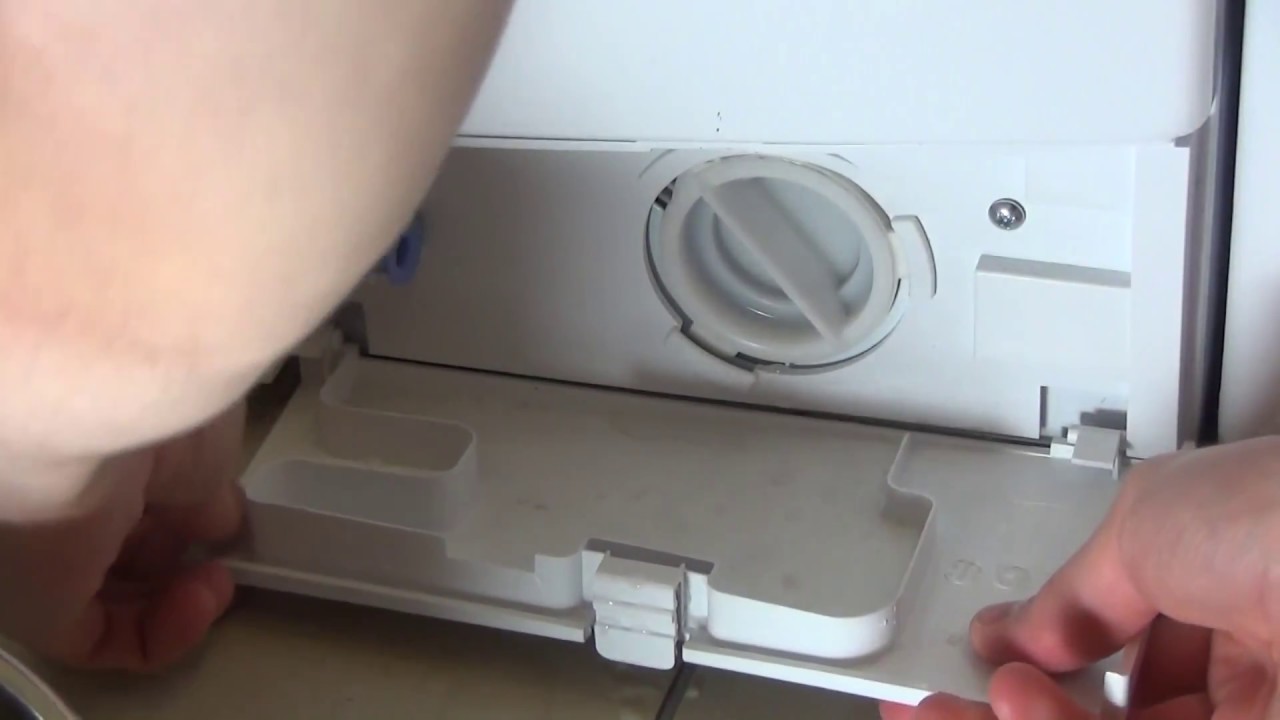
Clean the Drain Pump Filter
This 10-minute task prevents 60% of drainage problems.
Steps:
- Unplug the washer and turn off the water supply.
- Place towels beneath the front lower access panel.
- Open the small rectangular flap at the bottom front.
- Slowly unscrew the filter cap. Water will drain out.
- Remove debris. Coins, socks, hair, lint.
- Reinstall the cap tightly and close the panel.
Frequency: Clean every 2 to 4 weeks to prevent clogs.
Test the Drain Pump
If the filter is clear but no water drains, test the pump.
How to check:
- Listen during a drain cycle. A humming sound means power is reaching the pump.
- If silent, use a multimeter to test for continuity (should read 4 to 6 ohms).
- If no continuity, the pump motor is dead. Replace it.
Part note: Use OEM Beko pump (e.g., 4812318001) for proper fit and flow rate.
Restore Spin Function: Replace Motor Brushes

Diagnose Brush Wear
Motor brushes are small carbon blocks that conduct electricity to the motor. When worn, the motor cannot reach spin speed.
Signs of failure:
- Drum spins slowly during wash but not during spin.
- Machine completes all cycles except high-speed extraction.
- Error code E10 or similar (varies by model).
Pro Insight: Brush wear is common in models like BWM7200X after 5 to 7 years.
Replace Brushes Step-by-Step
Tools needed: Screwdriver, new OEM brush set (e.g., Beko 4821102001).
Procedure:
- Unplug the washer and move it forward.
- Remove the rear panel to access the motor.
- Locate the brush holders on the motor casing.
- Unscrew the holder and pull out the old brushes.
- Insert new brushes and reassemble.
- Test with a spin-only cycle.
Time estimate: 30 to 45 minutes for a DIYer.
Warning: Do not confuse brushed motors with ProSmart Inverter motors. Brushes do not exist on inverter models.
Repair Door Lock and Latch Problems

Test the Door Interlock
The door must lock before the machine starts. A faulty lock stops all operations.
Symptoms:
- Door will not click shut.
- Door light flashes or will not turn off.
- No response when starting.
Test with a multimeter:
- Disconnect power.
- Remove the top or front panel to access the lock.
- Unplug the lock’s wiring harness.
- Set multimeter to continuity mode.
- Test between the main terminals. Should beep when closed.
No beep? Replace the lock assembly.
Install a New Door Lock
Steps:
- Disconnect power and water supply.
- Remove top panel or front door seal (depending on model).
- Disconnect old lock wires and unbolt the unit.
- Install the new lock and reconnect wires.
- Reassemble and test the door lock.
OEM part recommended: Aftermarket locks may fail prematurely.
Stop Leaks Fast: Seal and Hose Fixes

Inspect the Door Gasket
The rubber seal around the door can develop tears or trap debris.
Fix:
- Wipe the gasket weekly with a damp cloth.
- Check the inner lip and bottom fold for trapped objects.
- Replace if cracked or torn (part # 4812317012).
Prevention tip: Leave the door ajar after use to dry out moisture and prevent mold.
Check Detergent Drawer Clogs
Overflow from the drawer is a sneaky leak source.
Clean it:
- Pull the drawer fully out.
- Remove inserts and soak in warm, soapy water.
- Flush the housing with a damp cloth.
- Reinsert and run a rinse cycle.
Use HE detergent only: Excess suds can back up and leak.
Tighten or Replace Hoses
Inspect both inlet and drain hoses annually.
Look for:
- Cracks or bulges in rubber.
- Loose connections at the wall or machine.
- Corrosion on metal fittings.
Upgrade tip: Install braided stainless steel inlet hoses for long-term reliability.
Tackle Control and Electronics Failures
Reset the Control Board
Sometimes, a simple reset fixes unresponsive panels.
Try this:
- Unplug the washer for 5 minutes.
- Plug back in.
- Press and hold Start for 10 seconds.
- Test basic functions.
Note: This clears temporary glitches, not permanent board failure.
Test the Pressure Switch
This sensor tells the machine how much water is inside. If faulty, it can block spin or cause overfilling.
Test procedure:
- Locate the pressure switch (usually near the top).
- Disconnect the thin hose and blow into it. Should hear a click.
- Use a multimeter to check continuity across terminals.
No response? Replace the switch.
Evaluate Major Repairs: Bearings, Motors, Boards
Replace Drum Bearings (Advanced)
Grinding noise during spin? Bearings are likely shot.
Reality check:
- Labor-intensive. Requires removing the drum.
- Cost: $350 to $450, including parts.
- Consider replacement if the machine is over 8 years old.
DIY difficulty: High. Requires special tools and precision reassembly.
Replace Inverter Board (ProSmart Models)
If the motor does not respond and brushes are good, the inverter board may be dead.
Symptoms:
- No motor movement.
- Error codes like E20 or Motor Fault.
- Burn marks on the board.
Replacement steps:
- Disconnect power.
- Remove rear panel.
- Locate the inverter board near the motor.
- Disconnect wiring and unscrew the board.
- Install the new OEM board.
Part cost: $120 to $180. Labor adds $100+.
Prevent Future Breakdowns: Maintenance Plan
Follow a Beko Maintenance Schedule
- Clean drain filter: Every 2 weeks
- Wipe door gasket: Weekly
- Run cleaning cycle: Monthly
- Inspect hoses: Quarterly
- Check leveling: Every 6 months
Cleaning cycle tip: Use Beko Washer Cleaner or 2 cups of white vinegar. Run a 90C cycle with no clothes.
Avoid Common Mistakes
- Overloading. Stresses motor, shocks, and drum.
- Wrong detergent. Non-HE detergent creates excess suds.
- Ignoring error codes. Early action prevents bigger failures.
- Using non-OEM parts. Aftermarket pumps or locks may fail in months.
Repair vs. Replace: Make the Right Call

When to Repair
Worth fixing if:
- Machine is under 8 years old.
- Problem is motor brushes, door lock, or drain pump.
- Repair cost is under 50% of a new unit.
- It is a high-end model with Home Connect or EcoSilence Drive.
Example: $280 repair on a 6-year-old Beko with ProSmart motor? Yes.
When to Replace
Time for a new washer if:
- Drum bearings are failing.
- Multiple systems are broken (e.g., pump + control board).
- Repairs exceed $400.
- Unit is 10+ years old with recurring issues.
Smart move: A new Beko washer costs $600 to $1,100 and comes with a 1-year warranty.
Frequently Asked Questions About Beko Washing Machine Repair
How do I reset my Beko washing machine?
Unplug the washer for 5 minutes, then plug it back in. Press and hold the Start button for 10 seconds. This clears temporary glitches in the control board.
Why does my Beko washing machine not spin?
The most common cause is worn motor brushes. These carbon components degrade over time and lose contact with the motor. Other causes include a faulty door lock or pressure switch failure.
How often should I clean the drain pump filter?
Clean the drain pump filter every 2 to 4 weeks. This single task prevents approximately 60% of drainage problems in Beko washing machines.
Can I use aftermarket parts for Beko repairs?
It is not recommended. Aftermarket parts, especially for pumps, locks, and control boards, may fail prematurely. Use OEM Beko parts for reliable performance and to maintain warranty coverage.
Is it worth repairing a Beko washing machine over 8 years old?
It depends on the issue. Minor repairs like drain pumps, door locks, or motor brushes are worth it. Major repairs like drum bearings or multiple system failures often justify replacement, especially if the machine is over 10 years old.
Where can I find Beko washing machine error codes?
Beko washing machines do not display formal error codes for most issues. However, drainage problems, door lock failures, and water supply issues follow specific patterns. Consult your user manual or contact Beko customer support at (888) 352-2356.
Key Takeaways for Beko Washing Machine Repair
Beko washing machine repair is often straightforward, especially for common issues like clogged filters, worn brushes, or faulty door locks. With the right tools and OEM parts, many fixes can be done in under an hour. The drain pump filter is the most important maintenance item. Clean it every 2 to 4 weeks to prevent the majority of drainage failures.
For major internal repairs like bearings or inverter boards, weigh the cost carefully. If repairs exceed $400 on a machine over 8 years old, consider replacement. Motor brush replacement is the most common repair for Beko front-loaders and costs significantly less than major component replacements.
Regular maintenance keeps your Beko running smoothly for years. Leave the door ajar after use, use only HE detergent, and inspect hoses quarterly. If in doubt, consult a factory-trained technician to avoid misdiagnosis and ensure long-term reliability.