Is your washing machine leaving water in the drum after a cycle? Are clothes coming out soaked, or do you notice a musty smell every time you open the door? These are telltale signs your drain hose may be clogged. Over time, lint, soap scum, fabric fibers, and even small items like coins or socks can accumulate inside the corrugated hose, restricting water flow and causing drainage issues. Left unchecked, this can lead to leaks, mold growth, and even pump damage.
Cleaning the drain hose on a washing machine is a critical maintenance task that restores performance, prevents odors, and extends appliance life. While many users focus only on the lint filter, the drain hose itself often harbors hidden buildup, especially in its ridged interior. In this guide, you’ll learn how to diagnose a clogged hose, remove and clean it thoroughly, and take simple steps to prevent future blockages.
Recognize Drain Hose Clog Symptoms

Before disassembling anything, confirm the issue lies with the drain hose. Key indicators include water remaining in the drum after the cycle ends, slow drainage or incomplete spin cycles, and gurgling sounds during draining, which signals air trapped by a blockage. Foul odors from the machine due to stagnant water and mold are also common warning signs. You may also notice leaking water near the back of the washer or floor pooling after a cycle.
If your machine displays an error code like “F02” or “ND,” consult your manual, as many indicate drainage failure. However, always rule out simpler causes first before assuming the worst.
Identify Common Blockage Types
Different debris causes different issues, and knowing what you’re dealing with guides your cleaning method. Lint and hair form dense mats that cling to corrugated hose ridges. Coins, buttons, or socks can physically block flow entirely. Soap scum and fabric softener residue create a sticky sludge that traps lint and accelerates buildup. Mineral buildup from hard water reduces the internal diameter over time, restricting water flow even further.
Pinpoint the Blockage Location
Not all clogs are in the hose, so narrow down the source first. Check the drain filter or coin trap first, as pulling out gunk here may solve the problem. Suspect the drain hose if the filter is clean but water still won’t drain. If you hear gurgling from the standpipe or notice backup into the laundry tub, the problem may be in your home’s plumbing rather than the machine itself.
Test by disconnecting the hose from the standpipe and draining into a bucket. If water flows freely, the problem lies downstream in your plumbing.
Gather Required Tools and Supplies
To safely remove and clean the hose, you’ll need specific tools. For accessing the hose, have a T20 Torx screwdriver on hand, as this is most common for back panels. You’ll also need flathead and Phillips screwdrivers, pliers or a wrench for hose clamps, a socket wrench for older top-loaders with agitator nuts, a flashlight to inspect dark areas, and buckets and towels to catch water. Keep a large bowl nearby as well, since many models trap residual water near the pump.
Choose the Right Cleaning Agents
Use natural or mechanical methods to avoid damaging rubber parts. Boiling water melts soap scum and flushes debris effectively. White vinegar and baking soda create a fizzing action that breaks down grime. Dish soap and warm water work well for soaking. Compressed air or a drain snake dislodges stubborn clogs. Commercial washer cleaner provides a monthly maintenance boost.
Avoid harsh chemicals unless specified by your manufacturer, as they can degrade seals and rubber components over time.
Disconnect the Drain Hose Safely
Never skip safety steps when working with your washing machine. Begin by turning off and unplugging the washing machine, then shut off both water supply valves. Pull the unit away from the wall for rear access, and place towels and a bucket under hose connections to catch any water that spills during the process.
Remove External Hose Connection
Most drain hoses connect to a standpipe at the back. To disconnect, loosen the clamp securing the hose to the standpipe, then carefully pull the hose free while expecting some water to spill. Inspect the check valve at the hose end for debris, as this component can accumulate buildup over time. If you’re only cleaning the external section, flush it now with a garden hose before proceeding.
Access Internal Hose for Deep Cleaning
For thorough cleaning, full removal works best. Remove the back panel using a T20 Torx driver, then locate the pump access area, which is usually front-lower or side-mounted. Drain trapped water via the small internal pipe into a bowl, as this water won’t empty during normal cycles. Unclamp the hose from the pump by squeezing the retaining clip, then release mounting brackets and gently pull the hose out. Work slowly to avoid kinking or tearing the flexible tubing.
Clean the Drain Hose Thoroughly
Flush with Hot Water
Start with the simplest method. Hold the hose vertically and pour 4 to 5 cups of boiling water through it. Let it sit for 5 minutes to dissolve grease and soap, then repeat until water runs clear. This often clears minor sludge buildup without requiring full disassembly.
Use Baking Soda and Vinegar
For odor and residue buildup, try this natural approach. Pour half a cup of baking soda into the hose, then follow with 1 cup of white vinegar. Let the mixture fizz for 30 to 60 minutes, then flush again with boiling water. This natural reaction loosens grime and kills bacteria effectively.
Snake Through Stubborn Clogs
For solid blockages caused by socks, coins, or dense lint mats, use a drain snake. Insert the snake from the pump end, not the standpipe end, because the check valve blocks entry from the other side. Push gently until you feel resistance, then rotate and wiggle to break up the clog. Pull out debris when retracting the snake, then flush with water to confirm clear flow. Use a flashlight to inspect both ends afterward.
Clean Related Drain Components
Clear the Drain Filter
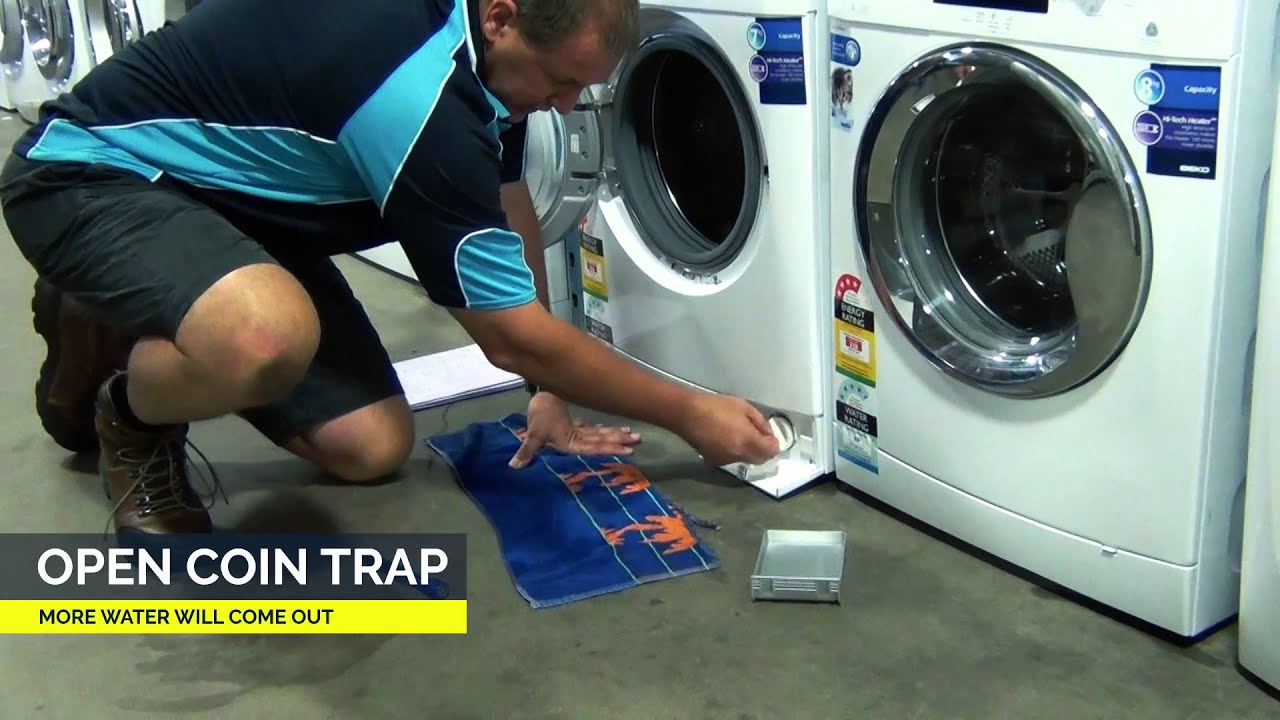
Most clogs start in the drain filter, also known as the coin trap. For front-loaders, open the lower front panel and place a bowl under the filter. For top-loaders, check under the agitator or at the tub base. Unscrew the filter cap slowly, as water will drain out. Remove lint, coins, and debris by hand, then soak in hot water and scrub with an old toothbrush. Reinstall tightly to prevent leaks. Perform this task every 3 months for optimal performance.
Inspect the Standpipe
If the hose and filter are clean but drainage fails, the problem may be in your plumbing. Shine a flashlight into the wall pipe, then pour baking soda and vinegar down it before flushing with hot water. Use a plumber’s snake for deep clogs. Ensure the standpipe is at least 30 inches high to prevent siphoning issues.
Reassemble and Test the System

Reconnect the Drain Hose
Feed the hose back through the machine if you removed it internally. Reattach to the pump and secure with the clamp, then reinstall mounting brackets and the back panel. Reconnect to the standpipe with a slight gooseneck curve, making sure the hose is never kinked. The gooseneck prevents sewer gases from entering your laundry room.
Run a Test Cycle
Before pushing the machine back into place, plug it in and turn on water valves. Run a short rinse or spin cycle empty while watching for fast, complete drainage with no leaks at connections and no gurgling or error codes. If issues persist after thorough cleaning, the pump or internal plumbing may need professional service.
Prevent Future Clogs
Follow a Maintenance Schedule
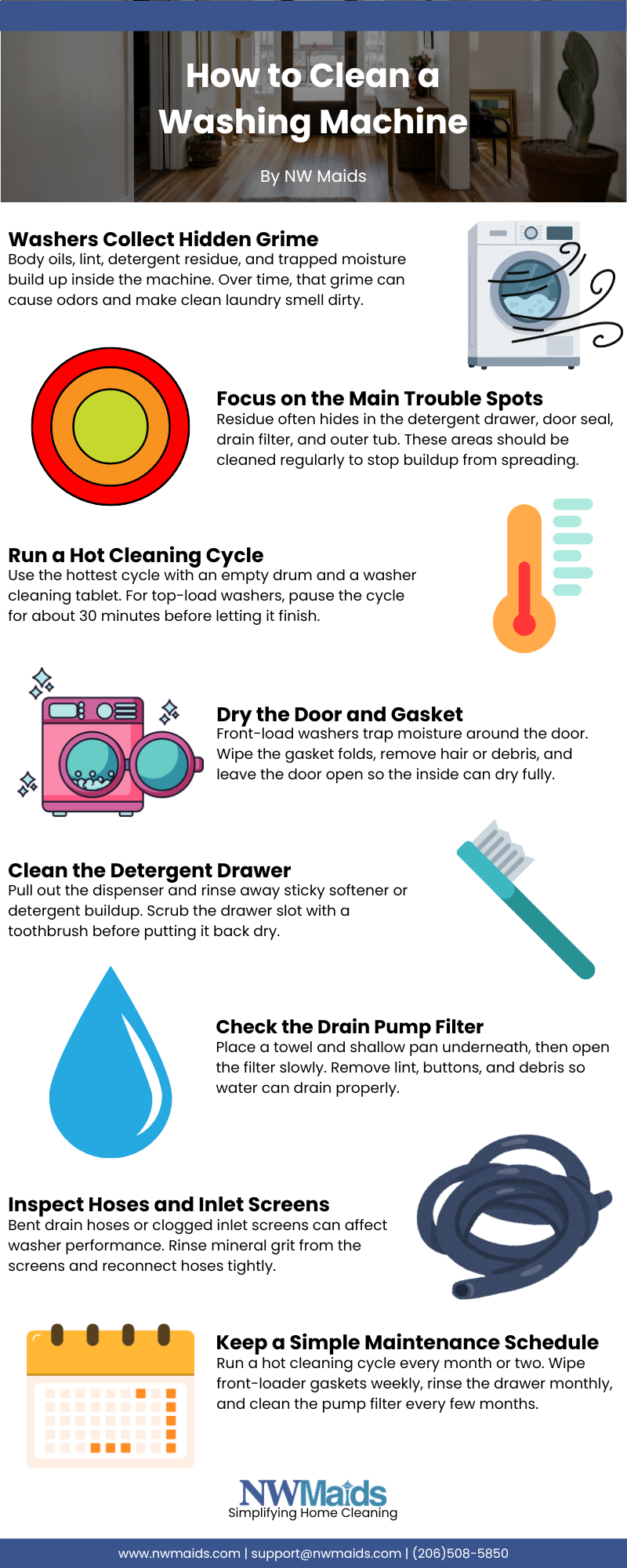
Establish a regular cleaning routine to prevent buildup before it becomes a problem. Run a hot wash with vinegar or commercial cleaner monthly. Clean the drain filter every 3 months. Inspect the hose for kinks every 6 months. Perform a full hose flush annually to keep everything flowing freely.
Adopt Best Practices
Use HE detergent only in high-efficiency machines, as regular detergent creates excess suds that coat hoses. Don’t overuse fabric softener, as it coats hoses and traps lint. Empty pockets before washing, as coins and tissues are common clog culprits. Avoid overloading the machine, as tight loads shed more fibers. Leave space behind the washer to prevent hose kinking.
Address Hard Water Issues
In high-mineral areas, use descaling agents monthly to combat buildup. Install a water softener if buildup is severe. Increase vinegar use in maintenance cycles to help dissolve mineral deposits. Hard water accelerates sludge formation, so stay ahead of it with consistent maintenance.
When to Call a Professional
DIY Fixes That Fail
If you’ve cleaned the hose, filter, and standpipe but water still won’t drain, the issue may be beyond basic maintenance. If the pump hums but doesn’t move water, or if grinding noises occur during the drain cycle, you may need a professional to address a failed drain pump or internal blockage requiring deeper disassembly.
Warning Signs of Major Issues
Seek professional help if you notice water leaking from the machine body rather than just connections, if error codes return after cleaning, if you smell a burnt odor or notice electrical issues, or if you’re uncomfortable handling internal components. Some repairs void warranties, so check yours before attempting major disassembly.
Frequently Asked Questions About Cleaning Washing Machine Drain Hoses
How do I know if my washing machine drain hose is clogged?
Key signs include water remaining in the drum after a cycle, clothes coming out soaked, slow drainage, gurgling sounds during draining, and foul odors from the machine. You may also see water pooling near the back of the washer or notice error codes like F02 or ND on display.
Can I clean the drain hose without removing it?
Yes, you can flush the hose while it’s still connected. Disconnect it from the standpipe, then pour boiling water through it or use the baking soda and vinegar method. However, for thorough cleaning, removal is recommended to access the entire length and both ends of the hose.
How often should I clean my washing machine drain hose?
Clean the drain filter every 3 months and inspect the drain hose every 6 to 12 months. If you notice odors, slow drainage, or other clog symptoms, clean the hose immediately regardless of schedule.
What is the best way to remove a clog from the drain hose?
Use a drain snake or fish wire inserted from the pump end of the hose. Push gently until you feel resistance, then rotate and wiggle to break up the blockage. Pull out debris when retracting, then flush with boiling water to verify clear flow.
Can I use chemical drain cleaners on my washing machine hose?
Avoid harsh chemical drain cleaners, as they can damage rubber seals and hose materials. Stick to natural solutions like baking soda and vinegar, or use mechanical methods like snaking. If you must use a commercial product, choose one specifically designed for washing machines.
Why does my drain hose keep clogging repeatedly?
Repeated clogs often result from overusing detergent or fabric softener, not cleaning the filter regularly, washing heavily soiled items that shed excess lint, or hard water buildup. Address these underlying causes to prevent future blockages.
Key Takeaways for Cleaning Your Washing Machine Drain Hose
Regular cleaning of your drain hose takes less than an hour but prevents costly repairs and keeps your laundry fresh. Start by diagnosing symptoms like standing water, slow drainage, and odors, then gather the necessary tools including a T20 Torx screwdriver, pliers, and buckets. Always disconnect power and water before working, and use natural cleaning methods like boiling water, baking soda, and vinegar rather than harsh chemicals.
Reassemble the system carefully, ensuring the hose has a proper gooseneck curve to prevent siphoning. Establish a maintenance schedule with monthly vinegar washes, quarterly filter cleaning, and annual hose inspections. By diagnosing symptoms early, using the right tools, and following a simple maintenance routine, you’ll ensure fast drainage and odor-free cycles for years to come.