Is your GE washing machine leaving clothes with a musty smell or strange residue? You are not alone. Despite doing laundry regularly, many homeowners overlook the fact that their washing machine itself needs cleaning. Over time, fabric softener, soap scum, and moisture create the perfect breeding ground for mold, mildew, and bacteria, especially inside hidden areas like the agitator core and rubber gasket. Left unchecked, this buildup can transfer grime to your clothes, clog drains, and even cause long-term damage to your machine.
The good news: cleaning your GE washing machine is simple, affordable, and takes less than an hour for routine maintenance. GE Appliances recommends cleaning your washer once per month to keep odors at bay and maintain performance. This guide walks you through every step, from quick monthly cycles to deep cleaning the hard-to-reach spots, so your GE washer stays fresh, efficient, and odor-free.
Monthly Cleaning Routine
Keeping your GE washer fresh starts with consistent monthly maintenance. These simple routines prevent buildup before it becomes a problem and extend the life of your machine.
Use a Washer Cleaning Tablet
The easiest and most effective way to clean your GE washing machine is with a dedicated cleaning tablet. Products like Glisten Washer Magic (GE Part #WX10X10208), Tide Washing Machine Cleaner, or ACTIVE tablets are formulated to dissolve grease, soap scum, and eliminate odors.
Steps:
• Ensure the drum is empty
• Drop one tablet directly into the tub (do not place in the detergent dispenser)
• Select the hottest, longest cycle available (often labeled “Basket Clean” or “Maintain”)
• Let the cycle complete fully
• Wipe the interior with a clean microfiber cloth to remove any residual foam or debris
Pro Tip: ACTIVE tablets are septic-safe and come in a 24-count box, enough for a full year of monthly cleaning.
Try Vinegar and Baking Soda Soak
If you prefer household ingredients, distilled white vinegar and baking soda offer a powerful, natural alternative.
What You Will Need:
• 4 cups distilled white vinegar
• 1 cup baking soda
• Soft scrubbing brush or microfiber cloth
Steps:
• Run the washer on the hottest, longest cycle
• As the tub fills, pour in 4 cups of vinegar
• Add 1 cup of baking soda directly to the water
• Let the washer agitate for 2 to 3 minutes, then pause or open the lid to allow the mixture to soak for 1 hour
• Resume and complete the cycle
• Wipe down the drum, lid, and control panel afterward
Warning: Never mix vinegar with bleach. This creates toxic fumes that can be dangerous.
Disinfect With Bleach
For a sanitizing deep clean, especially if someone in your home is sick or you have washed heavily soiled items, use liquid bleach.
Steps:
• Confirm the drum is empty
• Pour 1 cup (250 ml) of liquid bleach directly into the tub
• Run the “Basket Clean” or hottest cycle
• For stronger disinfection, pause the cycle after filling and let it soak for 1 hour before resuming
Note: A faint bleach smell may linger afterward. Leave the lid open to air out the machine.
Deep Cleaning: Remove the Agitator

If your top-load GE washer has a persistent musty odor, the culprit is likely fabric softener residue trapped inside the hollow agitator core. This dark, slimy buildup is the number one cause of unexplained smells, even if you use softener sparingly.
Gather Required Tools
You will need:
• 11 mm socket
• 12-inch (or longer) socket extension
• Impact driver (optional but recommended)
• Garden hose
• Scotch-Brite scrubbing pad
• Paper towels
• Mini vacuum (optional)
Safety First: Unplug the washer before starting any manual cleaning.
Remove the Agitator
Steps:
• Pull off the center cap at the top of the agitator
• Insert the 11 mm socket with extension into the bolt at the base
• Turn counterclockwise to loosen. Use an impact driver if the bolt is tight
• Do not force it. The agitator is plastic, and excessive pressure can crack it
• Once loose, lift the agitator straight up and out of the drum
Clean the Agitator and Base
Steps:
• Inspect the hollow core. Expect dark, slimy mold. This is biological growth, not just dirt
• Use a garden hose and scrubbing pad to clean the inner walls of the hollow center, the underside of the agitator, and the base where it sat in the drum
• A pressure washer delivers optimal results, but a hose and elbow grease achieve about 90% cleanliness
Clean the Drum and Perimeter Ring

Steps:
• Scrub the area beneath the agitator with a wet scrubbing pad
• Wipe down the inner tub surface
• Clean the perimeter ring (the outer edge of the inner drum) with a damp paper towel. This area collects dust and can transfer residue to clothes
Reinstall the Agitator
Steps:
• Align the agitator with the transmission spines at the base
• Push down firmly until you hear a distinct click or feel a solid thud
• Reinsert the 11 mm bolt and tighten slowly clockwise
• Do not over-tighten. Plastic can crack under too much torque
• Snap the center cap back into place
Run a Post-Cleaning Cycle
Steps:
• Place a washer cleaning tablet directly into the drum
• Run the largest load size, heavy wash, hot water, and deep rinse (if available)
• After the cycle, wipe the tub edge with a paper towel or use a mini vacuum to remove dislodged debris
Front-Load Washer Cleaning Tips
Front-load GE washers are prone to moisture retention in the rubber door seal (gasket), making them especially vulnerable to mold and odors.
Clean the Drum and Dispenser
Steps:
• Remove all items from the drum
• Add 3/4 to 1 cup of white vinegar to the liquid bleach dispenser
• Sprinkle 1/3 to 1/2 cup of baking soda directly into the drum
• Run the “Clean” or longest/hottest cycle
Wipe the Door Seal
Steps:
• After the cycle, pull back the rubber gasket around the door
• Use a dry microfiber cloth to wipe moisture, debris, and mold from the folds
• Leave the door slightly ajar when not in use to promote air circulation
Alternative: Use an ACTIVE tablet placed directly in the drum on a hot cycle. No mixing required.
Troubleshoot Common Issues
Even with regular cleaning, problems can arise. Use this guide to diagnose and fix them fast.
Musty Smell After Cleaning
Possible Causes:
• Agitator core not cleaned
• Drain hose siphoning water back
• Lid left closed
Solutions:
• Remove and scrub the agitator (top-load)
• Clip the drain hose to the side of the standpipe. Do not insert it too far
• Always leave the lid or door open after use to dry out the interior
Residue on Clothes
Cause: Detergent buildup or dirty perimeter ring
Fix:
• Clean the perimeter ring with a damp towel
• Reduce detergent amount. Use only HE detergent for high-efficiency models
• Run a monthly cleaning cycle
Poor Drainage or No Spin
Warning: This may not be a cleaning issue. Units around 6 years old with drainage or spin problems could have mechanical failure. Consider professional repair or replacement if cleaning does not resolve the issue.
Lingering Bleach Smell
Normal: A faint bleach odor after a cleaning cycle is expected
Solution: Run an extra rinse cycle or leave the washer open to air out for several hours
Prevent Future Buildup
A clean washer stays clean longer with the right habits.
Avoid Fabric Softener in the Agitator
Liquid fabric softener seeps into the hollow agitator core and creates a stagnant, mold-friendly environment. Switch to dryer sheets or HE-compatible wool dryer balls to avoid this issue entirely.
Use the Right Detergent
Always use HE (high-efficiency) detergent in HE models. Regular detergent creates excess suds and residue that builds up over time.
Leave the Lid or Door Open
After every use, prop the lid or door open to allow moisture to escape. This simple habit prevents 90% of mold and odor problems.
Check the Drain Hose
Ensure the drain hose is not inserted too far into the standpipe. It should be secured to the side, not pushed deep into the pipe, to prevent siphoning.
Model-Specific Cleaning Tips
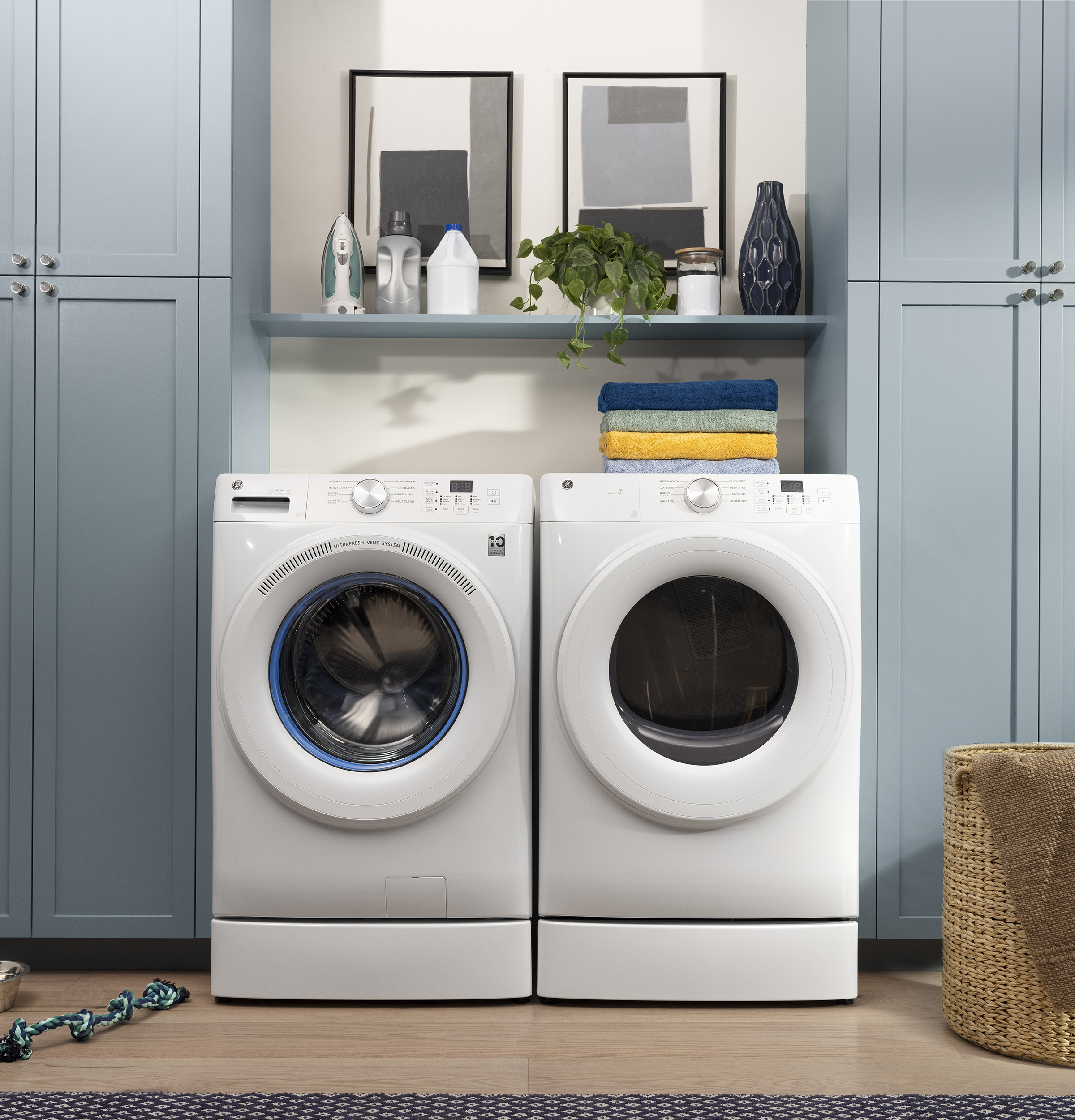
Different GE models have unique features that affect cleaning needs.
Profile Series
Features:
• UltraFresh Vent System (automatically vents moisture)
• Microban Antimicrobial technology (inhibits bacterial growth)
• SmartDispense (auto-releases detergent)
Cleaning Tip: Even with UltraFresh, run a monthly cleaning cycle. The system reduces but does not eliminate buildup.
Harmony Series
Features:
• Flow-Thru Dispensing System (reduces residue in drawers)
• Touchscreen controls
Cleaning Tip: Wipe dispensers monthly and clean the Stain Inspector lens (if equipped) with a damp cloth.
Spacemaker/Space-Saving Models
Compact units (2.8 to 4.0 cu ft) with caster wheels and front electronic controls
Cleaning Tip: These models have smaller drums. Clean every 3 to 4 weeks due to higher usage frequency.
Frequently Asked Questions About How to Clean GE Washing Machine
How often should I clean my GE washing machine?
GE Appliances recommends cleaning your washer once per month for routine maintenance. For deep cleaning, including agitator removal on top-load models, perform this thorough clean at least once per year.
What is the best way to clean a GE washing machine naturally?
The best natural method involves running the hottest cycle with 4 cups of distilled white vinegar and 1 cup of baking soda. Add the vinegar as the tub fills, then add baking soda. Pause the cycle after 2 to 3 minutes of agitation and let it soak for 1 hour before resuming.
Why does my GE washing machine still smell after cleaning?
Persistent smells usually mean the agitator core has not been cleaned. On top-load models, fabric softener residue accumulates inside the hollow agitator. You must remove the agitator and scrub the interior to eliminate this source of odor.
Can I use bleach to clean my GE washing machine?
Yes, liquid bleach is an effective disinfectant. Pour 1 cup (250 ml) directly into an empty drum and run the hottest cycle. For deeper cleaning, pause the cycle after filling and let it soak for 1 hour before resuming. Do not mix bleach with vinegar or ammonia.
How do I clean the rubber seal on my GE front-load washer?
Pull back the rubber gasket around the door after each cycle and wipe it with a dry microfiber cloth. For monthly maintenance, run a cleaning tablet cycle and wipe the gasket folds thoroughly to remove moisture and debris that cause mold.
Is it safe to leave my washing machine door open between uses?
Yes, leaving the lid or door open is actually recommended. This allows moisture to escape and prevents the stagnant, humid environment where mold and mildew thrive. This simple habit prevents most odor problems.
Key Takeaways for Cleaning Your GE Washing Machine

Cleaning your GE washing machine is not just about freshness. It is about performance, hygiene, and longevity. With monthly maintenance using a cleaning tablet or vinegar and baking soda mix, and an annual deep clean involving agitator removal for top-load models, you will keep your washer running like new for years to come.
The most important thing to remember is that fabric softener is the number one culprit behind musty odors. Whether you use it sparingly or not, liquid softener seeps into the hollow agitator core and creates the perfect environment for mold growth. Removing the agitator once a year and scrubbing that hollow center is the single most effective step you can take.
Always unplug your washer before performing manual cleaning, avoid mixing chemicals like bleach and vinegar, and make it a habit to leave the lid or door open between uses. A few minutes of preventive care saves you from costly repairs and smelly laundry down the road. Your clothes will thank you.