You’ve just finished a load of laundry, but instead of fresh-smelling clothes, you’re greeted with a musty, sour, or even sewage-like odor. It’s not your detergent, it’s your washing machine. Over time, bacteria, mold, soap scum, and trapped moisture turn your appliance into a breeding ground for stink. The good news? A deep clean can restore freshness, improve performance, and extend your machine’s life.
This guide will show you exactly how to clean a stinky washing machine using safe, effective methods. You’ll learn how to target hidden mold in seals, dissolve chemical buildup, and prevent odors from returning, all with common household ingredients.
Identify the Source of the Smell

Before cleaning, determine what kind of odor you’re dealing with. Not all smells come from inside the machine.
Musty or Moldy Smell
This is the most common issue. A damp, earthy, or mildew-like odor means biological growth has taken hold in the drum, rubber seal, detergent drawer, or hoses. It thrives in wet, dark spaces left undisturbed after wash cycles.
Key signs include smell that lingers after removing laundry, visible black or green mold in the door gasket, and slimy residue around seals or dispensers.
Rotten Egg or Sewage Smell
If your washer smells like rotten eggs or sewer gas, the problem may not be the machine at all. It could be your home’s plumbing.
Quick diagnostic test: Pull the washing machine away from the wall. Disconnect the drain hose from the standpipe. Sniff the pipe opening. If the odor intensifies at the pipe, the issue is a dry P-trap or clogged vent stack, not the washer. Pour one to two cups of water down the drain to refill the trap and clear odor-causing gases.
Warning: Sewer gas contains methane and hydrogen sulfide, both flammable and potentially hazardous. Fix plumbing issues promptly.
Choose the Right Cleaning Agents
Use the correct cleaner for the type of buildup. Some ingredients dissolve minerals, others kill mold or neutralize odors.
White Vinegar Breaks Down Buildup
Vinegar is a natural acid that dissolves soap scum, limescale, and kills eighty percent of mold species. Use two cups of white distilled vinegar per cleaning cycle.
How to use: Pour into the detergent dispenser or directly into the drum. Run on the hottest water setting. Avoid excessive use on rubber seals, as some manufacturers warn it may degrade them over time. Do not mix with bleach, as this creates toxic chlorine gas.
Baking Soda Deodorizes and Scrubs
Baking soda lifts grime, neutralizes odors, and balances pH. It works best after vinegar loosens residue.
How to use: Add one to two cups directly into the drum, not the dispenser where it can clump. Combine with vinegar in separate cycles to avoid premature fizzing. For extra power, mix with oxygen bleach.
Oxygen Bleach Kills Mold Safely
Sodium percarbonate releases hydrogen peroxide in water, breaking down organic matter like hair, oil, and mold without toxic fumes.
How to use: Use one-quarter cup with baking soda in a hot cycle. Safe for both white and colored parts of the machine. This is an eco-friendly alternative to chlorine bleach.
Chlorine Bleach: Use Only When Necessary
Chlorine bleach is a strong disinfectant but should be reserved for severe contamination.
How to use: Add two cups to the detergent dispenser. Run the longest, hottest cycle. Pause mid-cycle for a one-hour soak if no tub clean option exists. Never mix with vinegar, ammonia, or other cleaners, as deadly fumes result.
Skip Dishwasher Tablets and Steel Wool
These are not designed for washing machines. Dishwasher tablets cause oversudsing and damage sensors. Steel wool scratches drums and seals. Harsh chemical cleaners risk component degradation.
Deep Clean Each Machine Component
Odors hide in unseen areas. Clean every part manually before running a cleaning cycle.
Clean the Rubber Door Seal on Front-Loaders
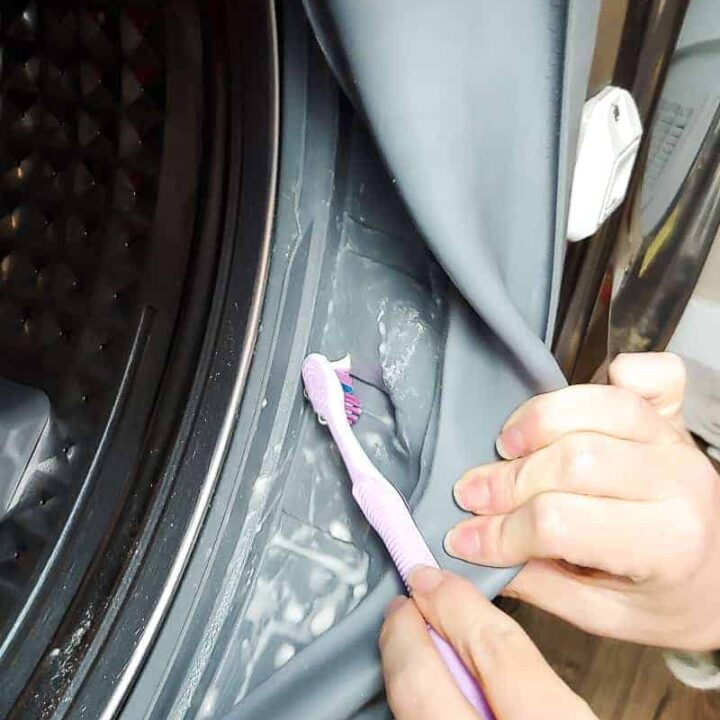
The gasket traps water and debris in its folds, making it prime mold real estate.
Steps: Pull back the rubber folds with your fingers. Spray with vinegar-water or vinegar-dish soap mix. Scrub with an old toothbrush or microfiber cloth. Wipe dry with a lint-free towel.
Pro tip: Designate a washer-only toothbrush to avoid cross-contamination.
Remove and Wash the Detergent Drawer
Soap residue builds up in the dispenser and its housing.
Steps: Press the release tab to remove the drawer. Soak in hot water plus vinegar for fifteen minutes. Scrub compartments and cavity with a toothbrush. Rinse and dry completely before reinserting.
Wipe the Drum and Lid Area
Top-loaders collect gunk under the rim. Front-loaders trap it around the door glass.
Steps: Dampen a cloth with vinegar and wipe the inner drum, top ledge, and glass. Use a toothbrush for crevices. For top-loaders: Remove the agitator cap and unscrew the bolt to lift it out. Clean underneath and the base.
Clear the Drain Pump Filter on Front-Loaders
This filter catches lint, coins, and hair, but when clogged, it holds stagnant water.
Steps: Place towels and a shallow pan under the front lower panel. Open the access flap. Unscrew the filter counterclockwise to drain water slowly. Remove and clean the filter and housing with a bottle brush. Reinstall tightly and close the panel.
Frequency: Clean monthly.
Run a Deep Cleaning Cycle
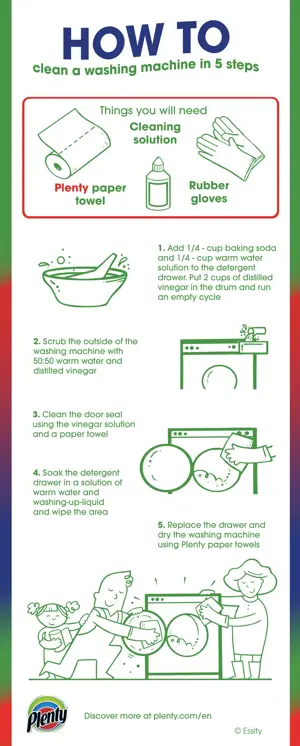
Now that components are clean, run one of these full-system cycles.
Method 1: Vinegar Then Baking Soda Plus Oxygen Bleach
Separating acid and base ensures maximum cleaning power.
Step one: Add two cups white vinegar to the detergent dispenser. Run the hottest, longest cycle. Optional: Add ten drops tea tree or lavender oil for antimicrobial boost.
Step two: While the cycle runs, clean the gasket, drawer, and drum manually.
Step three: Pour one cup baking soda plus one-quarter cup oxygen bleach into the drum. Run another hot cycle. Do not use the dispenser for powders.
Method 2: Baking Soda First
Some prefer to lift residue first, then dissolve it.
Step one: Add two cups baking soda to the drum. Run hot cycle.
Step two: Add two cups vinegar to dispenser. Run hot cycle.
Note: Both orders work. Just keep them in separate cycles.
Method 3: Use a Commercial Cleaner
For convenience, use a pre-measured product like Affresh, OxiClean Washer Cleaner, or LG Washer Cleaner.
Steps: Drop one tablet or packet into the drum. Run the hottest cycle. Follow brand-specific instructions.
Downside: More expensive than DIY. Some contain undisclosed fragrance chemicals.
Method 4: Chlorine Bleach Last Resort
Only use if mold is severe and other methods fail.
Steps: Add two cups chlorine bleach to the detergent dispenser. Run the hottest, longest cycle. Pause mid-cycle for a one-hour soak if possible. Ventilate the room during and after.
Warning: Do not use if you’ve recently used vinegar or other cleaners. Wait one week.
Maintain a Fresh Washing Machine
Prevention beats deep cleaning. A few simple habits stop odors before they start.
Leave the Door and Drawer Open
After every load, keep the door ajar to dry out the drum. Pull out the detergent drawer slightly. This prevents moisture buildup, the number one cause of mold.
Wipe the Gasket Weekly
Even with daily airing, wipe the rubber seal weekly with a vinegar-dampened cloth to remove early mold. Heavy-use households should wipe after every load.
Use the Right Detergent and Amount
Always use HE detergent in modern machines. Use half the recommended dose. Overuse causes residue. Avoid liquid fabric softener, as it leaves a waxy film that traps bacteria.
Better alternative: Wool dryer balls reduce static and soften clothes naturally.
Wash with Hot Water Occasionally
Cold cycles save energy but do not kill bacteria or dissolve grease. Run an empty hot cycle every one to two months, even if you usually wash cold.
Do Not Overload the Machine
Stuffed drums prevent proper rinsing and drainage, leaving soap behind. Fill only three-quarters full to allow space for water movement.
Set a Cleaning Schedule Based on Use
:max_bytes(150000):strip_icc()/how-often-wash-chart_822-ba6fa6daafe6421aa394388a32dd1a8c.jpg)
Tailor your routine to how often you wash.
Usage level determines frequency. Heavy use means three or more loads per week: deep clean monthly, wipe gasket after every load, always leave door open. Moderate use means one to two loads per week: deep clean every two months, wipe gasket weekly, always leave door open. Light use means one load per week: deep clean every three to four months, wipe gasket bi-weekly, always leave door open.
All machines should be deep cleaned at least twice a year.
Troubleshoot Persistent Odors
If the smell returns quickly, dig deeper.
Check the Drain Hose Installation
The hose should not extend more than six inches into the standpipe. Too deep can siphon sewer gas back into the machine. Ensure the hose has a high loop to prevent backflow.
Inspect Internal Hoses
Mold can grow in hidden drain or fill hoses. If cleaning fails, call a technician to inspect internal components. Consider replacing old hoses if the machine is over eight years old.
When to Replace the Machine
If odors persist after multiple deep cleans, if the drain pump or tub is corroded, or if the machine is over eight to ten years old, replacement may be more cost-effective than repeated repairs.
Final Tips for Long-Term Freshness

Use vinegar spray daily. Keep a bottle of fifty-fifty vinegar and dish soap in a spray bottle for quick wipe-downs. Run a cleaning cycle every one to two months if you wash frequently. Avoid scented washer boosters, as many mask rather than eliminate odors. Test water hardness. If you have hard water, use a water softener or add citric acid occasionally to prevent scale buildup.
By following this plan, your washing machine will stay odor-free, clean clothes more effectively, and last longer. A fresh washer is not just about smell. It is about hygiene, efficiency, and peace of mind.
Final note: Always consult your user manual before using vinegar, bleach, or cleaning cycles. Some manufacturers have specific guidelines. But for most machines, this proven method restores freshness fast.
Frequently Asked Questions About Cleaning a Stinky Washing Machine
Why does my washing machine smell musty even after cleaning?
The smell persists because mold and bacteria hide in hard-to-reach places like the rubber seal, detergent drawer, and drain pump filter. You must clean these components manually in addition to running cleaning cycles. Moisture left behind after washes creates the perfect environment for biological growth.
How often should I deep clean my washing machine?
Deep cleaning frequency depends on usage. Heavy users should clean monthly, moderate users every one to two months, and light users every three to four months. All machines need at least two deep cleans per year regardless of use.
Can I use vinegar and bleach together to clean my washing machine?
Never mix vinegar and bleach. This combination creates toxic chlorine gas that can cause serious respiratory problems. Use them in separate cleaning cycles, waiting at least one week between applications.
What is the best natural cleaning solution for front-loading machines?
White vinegar is the best natural option. Pour two cups into the detergent dispenser and run the hottest cycle. Follow with baking soda and oxygen bleach in a second hot cycle. This combination tackles soap scum, mold, and odors without harsh chemicals.
Why does my washing machine smell like sewage?
A sewage smell usually indicates a plumbing issue, not a machine problem. Your drain trap may be dry, allowing sewer gas to escape. Pour water into the drain pipe to refill the trap. If the smell persists, check the vent stack or call a plumber.
Does leaving the washing machine door open prevent odors?
Yes. Leaving the door ajar after each load is the most effective way to prevent odors. It allows moisture to escape and prevents the dark, damp environment where mold and bacteria thrive. This single habit dramatically reduces the need for deep cleaning.
Key Takeaways for Cleaning a Stinky Washing Machine
The most important step is identifying whether the smell comes from the machine itself or your plumbing. A sewage odor requires plumbing intervention, not machine cleaning. For machine odors, focus on the rubber seal, detergent drawer, and drain pump filter, as these hidden areas harbor the most bacteria.
Use white vinegar and baking soda as your primary cleaning agents. Run them in separate cycles for maximum effectiveness. Vinegar dissolves buildup and kills mold, while baking soda deodorizes and lifts residue. Oxygen bleach provides extra power for stubborn cases.
Prevention matters more than cleaning. Leave the door open after every load, wipe the gasket weekly, use only HE detergent in the correct amount, and occasionally run hot cycles. These habits keep your machine fresh between deep cleans and extend its lifespan significantly.